


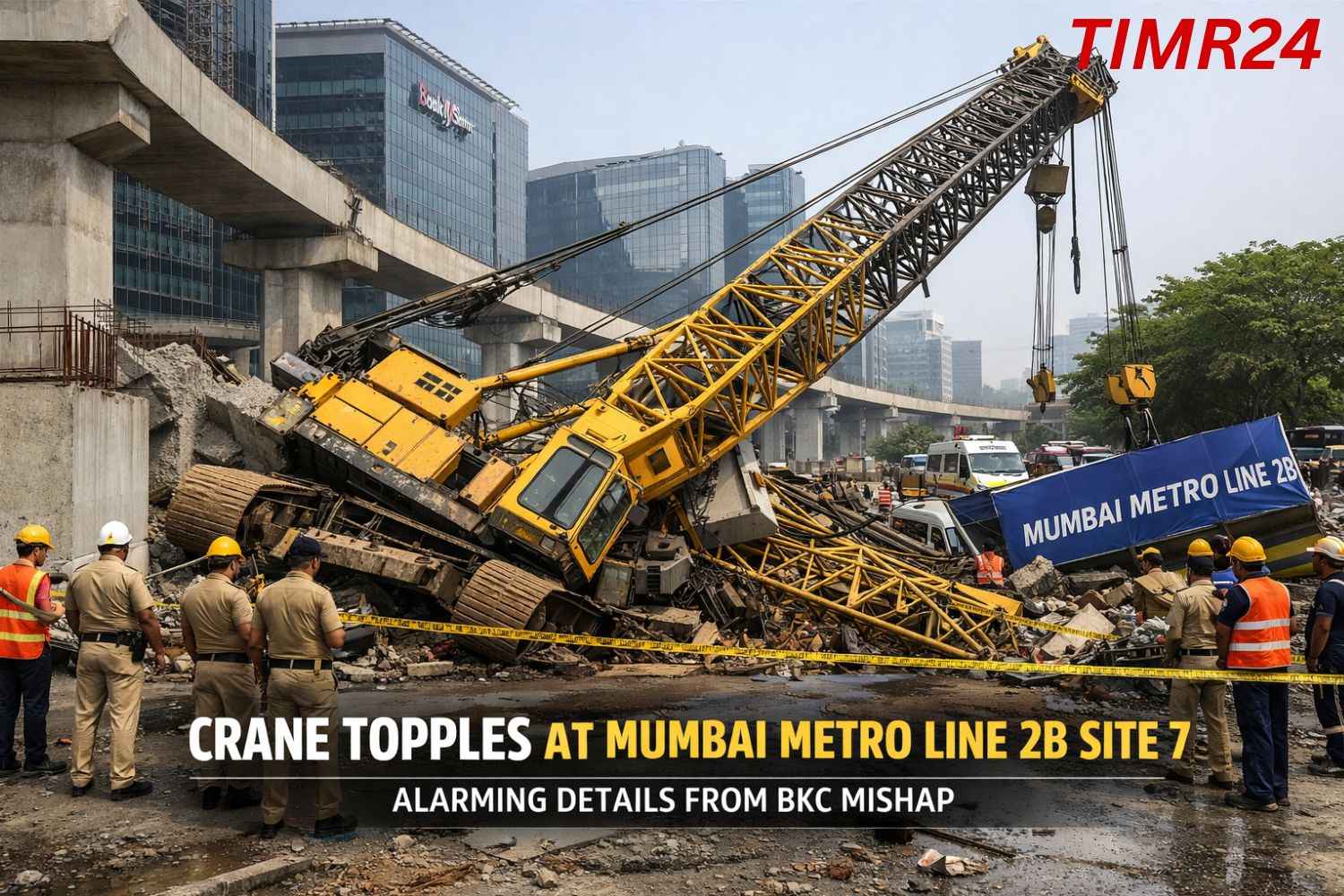












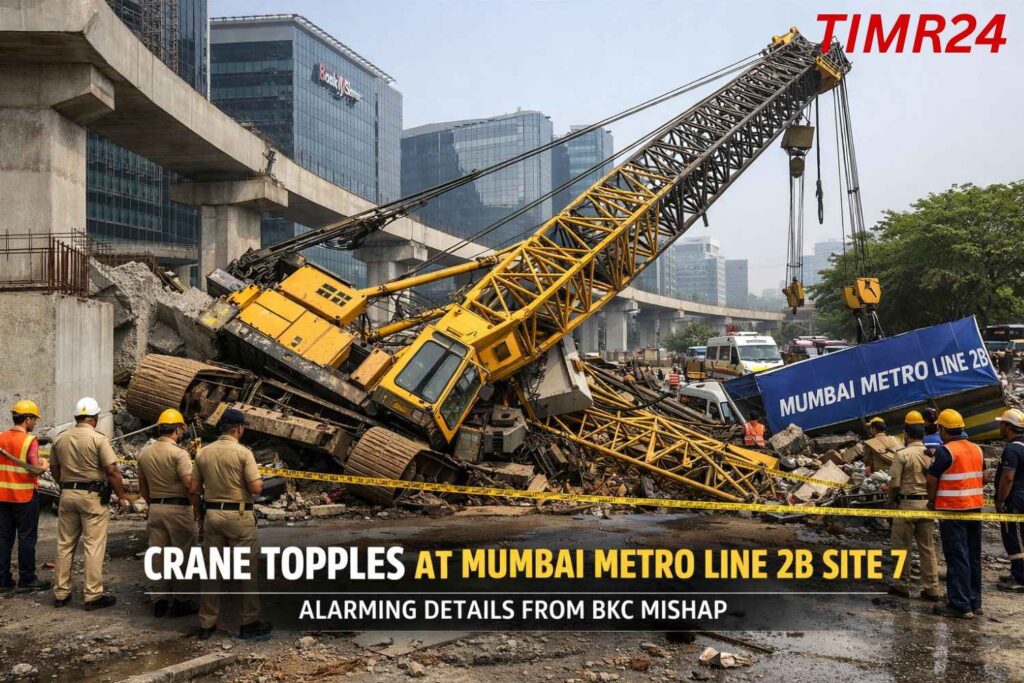
A crane fell during metro construction at Bandra Kurla Complex, Mumbai, around 4:30 am, causing traffic disruptions but no injuries. The incident involved a 400-tonne mobile crane lifting a pre-cast beam, which was linked to a mechanical failure in the lifting boom. Work was carried out by J. Kumar Infraprojects Limited. A 600-tonne crane has been deployed to clear the site, and traffic diversions were established, with plans to reopen the road shortly The recent crane collapse at the construction site of Mumbai Metro Line 2B in the bustling Bandra Kurla Complex (BKC) has drawn widespread attention to construction safety practices in India’s rapidly expanding infrastructure sector.
Equipment Maintenance, And Worker Safety
The incident, which occurred during ongoing construction work, has raised questions about operational protocols, equipment maintenance, and worker safety standards at large-scale urban development sites The project, overseen by Mumbai Metropolitan Region Development Authority, is a key part of the city’s ambitious metro expansion plan. Mumbai Metro Line 2B aims to significantly improve connectivity between eastern and western suburbs, easing traffic congestion and reducing travel time for millions of daily commuters. However, the crane accident has momentarily shifted focus from development progress to safety concerns.
According to initial reports, the crane toppled while engaged in heavy lifting operations at the site located in Bandra Kurla Complex. The exact cause of the collapse is still under investigation, but preliminary findings suggest that a combination of mechanical failure, load imbalance, or improper handling could have contributed to the accident. Fortunately, no fatalities were reported, although some workers sustained minor injuries and were treated promptly Emergency response teams acted swiftly, cordoning off the area and ensuring that further risks were minimized. Authorities also halted construction activities temporarily to conduct a thorough safety audit.
Involving Heavy Machinery Like Cranes, Require
The incident has prompted officials to reassess safety protocols across all metro construction sites in Mumbai This event underscores the inherent risks associated with large-scale infrastructure projects. Construction sites, especially those involving heavy machinery like cranes, require strict adherence to safety norms and continuous monitoring. Even a minor lapse can lead to potentially dangerous situations, as witnessed in this case. Experts have emphasized the need for regular equipment inspections, skilled operation, and real-time supervision to prevent such incidents The Mumbai Metro project has been a cornerstone of urban development in the city.
With increasing population density and traffic congestion, metro rail systems offer a sustainable solution to urban mobility challenges. The Line 2B corridor, in particular, is expected to connect key residential and commercial hubs, thereby enhancing economic activity and commuter (India) convenience its importance, incidents like the crane collapse highlight the challenges faced during execution. Infrastructure projects in densely populated cities often operate under tight timelines and complex logistical conditions. This makes it essential for authorities and contractors to prioritize safety alongside speed and efficiency The MMRDA has issued a statement assuring that all necessary.
Independent Experts May Be Brought In To Evaluate
Measures will be taken to prevent similar occurrences in the future. This includes conducting comprehensive safety audits, reviewing contractor compliance, and reinforcing training programs for workers and machine operators. Additionally, independent experts may be brought in to evaluate existing safety frameworks and recommend improvements The role of contractors and subcontractors is also under scrutiny. In many large projects, multiple agencies are involved, which can sometimes lead to gaps in communication and accountability. Ensuring that all stakeholders follow standardized safety protocols is crucial to maintaining a safe working environment.
This incident is not isolated. Across India, there have been several reports of construction-related accidents, often linked to negligence or lack of proper safety measures. As the country continues to invest heavily in infrastructure, there is a growing need to strengthen regulatory mechanisms and enforce strict compliance From a broader perspective, the crane collapse serves as a wake-up call for the entire construction industry. It highlights the importance of integrating safety into every stage of project planning and execution. Modern technologies such as real-time monitoring systems, IoT-enabled equipment, and AI-based risk assessment tools can play a significant role in enhancing safety standards.
Acknowledged Complexities Involved In Executing
Public reaction to the incident has been mixed. While many have expressed concern over safety lapses, others have acknowledged the complexities involved in executing large infrastructure projects in urban environments. Social media platforms have been abuzz with discussions on accountability, transparency, and the need for stricter regulations In response, authorities have assured transparency in the investigation process. Detailed reports will be made public, and any lapses identified will be addressed promptly. This approach is essential to maintaining public trust and ensuring that development projects continue without compromising safety.
For commuters and residents, the incident may cause temporary disruptions and delays in the project timeline. However, officials have reiterated their commitment to completing the project efficiently while ensuring the highest safety standards. The long-term benefits of the metro line are expected to outweigh these short-term setbacks crane collapse at the Mumbai Metro Line 2B site in BKC is a significant incident that highlights the critical importance of safety in infrastructure development.
While the absence of major casualties is a relief, the event serves as a reminder that even minor lapses can have serious consequences. Moving forward, a (India) collective effort from authorities, contractors, and workers is required to ensure that such incidents are prevented. Strengthening safety protocols, leveraging technology, and fostering a culture of accountability will be key to achieving this goal.
Q1. What caused the crane collapse at Mumbai Metro Line 2B site?
The exact cause is under investigation, but possible reasons include mechanical failure or load imbalance.
Q2. Were there any casualties in the incident?
No major casualties were reported, though some workers sustained minor injuries.
Q3. Which authority is managing the project?
The project is managed by MMRDA.
Q4. Where did the incident occur?
It occurred in Bandra Kurla Complex (BKC), Mumbai.
Q5. Will this delay the metro project?
There may be temporary delays, but authorities aim to complete the project on time.