Bajrang Setu has been designed as a next-generation suspension bridge featuring transparent glass walkways on both sides, allowing pedestrians to experience panoramic aerial views of the Ganga River and surrounding Himalayan foothills. The bridge is being promoted as one of India’s most unique tourism infrastructure projects and a modern replacement for the aging Lakshman Jhula crossing, which had been permanently shut due to structural concerns. The project represents a strategic effort by the Uttarakhand government to modernize Rishikesh’s tourism infrastructure while preserving the city’s religious and cultural significance.
Bridge’s Integrity And Pedestrian Safety
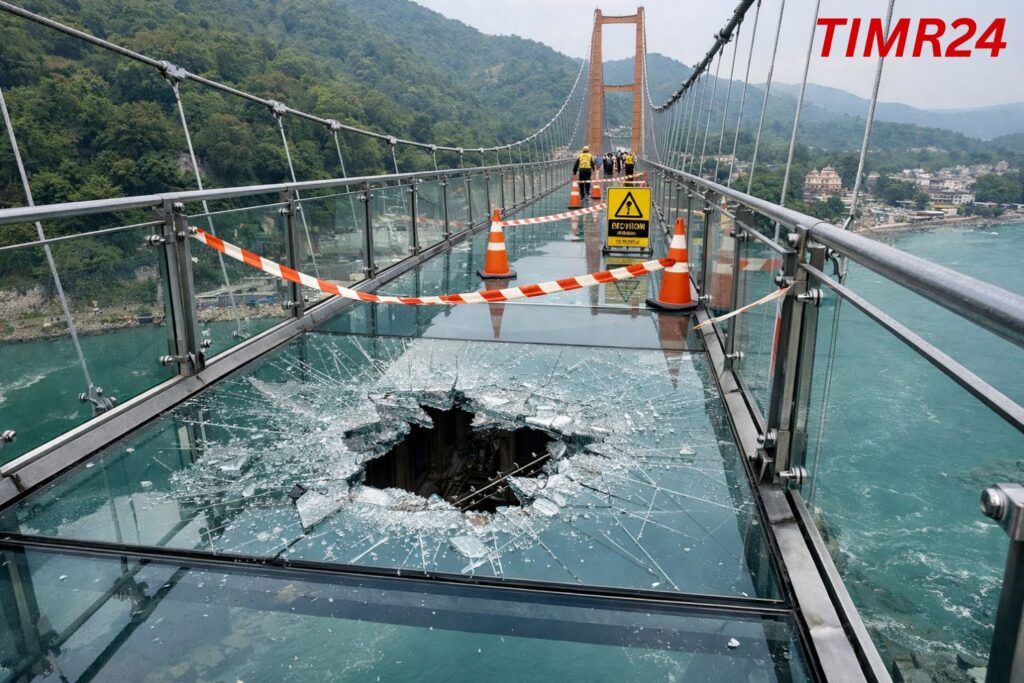
Officials from the Public Works Department stated that the glass used in Bajrang Setu consists of five layers of toughened safety glass, each approximately 12 mm thick, resulting in a total thickness of around 60 mm. This advanced engineering design ensures that even if the top surface is damaged, the lower structural layers maintain the bridge’s integrity and pedestrian safety. Engineers have reassured the public that the bridge remains structurally secure and that the incident does not compromise its load-bearing capacity Preliminary investigations suggest that the damage may have been caused deliberately by an unidentified individual rather.
Than resulting from structural failure. A formal complaint has reportedly been filed, and local authorities have initiated an investigation into the matter. In response, surveillance measures are being significantly upgraded, including the installation of CCTV cameras, stronger lighting systems, and enhanced on-site security to prevent further vandalism or accidental damage. This proactive approach reflects the administration’s intention to preserve the bridge’s condition before its public launch The recent incident has reignited public discussion surrounding the practicality and durability of glass bridge infrastructure in India. While glass bridges have become globally popular.
Engineering Standards Behind Bajrang
Tourist attractions in countries such as China, Vietnam, and the UAE, Indian public infrastructure faces unique challenges related to maintenance, crowd control, vandalism, and environmental wear. Experts note that while the engineering standards behind Bajrang Setu appear robust, long-term success will depend heavily on disciplined operations, visitor regulations, regular inspections, and strict maintenance protocols Constructed at an estimated cost of ₹69.20 crore, Bajrang Setu is approximately 132.30 meters long and 8.60 meters wide, making it one of the most advanced pedestrian bridge projects in northern India. The structure includes dedicated pedestrian pathways.
Transparent viewing sections, and a design optimized to handle high tourist footfall during peak seasons. Officials believe the bridge will significantly improve connectivity across the Ganga while also becoming a major tourism revenue generator for the region The bridge is also expected to strengthen Rishikesh’s positioning as a premium spiritual and adventure tourism destination. Already famous for yoga retreats, river rafting, and pilgrimage tourism, the city is increasingly investing in experiential infrastructure projects that blend utility with visitor attraction. Similar developments across India including ropeways, skywalks, riverfront projects, and panoramic.
Symbolizes India’s Shift Toward Experiential Infrastructure
Viewpoints demonstrate how states are modernizing tourism assets to increase economic activity and visitor retention Despite the minor damage incident, the broader significance of Bajrang Setu remains unchanged. The project symbolizes India’s shift toward experiential infrastructure where public works are designed not only for transportation but also for tourism enhancement and economic impact. Once operational, the bridge is expected to reduce pedestrian congestion in the Lakshman Jhula area while offering a safer, modern alternative to the older crossing However, the incident also serves as an important reminder that infrastructure innovation must be accompanied by.
Robust asset protection mechanisms. Public access to premium infrastructure requires equally premium standards of monitoring, maintenance, and civic discipline. Authorities may eventually implement regulated entry systems, restricted occupancy controls, or timed visitor (India) slots to protect the glass walkway from misuse and overloading, similar to operational models followed by major international glass bridge attractions Industry experts suggest that if Bajrang Setu operates successfully after launch, it could inspire similar glass bridge and skywalk projects across India’s hill states and tourism hubs. States like Himachal Pradesh, Jammu & Kashmir, Sikkim, and Meghalaya may look to.
Inauguration Timeline Once all Inspections
Replicate this model if Rishikesh’s execution proves commercially viable and operationally sustainable For now, repair work and enhanced safety installations are underway, and officials are expected to announce a revised inauguration timeline once all inspections are (India) completed. The government appears committed to ensuring the bridge opens only after meeting all structural, operational, and security standards. While the damage may have delayed the opening slightly, it has also provided authorities an opportunity to strengthen the project before public launch.
The minor damage to Bajrang Setu Glass Bridge ahead of inauguration is a temporary setback rather than a major structural issue. With the lower safety layers intact and security upgrades underway, the bridge remains one of India’s most exciting tourism infrastructure projects in development. Once inaugurated, Bajrang Setu is poised to become an iconic landmark in Rishikesh, blending engineering innovation, tourism growth, and urban modernization into a single transformative project for Uttarakhand’s future.