



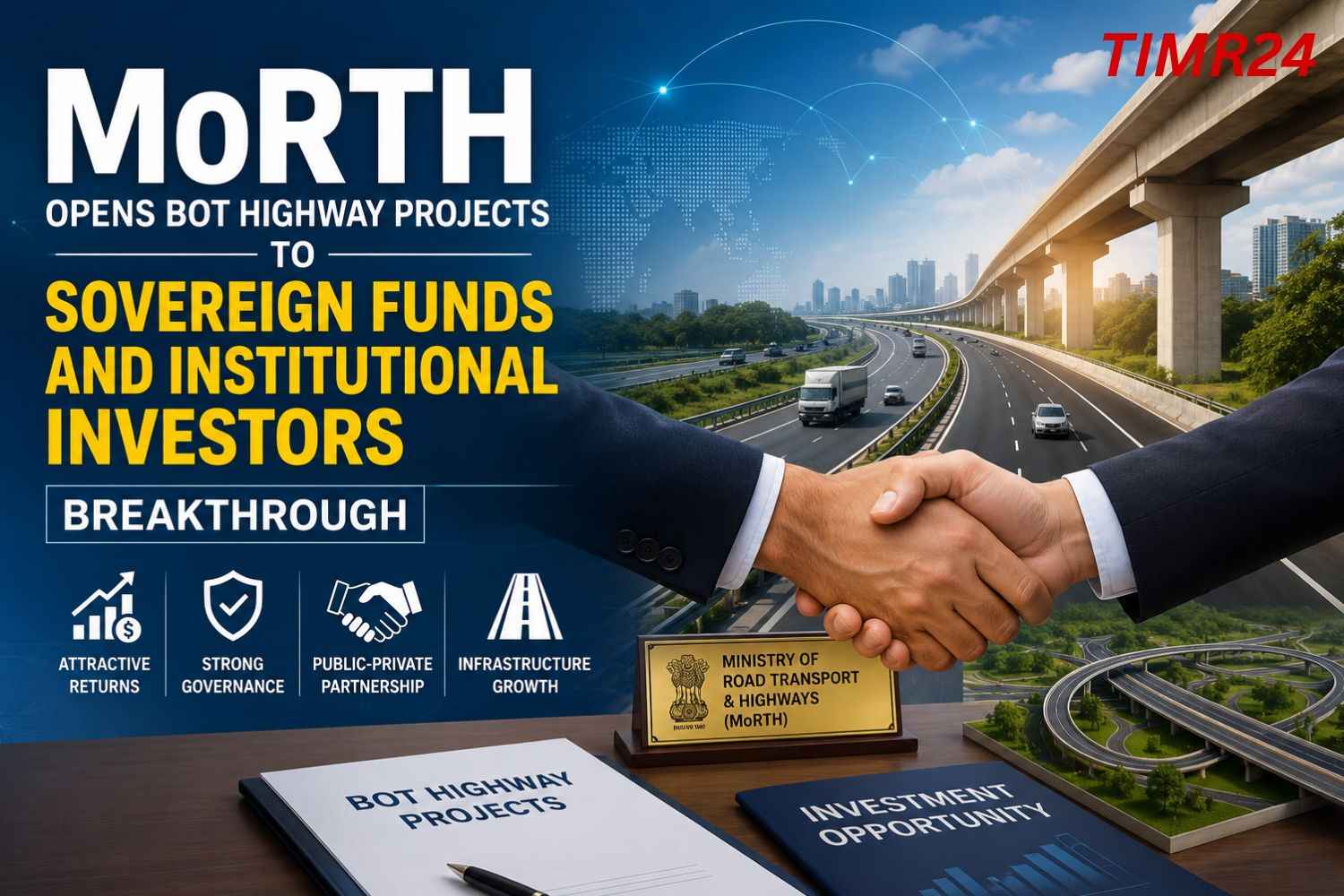


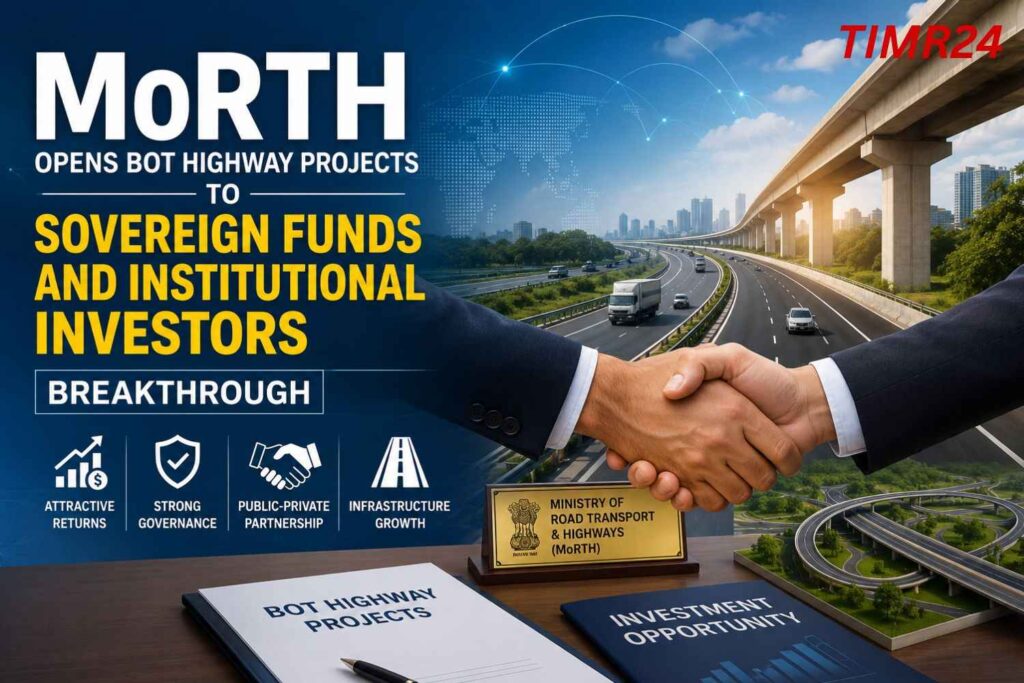
MoRTH Ministry of Road Transport and Highways has revised eligibility norms for build-operate-transfer (BOT) highway projects, enabling sovereign wealth funds, pension funds, infrastructure funds, and private equity investors to directly engage in these developments. This change follows difficulty in attracting bidders for projects worth approximately Rs 22,000 crore, leading to relaxed contract conditions and an expanded investor base under the public-private partnership model. The new criteria focus on the financial strength of institutional investors, while.
Expanding Highway Infrastructure Without
Construction expertise can be secured later through partners. This shift aims to enhance private participation in the BOT model, addressing previous challenges related to financing, traffic risks, and rigid agreements, and is seen as vital for expanding highway infrastructure without increasing public expenditure pressure The Indian infrastructure sector is witnessing another transformative policy shift as the Ministry of Road Transport and Highways (MoRTH) moves to open Build-Operate-Transfer (BOT) highway projects to sovereign wealth funds and institutional investors. This decision is expected to create a stronger investment ecosystem for road infrastructure.
While accelerating highway development across the country. India has already emerged as one of the fastest-growing infrastructure markets globally, and the inclusion of global institutional capital into BOT highway projects marks a significant milestone in the evolution of public-private partnership models in the transport sector Over the last decade, the Indian government has invested heavily in expanding the national highway network through ambitious initiatives led by the Ministry of Road Transport and Highways and the National Highways Authority of India. Large-scale highway expansion projects, expressways, economic corridors, and logistics connectivity.
Institutional Investors Are Expected To Play
Programs have transformed transportation efficiency and regional economic growth. However, sustaining this momentum requires continuous access to long-term financing, and this is where sovereign wealth funds and institutional investors are expected to play a crucial role The BOT model has historically been an important framework in India’s infrastructure development journey. Under this structure, private developers finance, construct, and operate highway projects for a fixed concession period before transferring the asset back to the government authority. While BOT projects were widely used in earlier phases of highway development.
The sector later witnessed challenges related to land acquisition delays, traffic risks, and financial stress among developers. As a result, alternative models such as Hybrid Annuity Model (HAM) gained popularity. Now, with improved economic conditions, stronger traffic recovery, and better policy support, the government is once again reviving confidence in BOT-based highway projects One of the biggest advantages of allowing sovereign wealth funds and institutional investors into BOT projects is the availability of patient capital. Unlike short-term investors, sovereign funds and pension-backed institutions generally seek stable and predictable returns over long durations.
Expanding Logistics Sector Further Improve
Highway assets perfectly align with these investment preferences because toll-based road infrastructure generates recurring revenue streams over several years. India’s rising vehicle ownership, increasing freight movement, and expanding logistics sector further improve the long-term attractiveness of highway investments This policy initiative also reflects the growing global confidence in India’s infrastructure market. International investors have already shown strong interest in Indian roads, airports, renewable energy, and logistics assets. Major pension funds and sovereign wealth funds from countries such as Singapore, Canada, Abu Dhabi, and Australia have significantly increased.
Their investments in India’s infrastructure ecosystem over recent years. By formally enabling participation in BOT highway projects, MoRTH is creating a transparent pathway for large-scale institutional capital inflows into the road sector Another important aspect of this development is risk optimization. Earlier BOT highway projects faced investor concerns because traffic estimates and execution challenges often impacted profitability. However, the government has now implemented several policy reforms aimed at reducing uncertainties for private investors. Faster land acquisition mechanisms, improved dispute resolution systems, digital toll collection through.
Financial Pressure On Domestic Developers And Bank
FASTag, and better project structuring have enhanced operational efficiency across the highway sector. These reforms are expected to strengthen investor confidence and improve the overall bankability of BOT projects The move is also likely to reduce financial pressure on domestic developers and banks. Infrastructure projects require massive upfront capital, and traditional financing sources often face limitations due to long repayment cycles. Institutional investors can provide alternative financing avenues while improving liquidity within the infrastructure market. This creates a more balanced funding ecosystem where developers, government agencies, and financial institutions can work.
Together efficiently to deliver large-scale transport projects India’s highway infrastructure expansion is directly connected to broader economic growth objectives. Efficient roads reduce logistics costs, improve freight movement, support industrial corridors, and enhance regional connectivity. The government has consistently emphasized that world-class transport infrastructure is essential for achieving higher manufacturing output and improving ease of doing business. By attracting long-term institutional investments into BOT projects, the country can accelerate construction timelines and ensure sustainable infrastructure growth without overburdening public finances.
The decision could also generate new opportunities for infrastructure monetization. Operational highway assets with stable toll collections are increasingly becoming attractive investment products for pension funds and sovereign investors globally. This trend supports asset recycling strategies where existing highway assets can generate capital for developing new infrastructure projects. Such financial models can create a continuous investment cycle that supports future road expansion programs across India For the construction industry, this development is expected to create a strong positive impact. Increased project funding will boost demand for.
Contractors And Infrastructure Developers
Engineering services, construction equipment, project management expertise, and technology-driven highway solutions. Contractors and infrastructure developers (India) may witness improved business opportunities as more BOT projects enter execution stages. The expansion of private participation can also encourage greater innovation in highway construction practices and operational management systems The policy shift aligns closely with India’s long-term infrastructure modernization goals. Programs focused on expressway development, multimodal logistics connectivity, industrial corridors, and economic zones require substantial capital investments over.
The coming years. Sovereign wealth funds and institutional investors can provide the financial stability needed to support these ambitious initiatives. Their participation may also improve global investor perception regarding the transparency and maturity of India’s infrastructure sector Digital transformation within the road sector is another major factor supporting investor confidence. Technologies such as electronic toll collection, AI-based traffic monitoring, smart highway management systems, and predictive maintenance are improving operational efficiency and revenue transparency. These advancements make highway assets more attractive to institutional.
Enthusiasm Toward BOT Highway Hevelopment
Investors seeking reliable long-term returns with lower operational uncertainties Industry experts believe that this move may revive private sector enthusiasm toward BOT highway development. Many developers had previously shifted focus toward other infrastructure models due to financial challenges associated with traditional BOT structures. However, with policy improvements and institutional participation, BOT projects could witness renewed momentum in the coming years. This may ultimately result in stronger competition, improved project quality, and faster infrastructure delivery nationwide.
India’s infrastructure story is increasingly becoming a global investment opportunity. As the economy continues to grow and transportation demand expands, road infrastructure will remain one of the country’s most important development priorities. MoRTH’s decision to open (India) BOT highway projects to sovereign wealth funds and institutional investors represents a strategic step toward building a more resilient and globally integrated infrastructure financing ecosystem.
The coming years are expected to witness stronger collaboration between government authorities, private developers, global investors, and financial institutions. Such partnerships can transform India’s transport landscape while supporting economic expansion, industrial growth, and employment generation. With improved regulatory support, rising traffic demand, and increasing international interest, BOT highway projects may once again emerge as a key driver of India’s infrastructure development journey.
Q1. What is MoRTH’s latest BOT highway initiative?
MoRTH has allowed sovereign wealth funds and institutional investors to participate in BOT highway projects to attract long-term infrastructure investment.
Q2. Why are sovereign funds interested in Indian highways?
Indian highways offer stable long-term returns, traffic growth potential, and government-backed infrastructure expansion opportunities.
Q3. What does BOT mean in highway projects?
BOT stands for Build-Operate-Transfer, where private companies build and operate highways for a concession period before transferring them back to the government.
Q4. How will this decision impact infrastructure growth?
The policy will improve capital inflow, speed up project execution, and encourage global participation in India’s road sector.
Q5. Which investors can participate now?
Sovereign wealth funds, pension funds, insurance companies, and large institutional infrastructure investors can now explore BOT highway investments.