






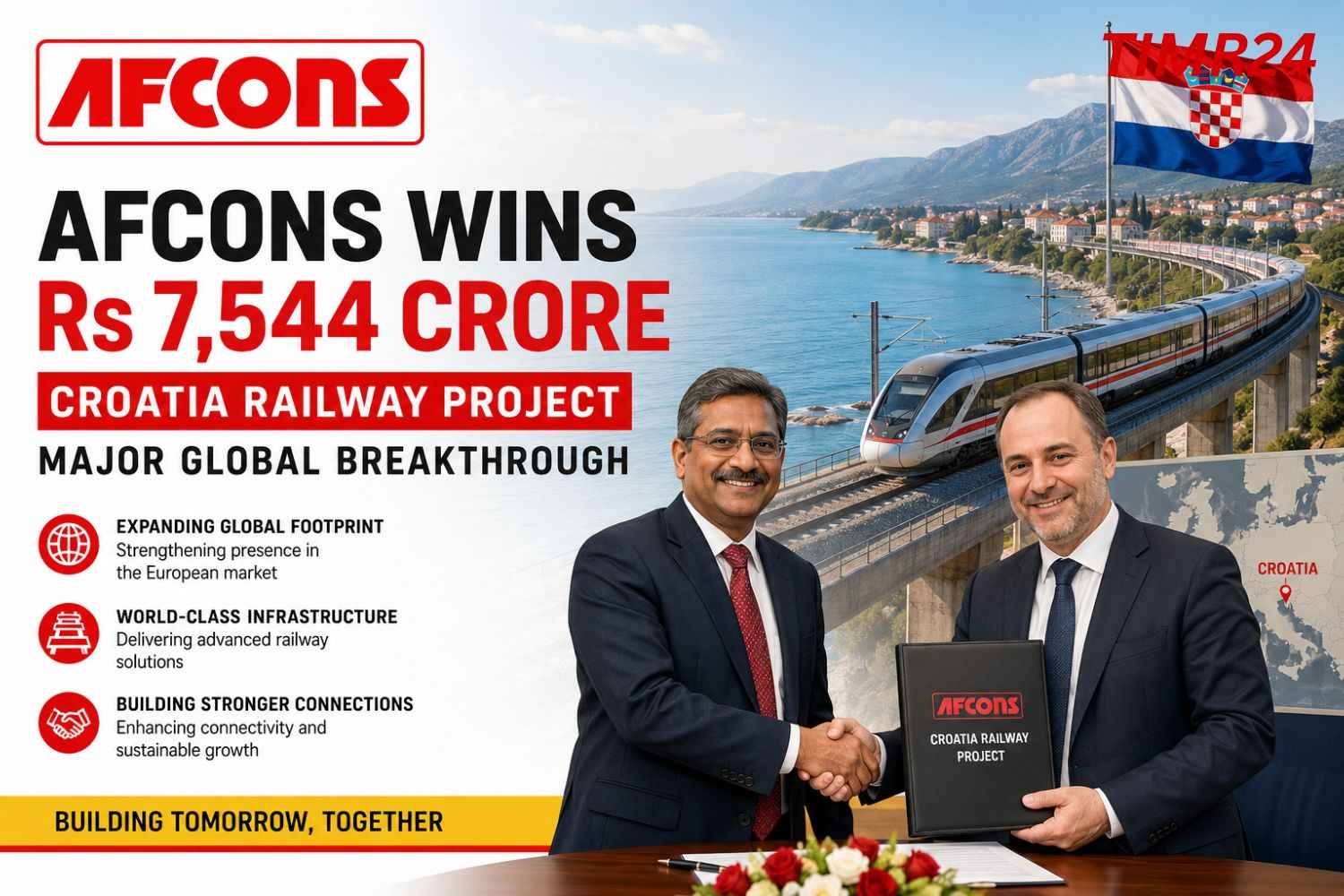

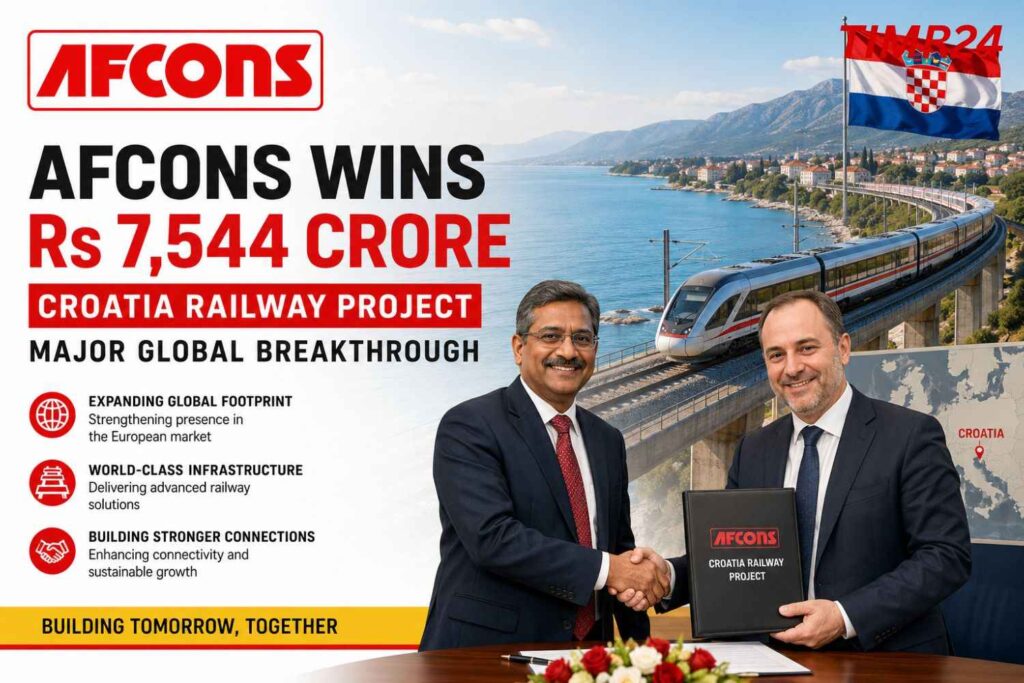
Afcons Infrastructure Limited has been awarded a major railway rehabilitation and construction project in Croatia, marking its entry into the European infrastructure market. The project entails the reconstruction of the existing railway track and construction of a second rail line on the Dugo Selo–Novska route, including overhead electrification and signalling works. Valued at €677.07 million (approximately Rs 7,544 crore), this contract is the company’s largest international order to date Indian infrastructure giant Afcons Infrastructure has achieved another major international milestone after securing a massive railway project worth Rs 7,544 crore in Croatia.
Indian Infrastructure Companies Have Increasingly
The development marks a significant achievement not only for the company but also for the Indian engineering and construction industry, which continues to strengthen its reputation across global markets. Over the last few years, Indian infrastructure companies have increasingly expanded beyond domestic borders, and this latest project demonstrates how Indian expertise is now being recognized in Europe’s highly competitive infrastructure sector The Croatia railway project is expected to play a major role in modernizing transportation infrastructure in the European nation. Railway modernization has become one of the top priorities for several European countries as.
Governments focus on sustainable transportation, faster mobility, and better regional connectivity. With this project, Afcons has entered another important international market and positioned itself among globally trusted railway engineering companies capable of delivering technically complex infrastructure developments Afcons Infrastructure has built a strong reputation through its execution of large-scale projects across transportation, marine engineering, metro systems, tunnels, bridges, and railways. The company has been involved in several landmark projects in India and overseas, making it one of the most recognized names in the infrastructure sector.
European Construction Market Railway Sector
The Croatia railway contract is expected to further enhance the company’s international credentials and improve its visibility in the European construction market The railway sector globally is witnessing rapid transformation due to increasing investments in high-speed transportation, freight corridors, and sustainable mobility systems. Countries across Europe are upgrading existing railway networks to improve operational efficiency and reduce carbon emissions. Croatia’s railway modernization initiative is part of a broader regional effort to improve connectivity and logistics infrastructure. By awarding this contract to Afcons, Croatian authorities have shown confidence in the engineering capabilities of Indian firms.
One of the most important aspects of this project is the international exposure it offers to Indian infrastructure expertise. Indian construction companies have already established their presence in Asia, the Middle East, and Africa. However, Europe remains a highly competitive and technically demanding market. Winning a major railway project in Croatia signals that Indian firms are now capable of competing with leading global infrastructure players in advanced markets as well Afcons is expected to utilize advanced engineering practices, modern railway technologies, and efficient project management systems for the successful execution of the project.
Execute Croatian Railway Project Effectively
Railway infrastructure projects require precision planning, strict safety standards, and high-quality construction practices. The company’s experience in handling challenging infrastructure projects across different geographies is expected to help it execute the Croatian railway project effectively The project could also create future opportunities for Indian infrastructure firms in Europe. Successful delivery of this railway contract may open doors for additional projects related to rail modernization, urban mobility, bridges, tunnels, and transportation corridors in neighboring European countries. Infrastructure development remains one of the biggest economic priorities globally, and companies with strong.
Execution records are expected to benefit significantly from rising international demand Another important factor behind this development is the increasing globalization of Indian engineering companies. Indian infrastructure businesses are no longer focusing only on domestic projects. Instead, they are actively exploring international opportunities to diversify their revenue streams and build global partnerships. Afcons has consistently expanded its international footprint through projects in multiple countries, and the Croatia railway contract further strengthens that strategy The project is also likely to positively impact investor confidence in the infrastructure and engineering sector.
Secured In Competitive International Markets
Large international orders generally improve revenue visibility for companies and demonstrate their technical and financial capabilities. Investors often view such projects as indicators of long-term growth potential, especially when contracts are secured in competitive international markets. As a result, the project could contribute to stronger market sentiment around Indian infrastructure companies operating globally Railway modernization projects typically involve multiple components including track upgrades, signaling systems, electrification work, civil engineering structures, and transportation connectivity enhancements. Such projects require collaboration between engineering experts.
Local authorities, contractors, and technology providers. Afcons is expected to bring its experience from major rail and metro projects to ensure efficient execution and timely completion India itself has been witnessing significant railway infrastructure development over the last decade. Large-scale investments in dedicated freight corridors, metro rail systems, high-speed rail, and station modernization have helped Indian engineering companies gain extensive technical expertise. This experience is now helping Indian firms compete internationally. The Croatia railway project reflects how domestic infrastructure growth in India is creating globally competitive construction and engineering companies.
Energy-Efficient And Environmentally Friendly
Infrastructure experts believe that global railway investments will continue to rise over the next decade due to urbanization, industrial expansion, and environmental sustainability goals. Rail transport is considered one of the most energy-efficient and environmentally friendly transportation systems. Governments worldwide are increasing investments in railway modernization to reduce traffic congestion, improve freight movement, and lower emissions. Companies like Afcons are expected to benefit from these long-term global trends The success of Indian infrastructure firms in overseas markets also supports the country’s image as a global engineering hub.
Indian companies are increasingly known for delivering complex projects at competitive costs while maintaining quality standards. This combination has helped them secure contracts in different international regions. Afcons’ latest achievement in Croatia further strengthens this growing global perception Apart from economic benefits, international infrastructure projects also encourage technology exchange, skill development, and global collaboration. Working in international markets helps companies adopt advanced construction technologies and global best practices. These experiences often contribute to better operational efficiency and innovation in future projects as well.
Afcons’ Croatia Railway Contract Comes At
Industry analysts believe that the railway and transportation infrastructure segment will remain one of the strongest growth drivers for engineering companies in the coming years. Governments around the world are allocating massive budgets for transportation (India) urban mobility systems, and sustainable infrastructure projects. Companies with expertise in rail engineering and project execution are likely to see increasing international demand Afcons’ Croatia railway contract comes at a time when global infrastructure spending is accelerating across multiple regions. Europe, Asia, and the Middle East are all investing heavily in transportation modernization.
This creates strong opportunities for experienced infrastructure companies capable of delivering technically demanding projects on schedule The achievement also reflects the growing confidence of international clients in Indian project management capabilities. Delivering large infrastructure projects requires strong planning, engineering precision, supply chain management, and financial discipline. Indian companies are now demonstrating these capabilities on a global stage, helping them secure more overseas contracts.
As infrastructure development continues to drive economic growth globally, projects like the Croatia railway modernization contract highlight the expanding (India) role of Indian companies in international construction markets. Afcons’ latest success not only strengthens its own global portfolio but also reinforces India’s growing reputation in engineering, transportation infrastructure, and railway modernization projects worldwide.
Q1. What project has Afcons won in Croatia?
Afcons Infrastructure has secured a railway modernization project worth Rs 7,544 crore in Croatia.
Q2. Why is this project important for Afcons?
The project strengthens Afcons’ international portfolio and expands its presence in the European railway infrastructure market.
Q3. What work will Afcons perform in Croatia?
Afcons will handle railway infrastructure modernization, track development, and related engineering activities.
Q4. How does this impact Indian infrastructure companies?
It highlights the growing global reputation of Indian engineering and construction firms in large-scale international projects.
Q5. What sector does Afcons mainly operate in?
Afcons operates in transportation, railways, marine, bridges, tunnels, and urban infrastructure projects.