




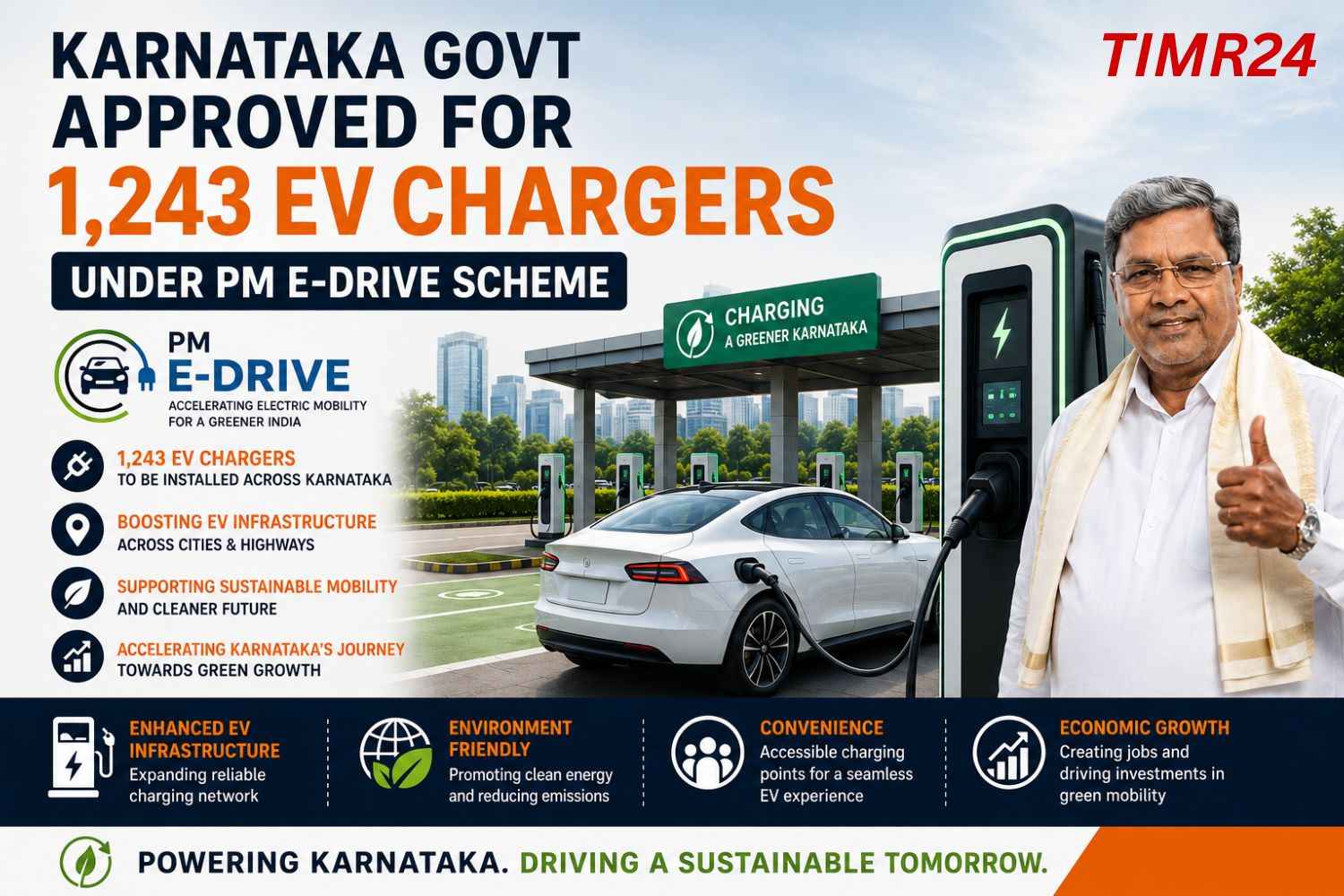











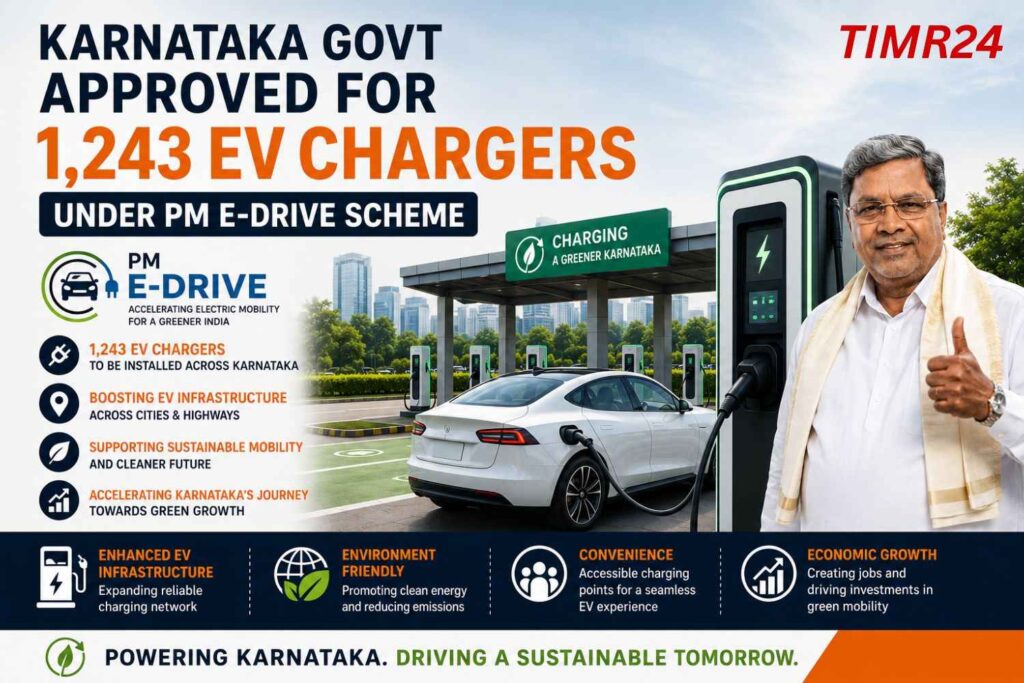
Union Minister H. D. Kumaraswamy announced the approval of 1,243 EV charging stations in Karnataka under the PM E-DRIVE Scheme, with a budget of Rs 123.26 crore. This was revealed at a conference in Bengaluru focusing on national EV infrastructure. The PM E-DRIVE Scheme has approved proposals totaling Rs 503.86 crore for 4,874 chargers across various states and public sector enterprises. The overall scheme aims to promote electric mobility in India, with Rs 2,000 crore allocated specifically for public charging stations.
Significantly Improve Charging Accessibility
Karnataka has taken a major step toward strengthening India’s electric mobility ecosystem after receiving approval for 1,243 electric vehicle charging stations under the PM E-DRIVE Scheme. The development is expected to significantly improve charging accessibility across urban highways, commercial corridors, and emerging EV zones throughout the state. With electric vehicle adoption rapidly increasing in India, the expansion of charging infrastructure has become one of the most critical requirements for long-term sustainable transportation growth. Karnataka, already recognized as one of India’s leading technology and innovation hubs, is now positioning itself as.
A key state in the country’s transition toward cleaner mobility solutions The PM E-DRIVE Scheme introduced by the Government of India focuses on accelerating electric mobility development through strategic investments in charging infrastructure, clean transportation support systems, and EV ecosystem expansion. Karnataka’s approval for over one thousand charging stations highlights the state’s proactive role in supporting India’s national sustainability and carbon reduction targets. The project is expected to create better convenience for EV users while also encouraging more consumers and fleet operators to transition from conventional fuel-powered vehicles to electric alternatives.
Network Expansion Is Expected To Reduce
The charging stations approved under the scheme are likely to be installed at strategic locations including national highways, city roads, commercial districts, transport hubs, residential clusters, and industrial regions. This network expansion is expected to reduce range anxiety among EV owners, which remains one of the biggest concerns affecting electric vehicle adoption in India. By improving access to reliable charging points, Karnataka aims to create a smoother and more practical ownership experience for electric vehicle users across different segments including passenger vehicles, commercial fleets, electric buses, and two-wheelers.
The state government has already been actively supporting electric mobility through policy incentives, investment support, and industrial promotion initiatives. Karnataka has attracted major EV manufacturers, battery technology companies, and mobility startups over the past few years, especially in cities like Bengaluru. The addition of 1,243 charging stations under the PM E-DRIVE initiative is expected to further strengthen the state’s EV ecosystem by supporting both manufacturers and consumers simultaneously. Industry experts believe that robust charging infrastructure plays a direct role in accelerating EV sales and improving investor confidence in the sector.
Infrastructure Development Remains Essential
India’s electric mobility market has witnessed strong momentum in recent years as both central and state governments continue promoting cleaner transportation alternatives. Rising fuel prices, increasing environmental concerns, and advancements in battery technology are driving greater interest in electric vehicles across the country, infrastructure development remains essential for sustaining this growth. Karnataka’s latest approval demonstrates how government-backed infrastructure programs can help bridge existing gaps and create a more dependable EV ecosystem for future expansion Apart from supporting environmental sustainability.
The project is also expected to generate economic opportunities across multiple sectors. The development, installation, and maintenance of EV charging stations can create employment opportunities in engineering, electrical infrastructure, digital services, (India) software integration, and operations management. Local businesses near charging points may also benefit from increased consumer traffic as EV charging often requires waiting periods that encourage spending at nearby retail and hospitality outlets The PM E-DRIVE Scheme is designed not only to expand charging infrastructure but also to strengthen India’s long-term clean energy goals.
Urban Development, And Climate Responsibility
Increased EV adoption can contribute toward reducing fossil fuel dependency and lowering urban air pollution levels in major cities. Karnataka’s participation in this initiative aligns with broader national objectives focused on energy transition, sustainable urban development, and climate responsibility. Bengaluru, which already faces traffic congestion and environmental challenges, could particularly benefit from wider electric mobility adoption supported by an improved charging network Technology integration is also expected to play a significant role in the implementation of these charging stations. Many modern EV charging networks are being developed with smart monitoring systems.
Mobile app connectivity, real-time availability tracking, and digital payment solutions. These features help improve user convenience and operational efficiency while supporting scalable infrastructure management. Karnataka’s strong technology ecosystem could help accelerate the deployment of advanced charging solutions integrated with smart city initiatives and renewable energy systems Several private sector companies are also expected to participate in the rollout of the charging infrastructure through partnerships, operational support, and technology deployment. Public-private collaboration has become a key factor in scaling EV infrastructure projects across India.
India’s Leading Electric Mobility Destination
Government-backed schemes combined with private investment can help accelerate deployment timelines while improving service quality and accessibility. This collaborative approach is likely to strengthen Karnataka’s position as one of India’s leading electric mobility destinations The rapid expansion of charging infrastructure may also encourage greater adoption of electric commercial fleets, logistics vehicles, and public transportation systems. Businesses operating delivery services and urban transport fleets are increasingly shifting toward electric mobility due to lower operating costs and sustainability commitments. Reliable charging availability is essential for commercial.
EV operations, especially for fleet vehicles that require predictable charging access and operational efficiency. Karnataka’s expanded network could therefore support not only individual consumers but also large-scale commercial mobility transformation As India continues progressing toward its clean transportation goals, infrastructure projects like this will play a vital role in shaping the future of mobility.
Karnataka’s approval for 1,243 EV charging stations under the PM E-DRIVE Scheme represents more than just infrastructure expansion; it reflects the growing (India) national commitment toward sustainable transportation and energy transition. The initiative is expected to improve charging accessibility, support EV adoption, strengthen green mobility infrastructure, and create long-term economic and environmental benefits for the state.
Q1. What has Karnataka approved under the PM E-DRIVE Scheme?
Karnataka has approved 1,243 EV charging stations to strengthen electric vehicle infrastructure across the state.
Q2. What is the purpose of the PM E-DRIVE Scheme?
The scheme aims to boost electric mobility, improve charging infrastructure, and support sustainable transportation in India.
Q3. Where will the EV chargers be installed?
The chargers are expected to be installed on highways, urban areas, commercial hubs, and major transport corridors.
Q4. How will this project benefit EV users?
It will reduce range anxiety, improve charging accessibility, and encourage faster EV adoption.
Q5. Why is Karnataka important for India’s EV sector?
Karnataka is a major technology and manufacturing hub with strong government support for electric mobility and clean energy projects.