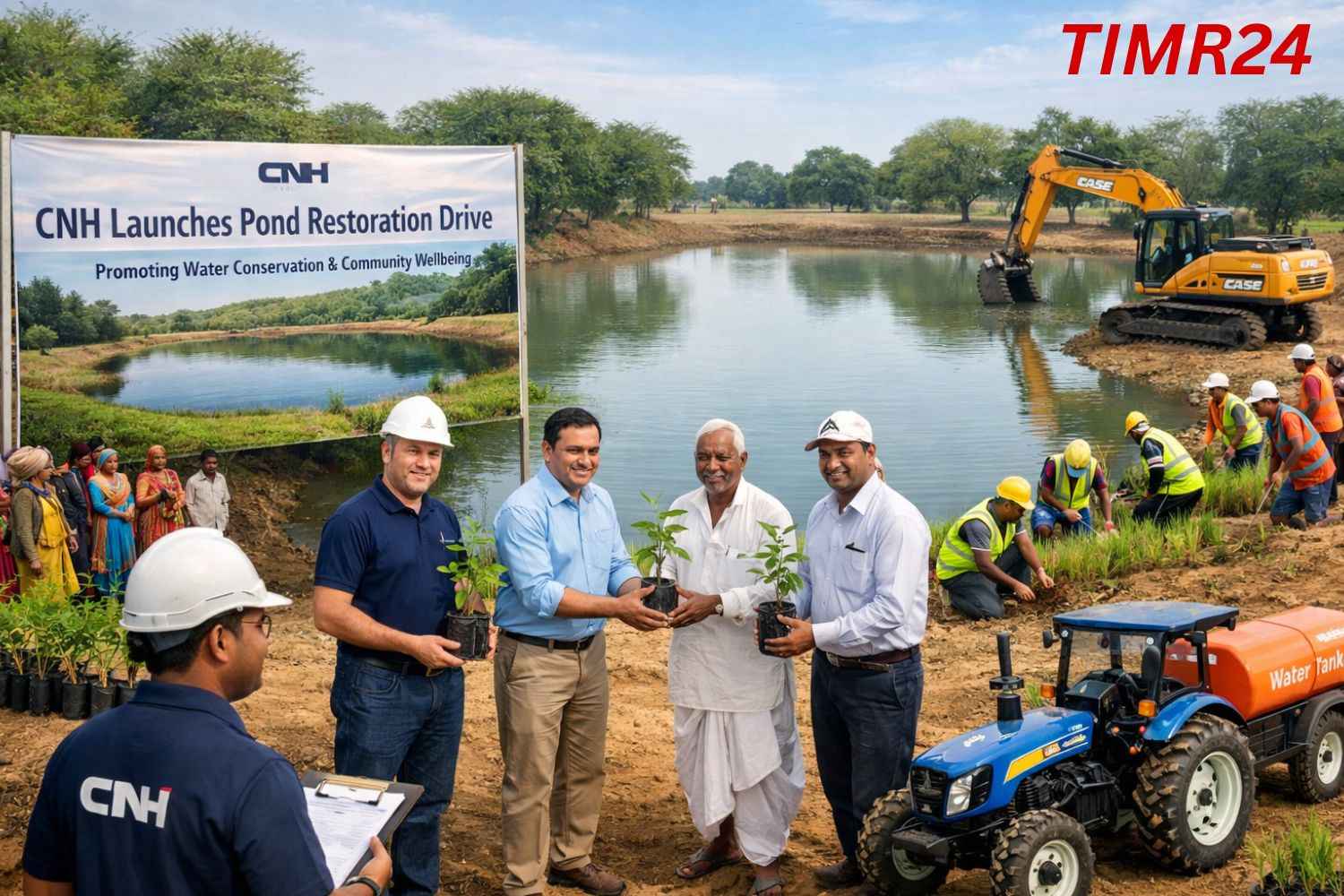
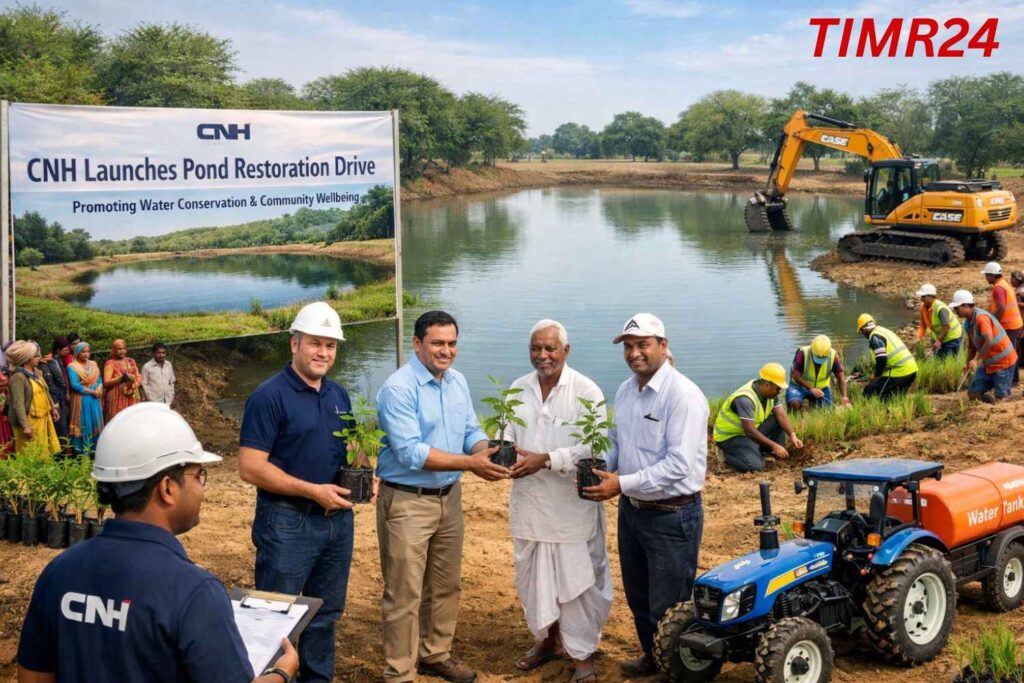
Pond restoration plays a crucial role in maintaining ecological balance, and CNH’s effort focuses on restoring neglected and dried-up ponds that once served as vital water sources for local communities. Over time, many of these ponds have either been encroached upon or have lost their capacity due to silt accumulation and lack of maintenance. By desilting, cleaning, and strengthening the structure of these ponds, the initiative aims to bring them back to life, allowing them to store rainwater effectively and recharge groundwater levels. This becomes especially important in rural and semi-urban areas where access to consistent water supply remains a challenge.
Contribute To Better Health Conditions Farmers Benefit
The initiative also reflects a broader understanding of how water conservation is directly linked to community wellbeing. When ponds are restored, they not only provide water for irrigation but also support livestock, improve sanitation, and contribute to better health conditions. Farmers benefit from improved water availability, which in turn enhances agricultural productivity and reduces dependency on erratic rainfall. In many cases, restored ponds become central to community life, fostering a sense of shared responsibility and collective action toward maintaining these resources Another important aspect of CNH’s pond restoration drive is its alignment with global sustainability goals.
Water conservation is a key component of the United Nations’ Sustainable Development Goals, particularly Goal 6, which focuses on clean water and sanitation. By actively contributing to such objectives, CNH is positioning itself as a responsible corporate entity that goes beyond business operations to create a positive environmental and social impact. The initiative also resonates with India’s national focus on water conservation, making it relevant at both global and local levels Community involvement is at the heart of this initiative, which ensures its long-term success. Rather than implementing a top-down approach, CNH is working closely with local stakeholders, including residents, farmers, and authorities.
Conducted Alongside Restoration Work
This participatory model not only ensures that the restored ponds are maintained properly but also empowers communities to take ownership of their natural resources. Awareness programs and educational campaigns are often conducted alongside restoration work to inform people about the importance of water conservation and sustainable practices From an environmental perspective, the benefits of pond restoration extend beyond water storage. Restored ponds help in increasing biodiversity by providing habitats for various species of birds, fish, and other aquatic organisms. They also contribute to soil health by maintaining moisture levels and preventing erosion.
Additionally, these water bodies act as natural buffers against extreme weather conditions, such as floods and droughts, thereby enhancing the resilience of local ecosystems The timing of this initiative is particularly important, as climate change continues to intensify water-related challenges across the world. Irregular rainfall patterns, prolonged droughts, and increasing temperatures have made water management a critical issue. In this context, decentralized solutions like pond restoration offer a practical and scalable approach to addressing water scarcity. Unlike large infrastructure projects, which often require significant investment and time, pond restoration can be implemented.
Making It Essential For Companies To Adopt
Relatively quickly and can deliver immediate benefits to communities CNH’s initiative also highlights the role of corporate social responsibility in addressing (India) environmental issues. As industries grow, their impact on natural resources becomes more significant, making it essential for companies to adopt sustainable practices. By investing in projects like pond restoration, CNH is demonstrating that businesses can play a proactive role in solving some of the most pressing challenges of our time. This not only enhances the company’s reputation but also sets an example for other organizations to follow. The initiative has the potential to create a ripple effect, inspiring similar efforts in other regions.
When communities witness the positive impact of restored ponds, they are more likely to replicate such practices, leading to a broader movement toward water conservation. Governments and non-governmental organizations can also collaborate with corporate entities to scale up these efforts, ensuring that more areas benefit from such initiatives In addition to environmental and social benefits, pond restoration can also have economic advantages. Improved water availability can lead to better crop yields, increased income for farmers, and reduced costs associated with water procurement. This, in turn, contributes to the overall development of rural economies.
Ensuring Its Sustainability Requires Regular
By addressing water scarcity, the initiative also reduces the risk of conflicts over water resources, promoting harmony within communities The success of such initiatives, however, depends on continuous monitoring and maintenance. Restoring a pond is only the first step ensuring its sustainability requires regular upkeep and community participation. CNH’s approach of involving local stakeholders and creating awareness is a step in the right direction, as it builds a sense of responsibility among people. Technology can also play a role in monitoring water levels and quality, further enhancing the effectiveness of the initiative.
CNH’s pond restoration drive is a comprehensive effort that addresses multiple dimensions of sustainability, from environmental conservation to community development. It serves as a reminder that simple yet impactful solutions can make a significant difference in (India) tackling complex challenges like water scarcity. By focusing on restoring natural resources and empowering communities, the initiative not only contributes to immediate needs but also lays the foundation for a more sustainable and resilient future.