


















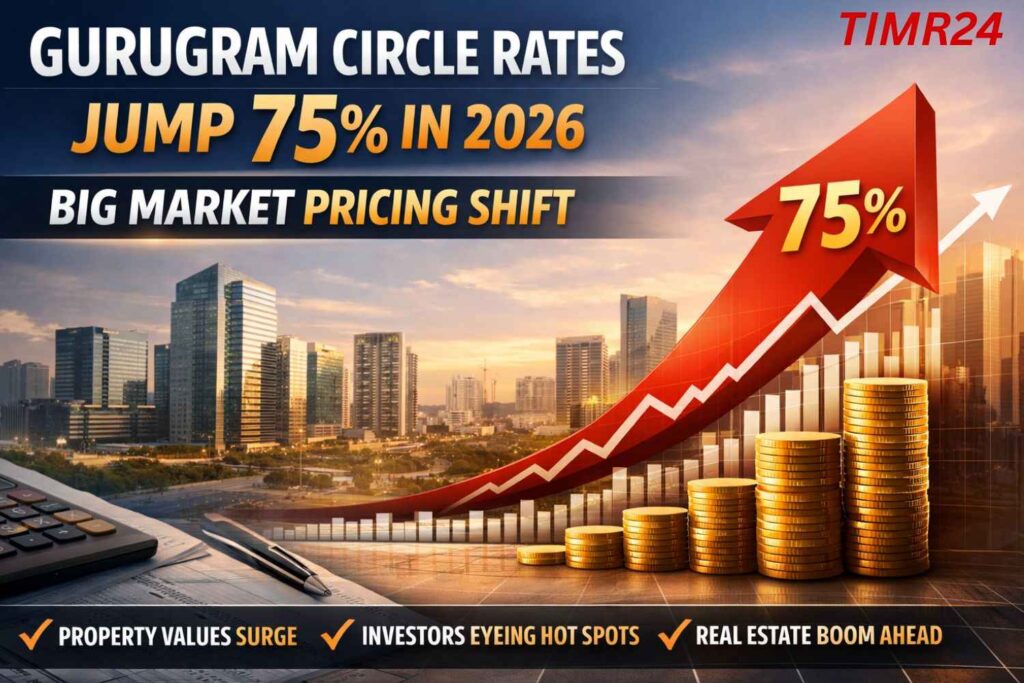
Gurugram’s real estate market is expected to undergo significant adjustments in 2026, with predictive revisions of circle rates anticipated to increase between 15% and 75%. This shift aligns rates with market values, driven by infrastructure growth and consistent demand. Key areas like the Dwarka Expressway and Southern Peripheral Road could see up to 75% increases, while established locations like Sector 29 may experience moderate hikes around 15% Residential rates in sectors 63, 63A, 64, and 67 are projected to rise by 45%, reaching ₹84,825 per sq. yard, and nearby sectors by 30% to ₹91,000 per sq. yard. Commercial rates are also set to increase significantly.
Industrial Growth With 30% Increases In Industrial Rates
Established sectors like Sector 15 and Sector 25 anticipate hikes of 45% and 75%, respectively. The Dwarka Expressway corridor is projected for high growth, especially in commercial land, with a 75% rise Manesar is projected to drive industrial growth with 30% increases in industrial rates. Overall, the expected revisions indicate an upward trend focused on emerging corridors, while established areas show more stable growth, confirming a market-aligned pricing framework The real estate landscape in Gurugram has undergone a major transformation in 2026 with the significant increase in circle rates by up to 75%. This revision is not just a routine update but a strategic.
Shift toward market-linked pricing, which reflects the evolving dynamics of the property sector. Over the past few years, Gurugram has emerged as one of India’s fastest-growing real estate hubs, driven by strong infrastructure, corporate presence, and high demand for residential and commercial properties. However, the gap between government-defined circle rates and actual market prices had widened considerably, leading to discrepancies in property transactions and revenue losses for the government. This latest revision aims to bridge that gap and bring more transparency into the system According to insights shared by Square Yards, the increase in circle rates.
Areas Have Witnessed Rapid Development, Improved
Aligns closely with current market valuations, especially in premium sectors such as Golf Course Road, Dwarka Expressway, and Sohna Road. These areas have witnessed rapid development, improved connectivity, and rising demand from both end-users and investors. The previous circle rates were significantly lower than the actual transaction values, which encouraged under-reporting and cash transactions. By increasing the minimum valuation, authorities are attempting to formalize the market and reduce such practices. This move is also expected to increase government revenue through higher stamp duty collections From a buyer’s perspective.
The immediate impact of this hike may seem challenging. Higher circle rates mean increased stamp duty and registration charges, which directly raise the overall cost of property acquisition. For instance, if a property was earlier registered at a lower government value, buyers now have to pay taxes based on the revised higher rates. This could slightly reduce short-term demand, particularly among budget-conscious buyers. However, in the long run, this change is expected to build confidence in the market by ensuring that property prices are realistic and standardized. Buyers will benefit from better transparency, reduced risk of legal disputes, and more reliable property valuations.
Enhance Brand Credibility And Attract
Developers and real estate companies are also likely to experience both opportunities and challenges due to this shift. On one hand, higher circle rates validate the true market value of their projects, especially in premium segments. This can enhance brand credibility and attract serious investors. On the other hand, developers may need to revisit their pricing strategies to ensure affordability and maintain sales momentum. Another important aspect of this development is its impact on investors. Gurugram has always been a preferred destination for real estate investment due to its proximity to Delhi, strong rental demand, and corporate ecosystem.
With circle rates now closely matching market prices, investors can expect more accurate property valuations and better returns over time. The risk of undervaluation or overpayment reduces significantly, making investment decisions more data-driven and secure The (India) government’s decision also reflects a broader trend toward formalization and digitization of the real estate sector in India. Initiatives like RERA, digital land records, and online property registration have already transformed the industry. The revision of circle rates is another step in the same direction, ensuring that property transactions are conducted fairly and efficiently. It also helps in curbing black money circulation.
Reduces Significantly Infrastructure Development
Which has been a long-standing issue in the real estate sector. By making official valuations more realistic, the scope for cash-based transactions reduces significantly Infrastructure development plays a crucial role in justifying the increase in circle rates. Gurugram has seen massive improvements in connectivity, including metro expansion, expressways, and road networks. Projects like the Dwarka Expressway and Southern Peripheral Road have boosted accessibility and increased property demand in surrounding areas. These developments have directly contributed to the rise in property values, making the revision in circle rates a logical step Despite the positive outlook.
There are certain challenges that need to be addressed. The sudden increase in circle rates may create a temporary slowdown in property registrations as buyers and sellers adjust to the new pricing structure. Some transactions may be delayed as stakeholders reassess their budgets and expectations. Additionally, there could be concerns regarding affordability, especially for first-time homebuyers. To address this, financial institutions and policymakers may need to introduce supportive measures such as lower interest rates, flexible loan options, or subsidies for affordable housing.
The 2026 hike in Gurugram circle rates marks a significant milestone in the evolution of India’s real estate sector. It signals a clear shift toward a more transparent, organized, and market-driven system. While the immediate impact may include higher transaction costs and short-term adjustments, the long-term benefits far outweigh the challenges. Buyers, investors, and developers will (India) all gain from a more reliable and fair property valuation framework. As Gurugram continues to grow as a real estate powerhouse, such reforms will play a crucial role in shaping its future and strengthening its position in the national and global property market.
Q1. What are circle rates?
Circle rates are minimum property values set by the government for property registration.
Q2. Why did Gurugram circle rates increase?
To align property prices with actual market rates and improve transparency.
Q3. How much increase has been announced?
Up to 75% increase depending on location and property type.
Q4. Will this affect property buyers?
Yes, it may increase stamp duty and registration costs.
Q5. Is this good for real estate investors?
Long-term, yes. It ensures fair valuation and reduces black money transactions.