



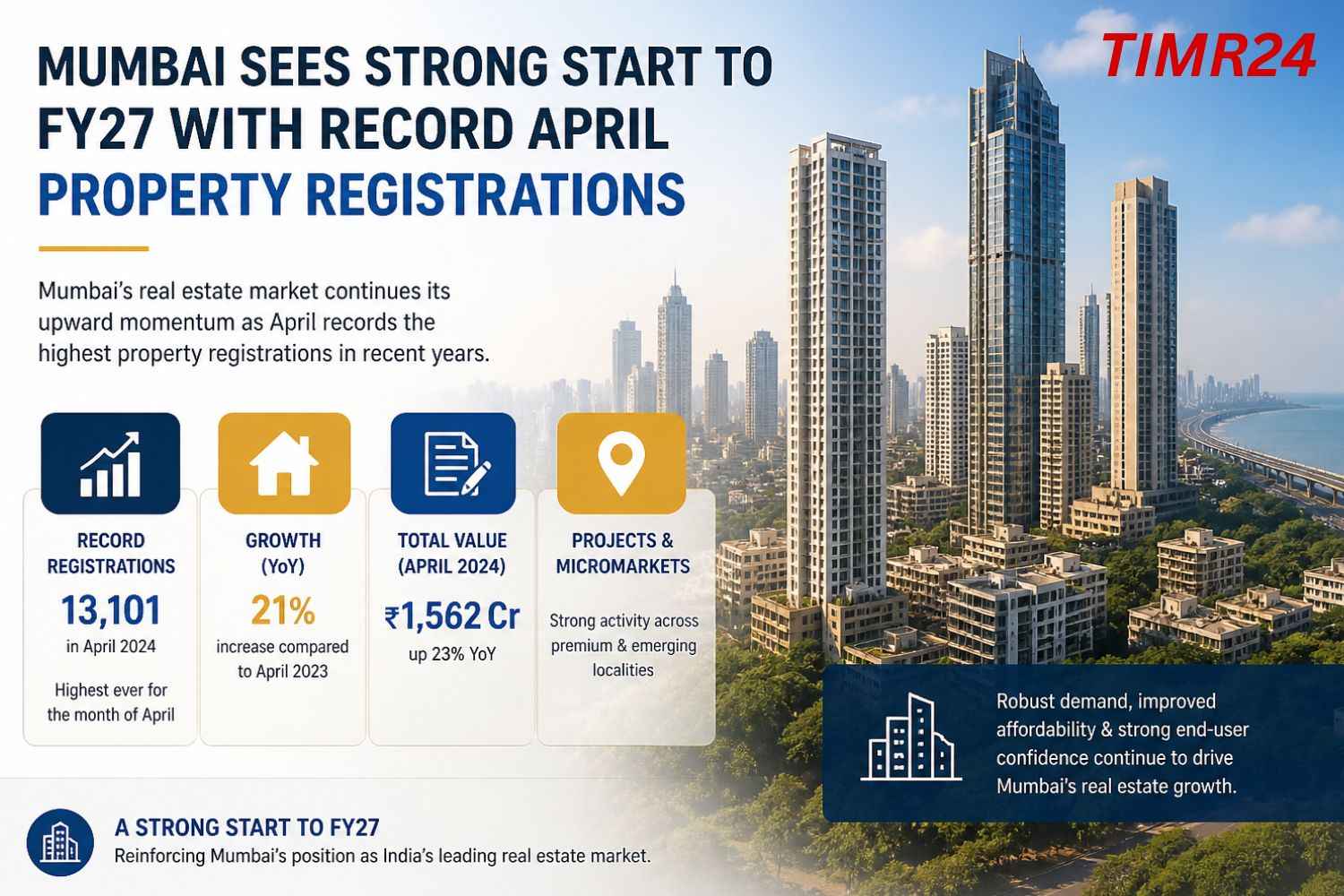









Mumbai’s residential real estate market began the financial year strongly, with April 2026 recording over 13,800 property registrations, a 6% year-on-year increase, marking the highest rate in 14 years. Despite a typical seasonal decline of 13% from March, which saw a spike in activity due to fiscal year-end rushes, stamp duty collections remained stable at over ₹1,100 crore, reflecting a shift towards mid-ticket, value-driven housing. Industry experts emphasize that this sustainable growth cycle indicates a genuine end-user demand rather than speculative activity, illustrating evolving buyer preferences towards quality living and practical ticket sizes. Overall, the data signals a balanced market with robust buyer confidence.
Primary Reasons Behind Growth
The real estate market in Mumbai has demonstrated a powerful start to FY27, with April witnessing record-breaking property registrations. This surge signals renewed confidence among homebuyers and investors, reinforcing the city’s position as India’s financial and real estate capital. After a period of cautious recovery, the market is now entering a phase of steady expansion, driven by favorable economic conditions and policy support One of the primary reasons behind this growth is the sustained demand for residential properties across both mid-income and premium segments. Buyers who had previously postponed purchasing decisions due to uncertainty are now actively entering the market.
The stability in interest rates has played a crucial role in enabling this shift, making home loans more accessible and predictable for long-term financial planning. Additionally, developers are offering flexible payment plans and incentives, which further encourage buyers to finalize their investments Infrastructure development has also significantly contributed to the rise in property registrations. Projects such as metro expansions, coastal roads, and improved connectivity across suburban areas are transforming how people perceive location value. Areas that were once considered peripheral are now emerging as prime investment destinations.
Mumbai Continues To Attract Professionals
This aligns with infrastructure-led expansion was highlighted as a key driver for real estate demand Another important factor influencing this growth is urban migration. Mumbai continues to attract professionals, entrepreneurs, and businesses from across the country. The city’s economic opportunities create consistent housing demand, particularly in affordable and mid-range segments. This trend is further supported by the rise of hybrid work models, where individuals prefer homes with better amenities, larger spaces, and improved connectivity rather than proximity to traditional business districts.
Government initiatives and policy stability have also created a favorable environment for real estate transactions. Transparent regulations, digitization of property registration processes, and reduced stamp duty benefits in certain periods have helped streamline transactions. These efforts have not only improved efficiency but also increased trust among buyers. For a broader understanding of policy-driven growth India and Ministry of Housing and Urban Affairs which continue to shape housing policies and financial frameworks The commercial real estate segment, although not directly reflected in residential registrations, also contributes to the overall positive sentiment.
Premium Properties, Real Estate As A Stable Asset
As businesses expand and office demand stabilizes, it creates a ripple effect across the housing market. Employees relocating or upgrading their residences drive additional demand, especially in well-connected micro-markets Interestingly, luxury housing has also shown (India) notable traction. High-net-worth individuals are increasingly investing in premium properties, real estate as a stable asset class amid global uncertainties. This trend indicates a diversification of demand across income groups, strengthening the overall market ecosystem From an investment perspective, Mumbai continues to outperform many other metropolitan cities. The consistent appreciation in property values.
Coupled with strong rental yields in certain areas, makes it an attractive destination for both domestic and international investors. Reports from Knight Frank and JLL suggest that Mumbai remains among the top real estate investment hubs in Asia Technology has also played a transformative role in boosting property registrations. Digital platforms now allow buyers to explore projects, compare prices, and complete documentation online. This has reduced dependency on traditional intermediaries and increased transparency in transactions. The integration of technology with real estate processes is expected to further accelerate market growth in the coming years.
Affect Buyer Sentiment However, Overall Outlook
Despite the positive momentum, certain challenges remain. Property prices in prime locations continue to be high, which can limit affordability for first-time buyers. Additionally, regulatory compliance and project delays in some cases may affect buyer sentiment. However, the overall outlook remains optimistic, with industry experts predicting sustained growth throughout FY27 The suburban regions of Mumbai are expected to witness the highest growth in the coming months. Improved infrastructure and relatively affordable pricing make these areas attractive for both end-users and investors.
Where connectivity improvements led to increased real estate activity in surrounding regions The strong start to FY27 sets a positive tone for the rest of the year. If current trends continue, Mumbai could achieve one of its best-performing years in terms of property registrations and overall real estate growth. The combination of economic stability, infrastructure development, and evolving buyer preferences creates a robust foundation for long-term expansion.
Mumbai’s record property registrations in April are not just a short-term spike but a reflection of deeper structural growth in the real estate sector. The city continues (India) to adapt to changing market dynamics while maintaining its position as a leading real estate destination. As buyers become more informed and developers innovate to meet their expectations, the market is poised for sustained success in FY27 and beyond.
Q1. Why did Mumbai see record property registrations in April FY27?
Due to strong demand, stable interest rates, and improved infrastructure.
Q2. Which segments are driving growth?
Mid-income, affordable housing, and luxury segments all contributed.
Q3. Is this growth expected to continue?
Yes, experts predict sustained momentum throughout FY27.
Q4. How does infrastructure impact property demand?
Better connectivity increases location value and attracts buyers.
Q5. Is Mumbai still a good investment option?
Yes, due to consistent appreciation and strong rental demand.