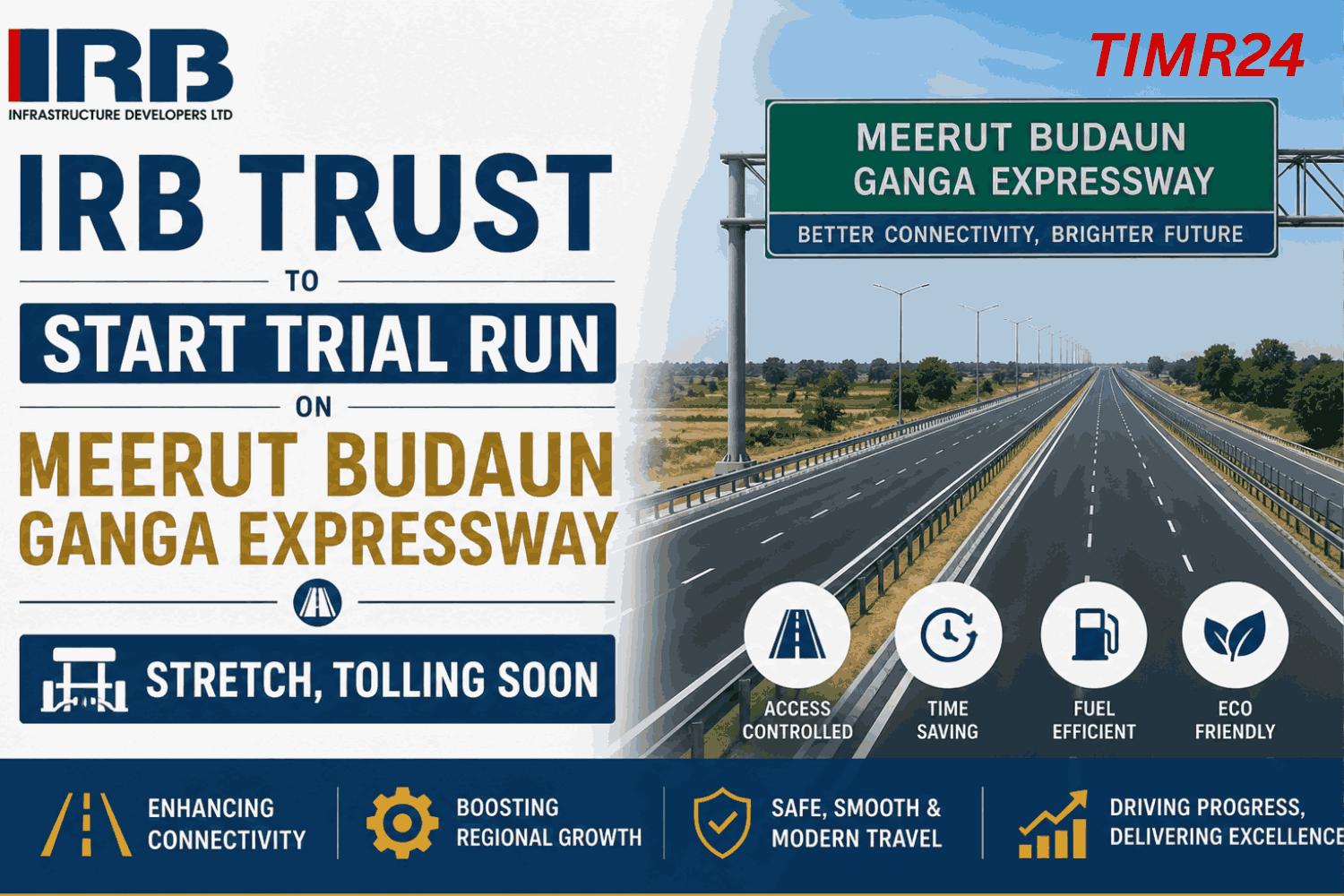















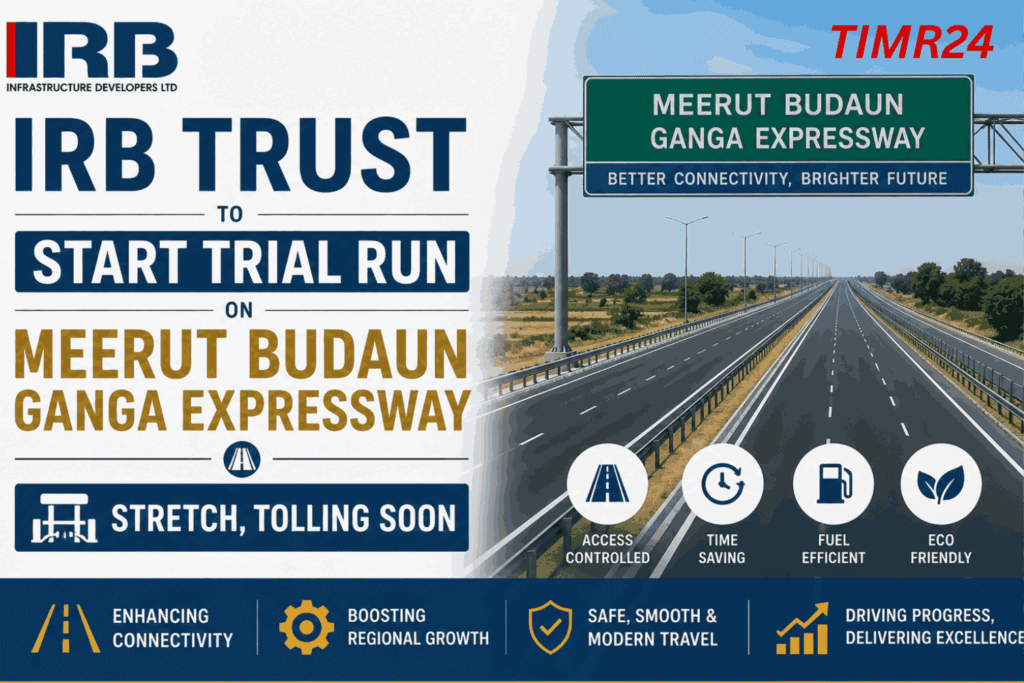
The Meerut Budaun Expressway Limited, part of the IRB Infrastructure Trust, will commence trial traffic operations on the Ganga Expressway’s Meerut–Budaun section from April 30, 2026. This project symbolizes a significant milestone for IRB, featuring a 1 km bridge over the Ganga and enhancing connectivity across six districts in Uttar Pradesh. Developed at a cost of Rs 6,538 crore, the six-lane corridor is expected to reduce travel times by nearly 50% and supports key economic growth through better logistics and accessibility, including connections to Delhi, Haryana, and Punjab. The project also includes substantial infrastructure like nine flyovers and 90.
Ganga Expressway Represents A Major Milestone
Vehicular underpasses, with a 30-year concession period extendable to 36 years. With this operational, all assets in IRB’s portfolio are revenue-generating The recent development where IRB Infrastructure Trust has initiated a trial run on the Meerut–Budaun stretch of the Ganga Expressway represents a major milestone in India’s rapidly evolving infrastructure landscape, especially in Uttar Pradesh which has emerged as one of the fastest-growing states in terms of expressway connectivity and road network expansion. This trial phase is not just a routine operational step but a critical testing stage that ensures the expressway is fully equipped to handle real-time traffic conditions.
Toll collection systems, and safety protocols before opening it to the public for commercial use. The Ganga Expressway project itself has been envisioned as a transformational corridor that will significantly reduce travel time between western and eastern Uttar Pradesh (India) while also boosting industrial development, logistics efficiency, and real estate growth along its route, making it a key project frequently covered the trial run now underway, authorities are closely monitoring vehicle movement, toll plaza functionality, electronic toll collection systems, and emergency response mechanisms to ensure that once tolling begins, commuters experience seamless and efficient travel without disruptions.
Global Benchmarks And Support Increasing Traffic
This expressway is being developed with modern engineering standards, including multi-lane high-speed corridors, advanced drainage systems, and safety features such as crash barriers, signage, and surveillance infrastructure, all of which are designed to meet global benchmarks and support increasing traffic demand in the coming years. The involvement of IRB Infrastructure Trust also reflects the growing role of private participation and investment trusts in India’s infrastructure sector, where public-private partnerships are accelerating the pace of development and improving project execution efficiency Once operational, the Meerut–Budaun stretch will not only ease.
Congestion on existing routes but also create new economic opportunities by improving connectivity to smaller towns and industrial hubs, thereby encouraging investment in manufacturing, warehousing, and commercial real estate projects along the corridor. The expected (India) start of tolling indicates that the project is nearing completion readiness, and it will also contribute to revenue generation that can be reinvested into maintenance and future infrastructure projects, ensuring long-term sustainability. From a broader perspective, projects like the Ganga Expressway align with India’s national infrastructure pipeline and vision of becoming a $5 trillion economy.
E-Commerce By Enabling Faster Movement
Where efficient transport networks play a crucial role in reducing logistics costs and improving supply chain efficiency across states. Moreover, the expressway is expected to positively impact sectors such as tourism, agriculture, and e-commerce by enabling faster movement of goods and people, thus integrating regional markets more effectively. The trial phase also serves as a confidence-building measure for stakeholders, including investors, government authorities, and the general public, as it demonstrates that the project is progressing as planned and is close to delivering its intended benefits. In addition, the expressway’s development is likely to trigger a surge in real estate demand in nearby areas.
As improved connectivity often leads to increased land value and new residential and commercial developments, making it the success of projects like this will set a benchmark for future expressway developments across the country, showcasing how strategic planning, efficient execution, and advanced technology can come together to create world-class transport systems.
Overall, the commencement of the trial run on the Meerut–Budaun stretch is a clear indication that the Ganga Expressway is moving closer to becoming fully (India) operational, and once tolling begins, it will mark the beginning of a new era of connectivity and economic growth for Uttar Pradesh and beyond, reinforcing the importance of infrastructure as a backbone of national development.
Q1. What is the latest update on Meerut–Budaun Ganga Expressway?
Trial run has started and tolling is expected soon.
Q2. Who is managing this expressway stretch?
It is handled by IRB Infrastructure Trust.
Q3. When will toll collection begin?
After successful trial completion, tolling may start shortly.
Q4. Why is this expressway important?
It improves connectivity and reduces travel time across UP.
Q5. What benefits will users get?
Faster travel, better road quality, and improved logistics.