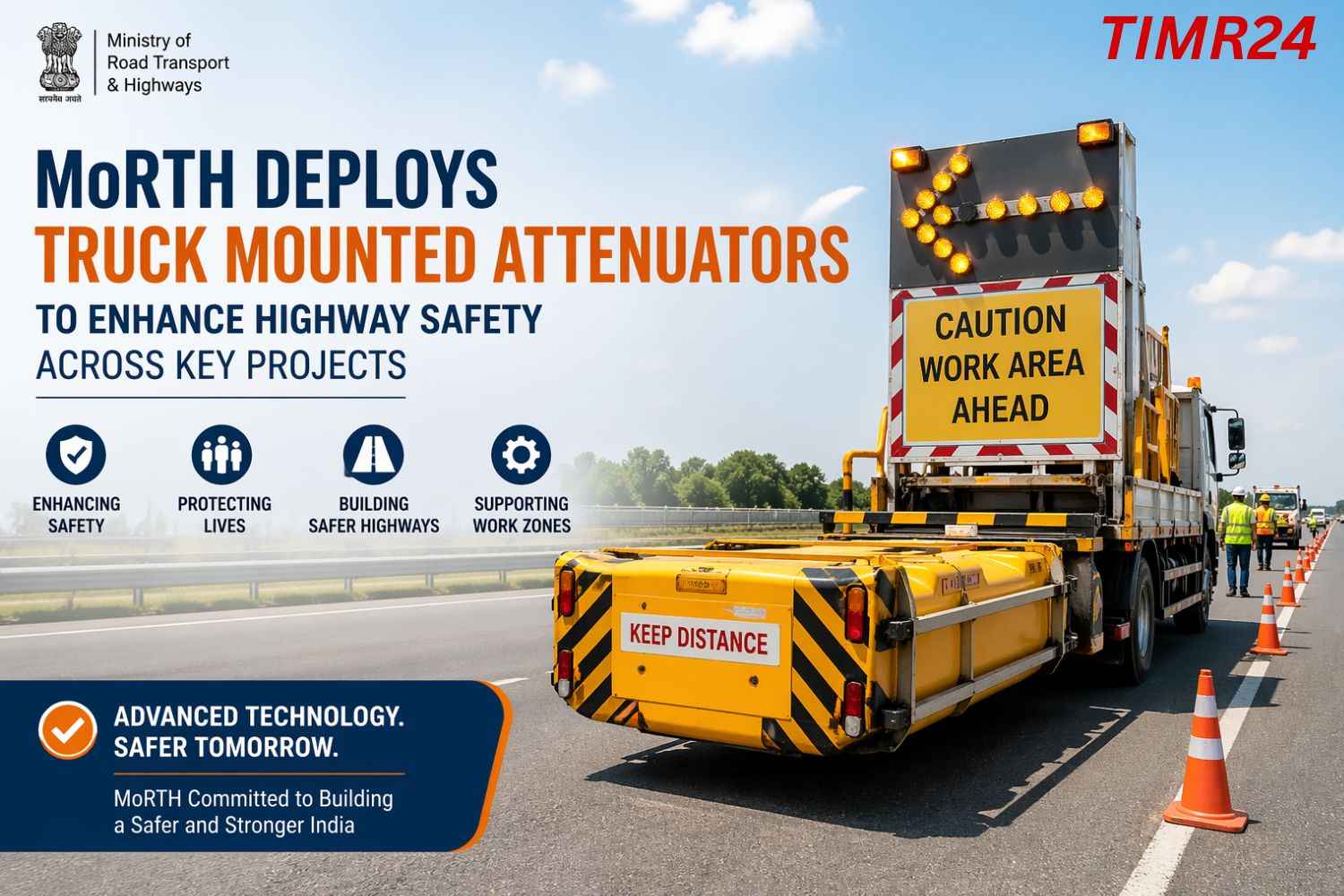
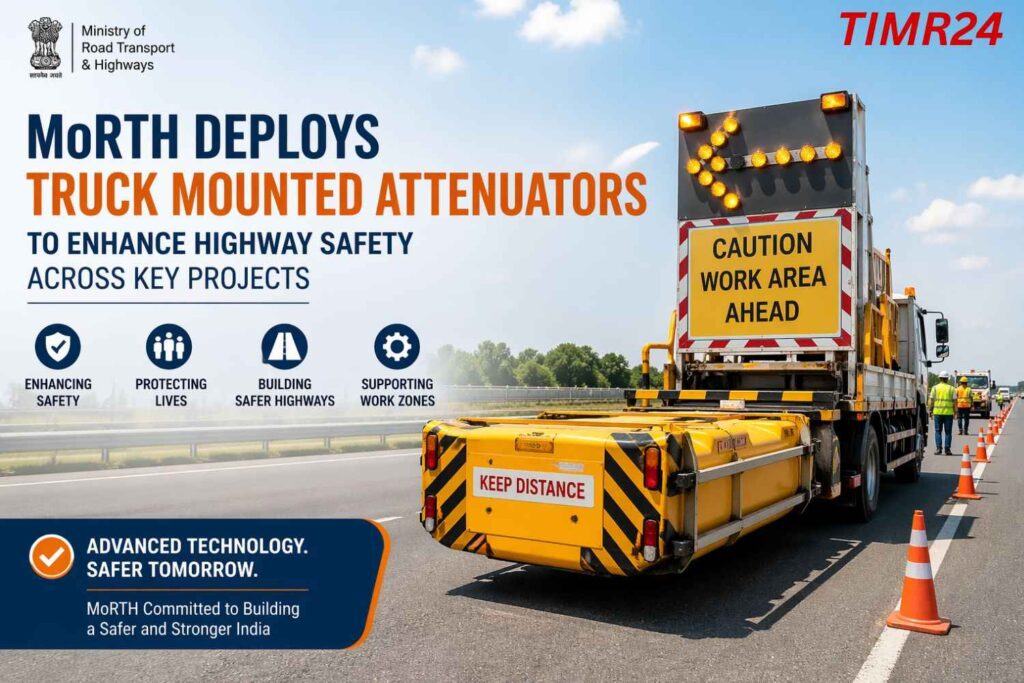
The deployment of Truck Mounted Attenuators (TMAs) by the Ministry of Road Transport and Highways marks a significant step forward in strengthening road safety across India’s rapidly expanding highway network. As infrastructure development accelerates, ensuring the safety of both commuters and construction workers has become a top priority. This initiative reflects a strategic shift toward adopting advanced safety technologies that are already widely used in developed nations India has one of the largest road networks in the world, and with this scale comes a growing challenge of managing safety risks, particularly in high-speed highway corridors.
Construction zones are especially vulnerable areas where accidents frequently occur due to sudden lane diversions, reduced visibility, and unpredictable driver behavior. By introducing TMAs, MoRTH is addressing these risks head-on, providing a robust solution that can significantly reduce the severity of collisions Truck Mounted Attenuators are specialized devices installed at the rear of heavy vehicles, designed to absorb the energy of an impact during a collision. When a vehicle crashes into a truck equipped with a TMA, the device compresses and dissipates the force, thereby reducing damage to both vehicles and minimizing the risk of serious injuries or fatalities.
Deploying TMAs, MoRTH Is Creating A Safer Working
This technology is particularly effective in work zones where stationary or slow-moving vehicles are present, making them potential hazards for fast-moving traffic The importance of such safety measures cannot be overstated. According to various reports, a significant percentage of road accidents in India occur near construction zones or areas under maintenance. These incidents not only result in loss of life but also cause project delays and financial setbacks. By deploying TMAs, MoRTH is creating a safer working environment for laborers while ensuring smoother traffic flow and reduced disruptions Another critical aspect of this initiative is its alignment with global best practices.
Countries like the United States and those in Europe have long adopted TMAs as a standard safety requirement for highway projects. By integrating similar technologies, India is moving closer to international safety standards, enhancing the overall quality and reliability of its infrastructure projects. This also boosts investor confidence and supports the country’s vision of becoming a global leader in infrastructure development The implementation of TMAs is expected to have a ripple effect across the construction and transportation sectors. Contractors and project developers will need to adopt these safety measures as part of their operational protocols, leading to.
Scale And Complexity Of Operations Demand
A culture shift where safety becomes a core component of project execution rather than an afterthought. This is particularly relevant in large-scale projects such as expressways, economic corridors, and smart city developments, where the scale and complexity of operations demand advanced safety solutions From a policy perspective, this move demonstrates the government’s commitment to reducing road fatalities, a key objective under various national road safety programs. The integration of TMAs complements other initiatives such as improved signage, better lighting, stricter enforcement of traffic rules, and public awareness campaigns.
Together, these measures create a comprehensive framework aimed at making Indian roads safer for everyone The economic implications of enhanced road safety are also noteworthy. Accidents not only lead to human loss but also result in significant economic costs, including medical expenses, vehicle damage, and productivity loss. By preventing accidents or reducing their severity, TMAs contribute to lowering these costs, thereby supporting sustainable economic growth. Moreover, safer highways encourage smoother logistics and transportation, which are critical for trade and commerce In addition to their functional benefits, TMAs also serve as a visual cue for drivers, signaling.
Enhance Overall Road Discipline And Awareness
The presence of a work zone ahead. This psychological aspect plays an important role in influencing driver behavior, prompting them to slow down and exercise caution. When combined with proper traffic management systems, TMAs can significantly enhance (India) overall road discipline and awareness The success of this initiative will depend on effective implementation and regular monitoring. It is essential to ensure that TMAs are properly installed, maintained, and used in accordance with established guidelines. Training programs for drivers and construction personnel will also play a crucial role in maximizing the effectiveness of these devices.
Continuous evaluation and feedback mechanisms can help identify areas for improvement and ensure that the technology delivers the desired outcomes The deployment of TMAs could pave the way for the adoption of other advanced safety technologies in India’s road infrastructure. Innovations such as intelligent traffic management systems, automated warning devices, and connected vehicle technologies could further enhance safety and efficiency. By embracing such advancements, India can build a modern, resilient, and future-ready transportation network.
Introduction of Truck Mounted Attenuators by MoRTH represents a proactive and forward-thinking approach to road safety. It underscores the importance of integrating technology with infrastructure development to address evolving challenges. As India continues to (India) expand its highway network, initiatives like these will play a crucial role in ensuring that progress is not only rapid but also safe and sustainable. This step not only protects lives but also strengthens the foundation for a more secure and efficient transportation ecosystem across the country.