


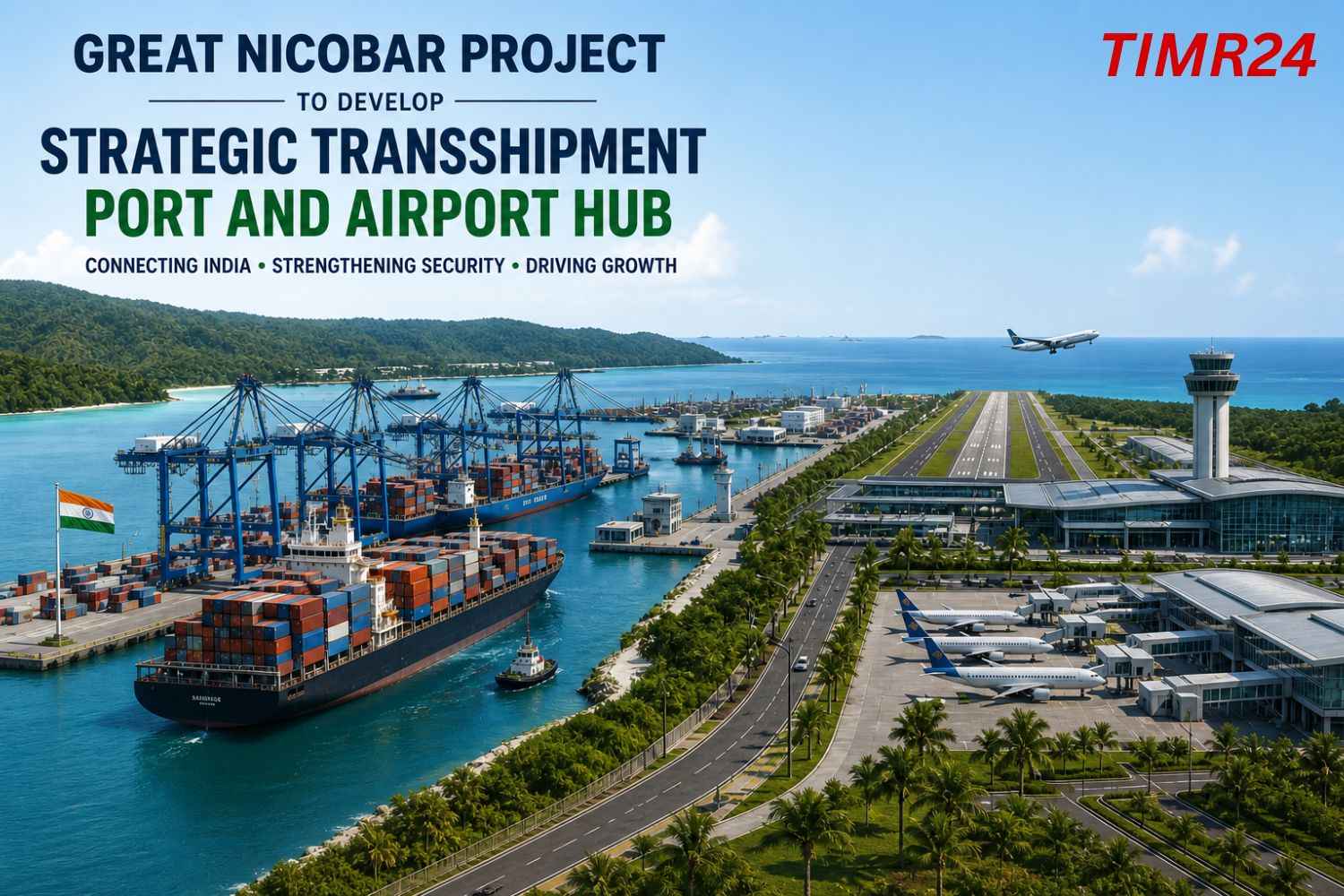













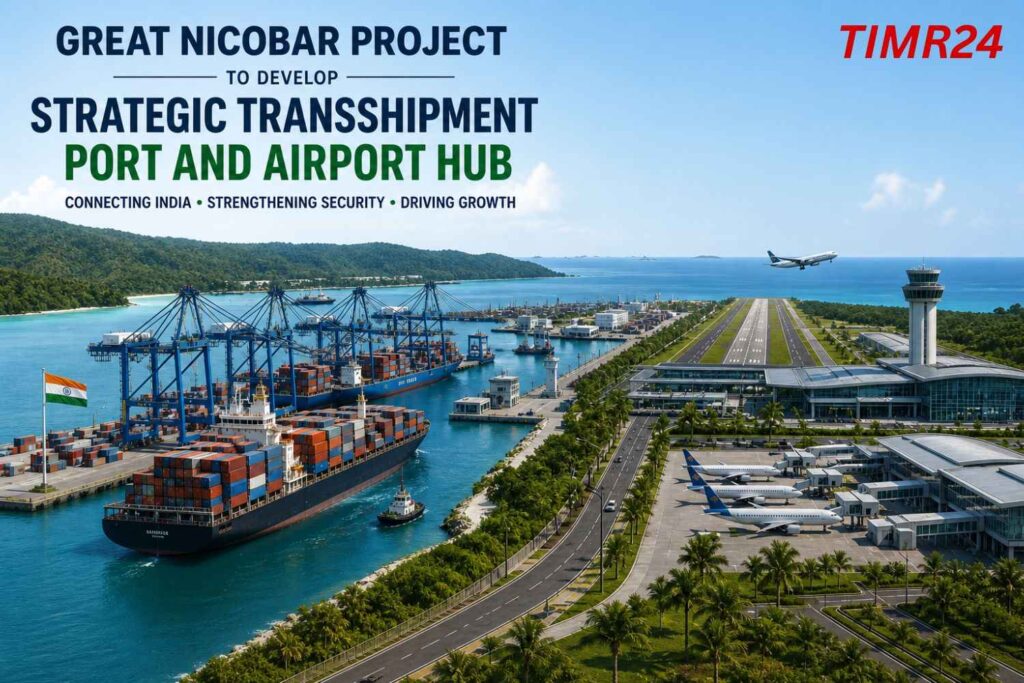
The Great Nicobar Project seeks to establish Great Nicobar as a strategic maritime and economic hub through infrastructure developments including a 14.2 million TEU international container terminal, a greenfield airport, and a 450 MVA power plant. Positioned near the East–West shipping route, it aims to decrease India’s reliance on foreign transshipment facilities, enhancing logistics, trade capacity, and national security in the Indo-Pacific. The project will be executed in three phases by 2047, covering 166 sq km, and will adhere to an environmental framework ensuring regulatory compliance and monitoring The Great Nicobar Project is one of the most ambitious.
Nicobar Islands Global Trade And Logistics Hub
Infrastructure developments planned by Government of India, aiming to transform the southernmost part of the Andaman and Nicobar Islands into a global trade and logistics hub. Located close to the Malacca Strait, one of the busiest shipping routes in the world, the project is strategically designed to strengthen India’s position in international maritime trade while enhancing connectivity and defense capabilities The development includes a deep-sea transshipment port, a greenfield international airport, a power plant, and a township. This integrated approach ensures that the region evolves into a self-sustaining economic zone capable of handling global cargo traffic efficiently.
The project is expected to significantly reduce India’s dependence on foreign ports such as Colombo Port and Singapore Port for transshipment activities From an economic standpoint, the Great Nicobar Project has the potential to redefine India’s logistics ecosystem. Currently, a large portion of India’s cargo is transshipped through foreign ports, leading to increased costs and time delays. By establishing a domestic transshipment hub, India can retain more value within its economy, reduce logistics expenses, and improve supply chain efficiency. This aligns with broader national initiatives like PM Gati Shakti, which focuses on integrated infrastructure development.
Geopolitical Competition, Especially Involving
Another critical aspect of the project is its strategic importance. The Andaman and Nicobar Islands hold immense defense value due to their proximity to key international sea lanes. Strengthening infrastructure in this region enhances India’s surveillance and response (India) capabilities, particularly in the Indo-Pacific region. With increasing geopolitical competition, especially involving China, the development of Great Nicobar becomes even more significant in securing maritime interests and maintaining regional stability The proposed international airport is expected to handle both civilian and military operations, further boosting connectivity between mainland India and remote island territories.
This will not only facilitate tourism but also improve disaster response and emergency logistics. The integration of air and sea infrastructure makes the project unique, positioning it as a multi-modal logistics hub However, despite its economic and strategic benefits, the Great Nicobar Project has sparked debates around environmental sustainability. The region is known for its rich biodiversity, including unique flora and fauna, coral reefs, and dense tropical forests. Environmentalists have raised concerns about deforestation, habitat loss, and the impact on indigenous communities such as the Nicobarese and Shompen tribes Balancing development with ecological preservation remains a key challenge.
Transparent Implementation To Ensure Minimal Environmental
Authorities have emphasized that the project will follow sustainable practices, including compensatory afforestation and wildlife conservation measures. Still, the scale of the project necessitates careful monitoring and transparent implementation to ensure minimal environmental damage From a global trade perspective, the project has the potential to place India among leading maritime nations. By leveraging its geographic advantage, India can attract international shipping lines, increase port revenues, and create a competitive alternative to established transshipment hubs. This will also support the growth of export-oriented industries by providing faster and more cost-effective logistics solutions.
Employment generation is another major benefit. The project is expected to create thousands of direct and indirect jobs across sectors such as construction, logistics, tourism, and services. This will contribute to regional development and improve living standards in the Andaman and Nicobar Islands In terms of investment, the project represents a significant financial commitment, reflecting the government’s long-term vision for infrastructure-led growth. Public-private partnerships are likely to play a crucial role in its execution, bringing in expertise and capital from global players.
The success of the Great Nicobar Project will depend on effective planning, stakeholder collaboration, and sustainable execution. If implemented (India) successfully, it could become a game-changer for India’s maritime sector, boosting trade competitiveness and strengthening national security.
Q1. What is the Great Nicobar Project?
It is a large-scale infrastructure initiative to develop a transshipment port, airport, and township in Great Nicobar Island.
Q2. Why is this project important for India?
It reduces dependence on foreign ports and boosts trade efficiency and national security.
Q3. Where is Great Nicobar located?
It is part of the Andaman and Nicobar Islands, near the Malacca Strait.
Q4. What are the environmental concerns?
Deforestation, biodiversity loss, and impact on indigenous communities are key concerns.
Q5. How will it benefit the economy?
It will create jobs, improve logistics, and increase India’s global trade competitiveness.