



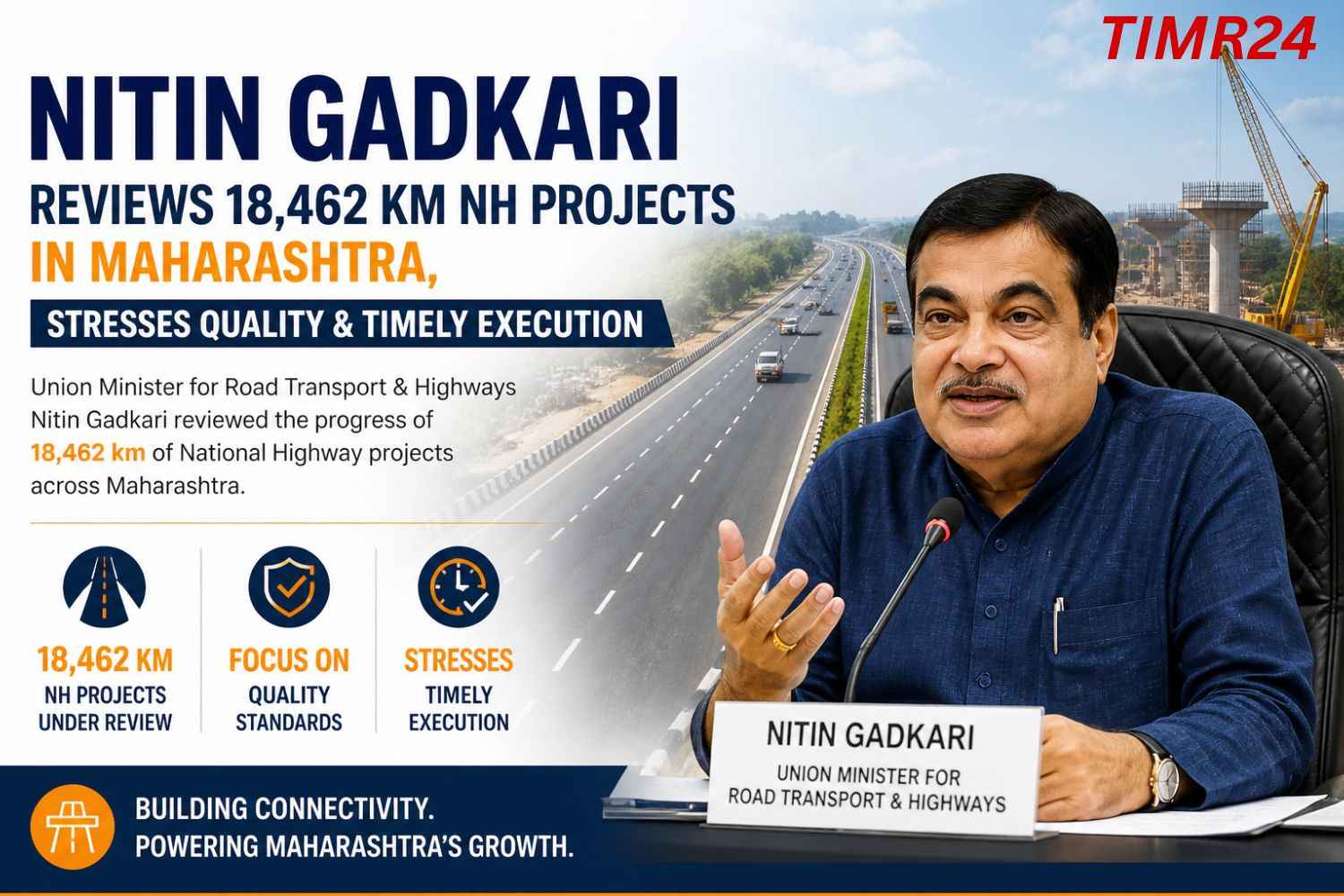










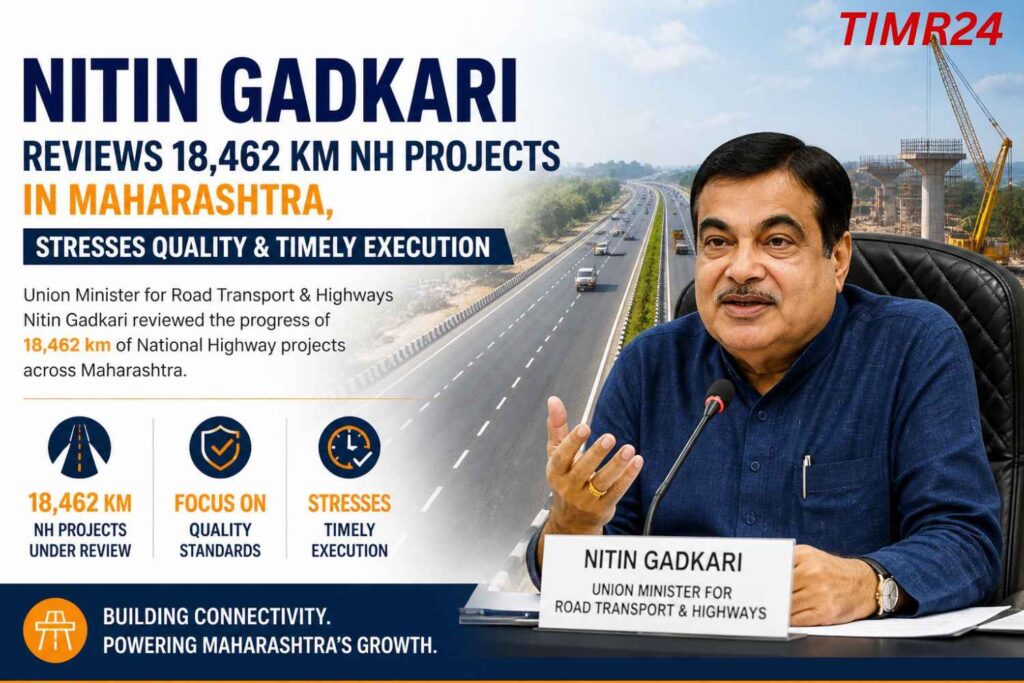
Union Minister Nitin Gadkari reviewed the quality and maintenance of 18,462 km of National Highways in Maharashtra and 288 km in Goa, based on feedback from media and social platforms. The meeting, attended by key officials, focused on timely execution, adherence to quality standards, and the use of advanced construction technologies for sustainable highway infrastructure. Gadkari emphasized the need for improved field-level work, robust quality checks, and pre-monsoon preparedness to enhance asset longevity and ensure commuter safety.
Maharashtra Plays A Crucial Role In India’s Industrial
The recent review conducted by Nitin Gadkari on 18,462 km of National Highway projects in Maharashtra marks a significant step towards strengthening India’s infrastructure backbone, especially in one of the country’s most economically vital states. Maharashtra plays a crucial role in India’s industrial and logistics ecosystem, with cities like Mumbai, Pune, and Nagpur acting as major economic hubs. Therefore, the development and maintenance of high-quality highways are not just a regional priority but a national necessity. During this comprehensive review, Gadkari emphasized that infrastructure development should not only focus on speed but also on maintaining.
Global standards of quality, durability, and safety. This approach reflects a shift from quantity-driven expansion to quality-driven execution, ensuring that highways remain sustainable and efficient in the long term The involvement of National Highways Authority of India in executing these large-scale projects is central to achieving the government’s vision. NHAI has been at the forefront of highway development in India, and its role in Maharashtra is particularly critical due to the complexity of terrain, urban congestion, and high traffic demand. Gadkari’s directive to ensure timely completion comes at a time when delays in infrastructure projects.
Planning To Construction And Final Delivery
Often lead to cost overruns and inconvenience for commuters. By setting strict deadlines and monitoring mechanisms, the government aims to eliminate bottlenecks and enhance efficiency across all stages of project execution, from planning to construction and final delivery Another key aspect highlighted during the review is the adoption of advanced technologies in highway construction. Modern techniques such as digital monitoring, automated quality checks, and the use of sustainable materials are being encouraged to improve the overall lifespan and performance of roads. This technological integration not only reduces human error but also ensures.
Transparency and accountability in project implementation. Gadkari has consistently advocated for innovation in road construction, and this review reinforces his commitment to transforming India’s infrastructure landscape into one that matches international benchmarks. The focus on green and sustainable practices also aligns with global trends, where infrastructure development is increasingly being evaluated based on its environmental impact The economic implications of these highway projects are substantial. Improved road connectivity directly contributes to faster movement of goods and services, reducing logistics costs and boosting trade efficiency.
Strengthening Supply Chains And Attracting
Maharashtra, being a major contributor to India’s GDP, stands to benefit significantly from enhanced highway infrastructure. Better roads facilitate smoother transportation between industrial zones, ports, and markets, thereby strengthening supply chains and attracting further investment. This is particularly important for sectors such as manufacturing, agriculture, and e-commerce, which rely heavily on efficient logistics networks. By prioritizing timely execution, the government aims to ensure that these economic benefits are realized without unnecessary delays.
From a social perspective, the development of high-quality highways also improves the daily lives of citizens. Reduced travel time, increased road safety, and better connectivity between rural and urban areas are some of the key advantages. In Maharashtra, where many regions still face connectivity challenges, these projects can bridge the gap and promote inclusive growth. Gadkari’s emphasis on safety standards is especially noteworthy, as road accidents remain a significant concern in India. By enforcing strict quality checks and safety measures, the government aims to create a safer transportation environment for all users, including pedestrians, cyclists, and motorists.
Sense Of Responsibility And Professionalism Across
The review also underscores the importance of accountability among contractors and officials involved in these projects. Gadkari has made it clear that negligence, delays, and substandard work will not be tolerated. This strict stance is expected to instill a sense of responsibility and professionalism across the entire project ecosystem. By holding stakeholders accountable, the government seeks to ensure that public funds are utilized effectively and that projects deliver maximum value to the citizens. This approach also enhances public trust in infrastructure initiatives, which is crucial for the long-term success of such large-scale developments.
In addition to quality and timeliness, the review highlighted the need for better coordination among various stakeholders, including state authorities, central agencies, and private contractors. Infrastructure projects of this scale require seamless collaboration to address (India) challenges such as land acquisition, environmental clearances, and resource allocation. By fostering better communication and coordination, the government aims to minimize disruptions and ensure smooth project execution. This collaborative approach is essential for achieving the ambitious targets set under India’s infrastructure development plans.
Robust And Integrated Transportation Network
Furthermore, the focus on Maharashtra’s highway network is part of a broader national strategy to enhance connectivity across the country. Initiatives such as Bharatmala Pariyojana and other corridor-based developments are designed to create a robust and integrated transportation network. The review of 18,462 km of highways in Maharashtra is a significant component of this larger vision, highlighting the state’s importance in India’s infrastructure roadmap. By strengthening key corridors, the government aims to improve connectivity between major economic centers and promote balanced regional development.
Review conducted by Nitin Gadkari represents a comprehensive and forward-looking approach to infrastructure development in Maharashtra. By prioritizing quality, timely execution, technological innovation, and accountability, the government is setting new standards for (India) highway construction in India. These efforts are expected to yield long-term benefits in terms of economic growth, improved connectivity, and enhanced quality of life for citizens. As Maharashtra continues to play a pivotal role in India’s development journey, the successful implementation of these highway projects will be crucial in sustaining the state’s growth momentum and contributing to the nation’s overall progress.
Q1. What did Nitin Gadkari review?
He reviewed 18,462 km of National Highway projects in Maharashtra.
Q2. What was the main focus of the review?
Quality construction, timely execution, and accountability.
Q3. Which agency is mainly responsible?
The National Highways Authority of India (NHAI).
Q4. Why is this review important?
It ensures faster infrastructure growth and better connectivity.
Q5. What will be the impact on citizens?
Reduced travel time, safer roads, and economic development.