

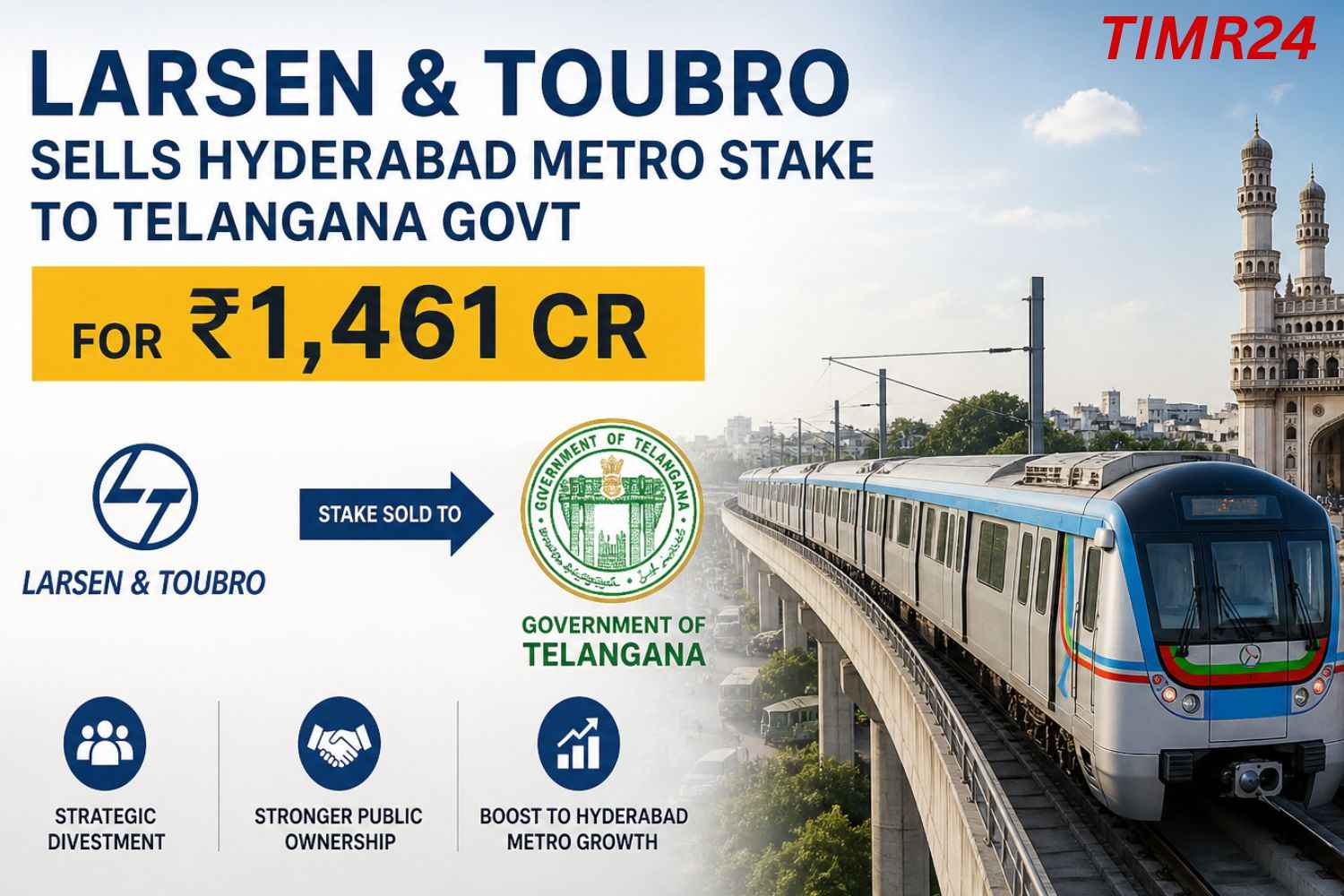





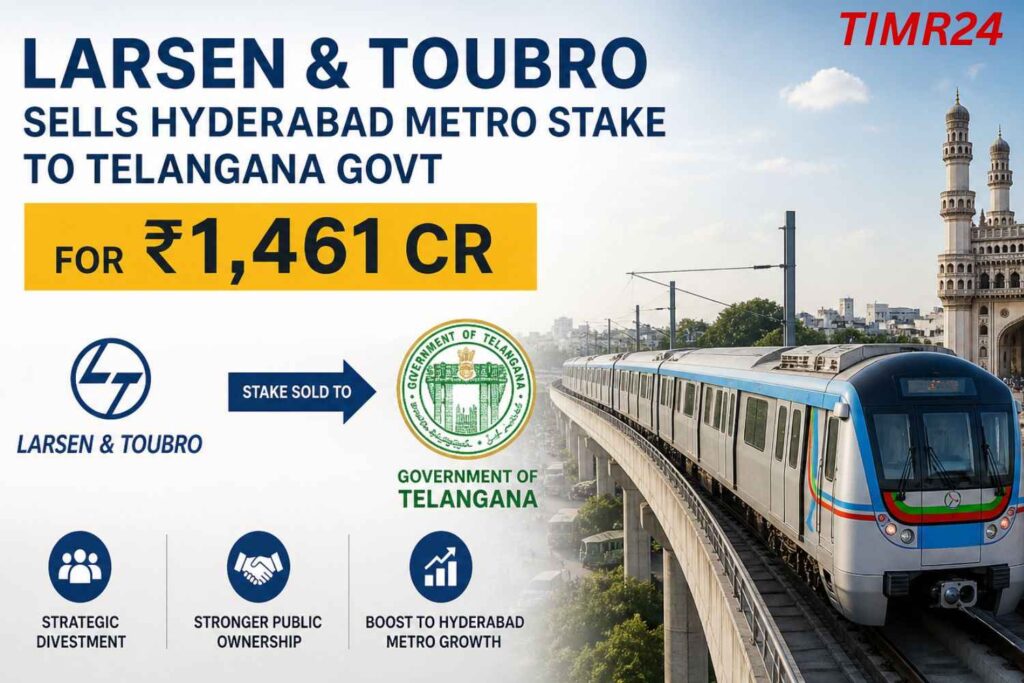
Larsen & Toubro has agreed to sell its entire stake in L&T Metro Rail Hyderabad Limited to Hyderabad Metro Rail Limited for Rs 1,461.47 crore. After the transaction, L&T Metro Rail (Hyderabad) Limited will no longer be a subsidiary of Larsen & Toubro, indicating a major change in the ownership of the Hyderabad Metro project The recent decision by Larsen & Toubro to divest its stake in the Hyderabad Metro marks a significant development in India’s infrastructure and urban mobility landscape. The ₹1,461 crore deal with the Telangana Government reflects not just a financial transaction but a broader shift in how large-scale public transport systems are managed and sustained in the country.
Urban Infrastructur, The Evolving Financial
Over the years, Hyderabad Metro has been considered one of the largest public-private partnership (PPP) metro projects in India, showcasing how private sector efficiency and government support can combine to deliver modern urban infrastructure. However, the evolving financial dynamics and operational challenges have prompted a strategic rethink, leading to this landmark deal From L&T’s perspective, the move is largely aligned with its long-term financial and business strategy. The company has been actively focusing on optimizing its asset portfolio and reducing debt exposure by exiting capital-intensive ventures that require long gestation periods.
Metro rail projects, while crucial for urban development, often involve high upfront investments and relatively slower returns, making them less attractive compared to other infrastructure segments such as defense, energy, and heavy engineering. By monetizing its stake in Hyderabad Metro, L&T can unlock capital and redeploy it into higher-growth and more profitable verticals. This strategy has been evident in recent years, as the company continues to streamline its operations and improve shareholder value On the other hand, the Telangana Government’s decision to acquire the stake signals a strong commitment to strengthening public control over essential urban transport systems.
Influence Over Pricing Policies, Service Quality
Metro rail networks are critical for reducing traffic congestion, lowering pollution levels, and improving the overall quality of life in rapidly growing cities like Hyderabad. By increasing its ownership, the government can have greater influence over pricing policies, service quality, and future expansion plans. This is particularly important in a city that is witnessing rapid growth in IT, real estate, and population The Hyderabad Metro project itself has been a pioneering initiative in India’s urban transport sector. Spanning multiple corridors and connecting key commercial and residential areas, it has significantly improved commuting efficiency for millions of residents.
Despite initial challenges related to land acquisition, funding, and ridership fluctuations, the metro has gradually established itself as a reliable and sustainable mode of transport. The involvement of L&T brought in global expertise in engineering and project execution, ensuring that the infrastructure met international standards. However, as the project matured, the need for a more stable and government-backed operational model became increasingly evident, paving the way for this transition Financially, the ₹1,461 crore deal is seen as a balanced outcome for both parties. For L&T, it represents a fair valuation that helps recover investments.
Facilitate Better Integration With Other Modes
While maintaining its reputation as a key player in infrastructure development. For the Telangana Government, the acquisition cost is justified by the long-term benefits of owning a strategic urban asset. Increased government control can also facilitate better integration with other modes of transport, such as buses and suburban rail, creating a more seamless mobility ecosystem Another important aspect of this deal is its impact on the broader PPP model in India. While public-private partnerships have been instrumental in accelerating infrastructure development, they also come with inherent risks, especially in sectors with uncertain revenue streams.
The Hyderabad Metro case highlights the importance of flexibility and adaptability in such partnerships. It demonstrates that exit strategies and ownership transitions can be structured in a way that benefits both private investors and public authorities. This could (India) serve as a template for future projects, where the private sector focuses on construction and initial operations, while the government gradually takes over long-term management For commuters, the immediate impact of this transaction is expected to be minimal. Metro services will continue to operate as usual, with no disruptions in schedules or ticketing systems. However, in the long run, passengers may benefit from improved.
Particularly Important In A City Like Hyderabad,
Service quality, better maintenance, and potential fare rationalization. Government ownership could also lead to more socially inclusive policies, ensuring that metro services remain affordable and accessible to a wider population. This is particularly important in a city like Hyderabad, where public transport plays a crucial role in connecting diverse communities The focus will likely shift towards expanding the metro network and enhancing its operational efficiency. The Telangana Government may explore new corridors, adopt advanced technologies, and strengthen last-mile connectivity to increase ridership. At the same time, lessons learned from the PPP phase can be used to resilient and sustainable.
Infrastructure projects in the future. The involvement of experienced players like L&T in the initial stages ensures that the foundation remains strong, while government stewardship can drive long-term growth and stability The sale of Hyderabad Metro stake by L&T to the (India) Telangana Government is more than just a financial transaction; it is a reflection of the evolving nature of infrastructure development in India. It underscores the need for collaboration between the public and private sectors, while also highlighting the importance of strategic decision-making in managing large-scale projects. As cities continue to grow and urban challenges become more complex, such transitions will play a key role in shaping the future of transportation and infrastructure in the country.
Q1. Why did L&T sell its Hyderabad Metro stake?
L&T aimed to reduce debt and refocus on core infrastructure and engineering projects.
Q2. Who bought the stake?
The Telangana Government acquired the stake to gain more control over metro operations.
Q3. What is the deal value?
The transaction is valued at ₹1,461 crore.
Q4. Will metro operations change?
Operations are expected to continue smoothly, with possible efficiency improvements.
Q5. What does this mean for passengers?
Passengers may benefit from better services and long-term expansion plans.