














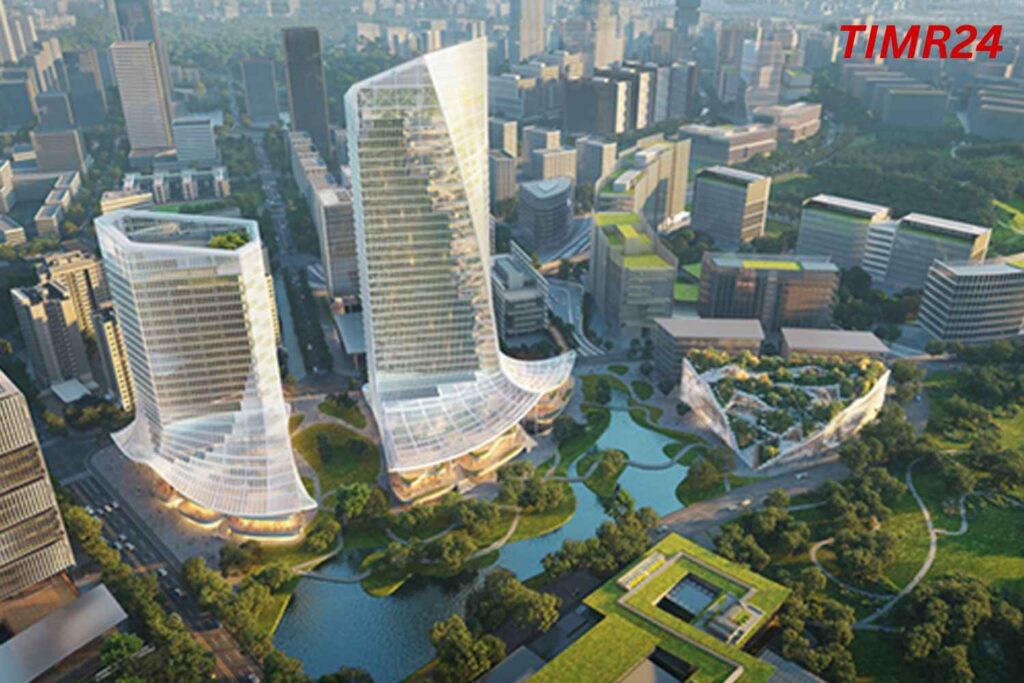
The Council on Vertical Urbanism (CVU) is partnering with MVRDV NEXT for a 2026 Sustainability Executive Program to enhance measurement and reduction of embodied carbon in urban developments. Through the CarbonSpace platform, MVRDV NEXT will provide a data-driven approach for early-stage assessment of carbon impact in building design, facilitating better decisions for stakeholders In parallel, the Supreme Court upheld the revival framework under the Insolvency and Bankruptcy Code (IBC), allowing stalled projects to proceed, which aids homebuyers and investors affected by delays. The Greater Noida Industrial Development Authority (GNIDA) will only.
Planned Investment Of INR 750 Crore, Projected
Recover principal dues from Alpha Corp Development, the Successful Resolution Applicant, which is set to complete the stalled projects with a planned investment of INR 750 crore, projected to generate INR 1,200 crore in revenue. This decision aims to restore trust among over 3,000 buyers waiting for property delivery The global urban development sector is rapidly moving toward sustainability-focused planning, and the latest collaboration between CVU Partners and MVRDV NEXT marks another major step in this transformation. The partnership aims to integrate advanced data analysis, digital technology, and carbon-conscious planning strategies into modern urban development projects.
As cities around the world continue to face environmental challenges, increasing carbon emissions, and rising infrastructure demands, the role of technology-driven sustainable planning has become more important than ever before The collaboration between CVU Partners and MVRDV NEXT is expected to create innovative frameworks that help architects, urban planners, and developers make informed decisions during the early stages of project planning. Instead of relying only on traditional architectural methods, the companies plan to use advanced computational tools and environmental simulations to measure the carbon impact of buildings.
Urban Areas Currently Contribute Nearly 70%
Transportation systems, public spaces, and urban infrastructure before construction even begins. This approach could significantly improve efficiency while helping cities achieve long-term sustainability goals According to industry experts, urban areas currently contribute nearly 70% of global carbon emissions, making sustainable city planning one of the most critical priorities for governments and developers worldwide. Through this partnership, both organizations intend to deliver practical solutions that can help reduce environmental impact while maintaining economic growth and urban expansion. The initiative also reflects the increasing shift toward climate-resilient.
Infrastructure and smart city development across the global construction industry One of the major highlights of the collaboration is the integration of digital intelligence into urban planning. By using predictive analytics, environmental mapping, and real-time simulation technologies, planners can identify high-carbon design elements and replace them with more sustainable alternatives. These technologies can analyze everything from traffic flow and energy usage to building materials and green space distribution. Such detailed analysis allows developers to create urban environments that are not only efficient but also environmentally responsible.
Advanced Urban Analytics Is Expected To Support CVU
The role of technology in modern architecture has evolved significantly in recent years. Companies like MVRDV NEXT have been at the forefront of integrating artificial intelligence, parametric design, and digital visualization into sustainable planning processes. Their expertise in advanced urban analytics is expected to support CVU Partners in creating scalable low-carbon development models suitable for both emerging and established cities. The partnership may also encourage more developers to adopt data-backed environmental planning methods in future infrastructure projects Sustainability experts believe that data-driven design can fundamentally change how cities are built.
Traditional urban planning methods often fail to fully evaluate long-term environmental impacts during the early design phase. However, modern analytical systems can calculate energy consumption, mobility patterns, sunlight exposure, carbon intensity, and climate risks with remarkable accuracy. This enables planners to make environmentally smarter decisions while reducing unnecessary construction waste and operational inefficiencies. The collaboration is also aligned with the broader global movement toward net-zero urban development. Governments across Europe, Asia, and North America are implementing stricter environmental regulations aimed at reducing.
Private Sector Innovation Can Contribute To Achieving
Greenhouse gas emissions from buildings and infrastructure. In response, developers are increasingly investing in sustainable construction materials, renewable energy systems, and digital planning technologies. The CVU Partners and MVRDV NEXT initiative demonstrates how private sector innovation can contribute to achieving international climate objectives Another important aspect of this partnership is its potential impact on future smart cities. Smart cities rely heavily on interconnected systems, data collection, and digital infrastructure to improve quality of life and resource management. By combining carbon reduction strategies with intelligent urban systems.
The collaboration could help create urban environments that are cleaner, more efficient, and more adaptable to climate change. These developments may include energy-efficient transportation networks, green public spaces, climate-responsive buildings, and optimized land utilization Urban planners worldwide are increasingly recognizing the importance of balancing economic growth with environmental responsibility. Rapid urbanization has created significant pressure on infrastructure systems, natural resources, and public services. Without proper planning, expanding cities can face severe environmental and social challenges. Data-driven sustainability models provide an opportunity to address.
Advanced Technologies Such As Building
These issues proactively by identifying potential risks and implementing smarter design strategies before development begins The construction and infrastructure industry is also undergoing a major digital transformation. Advanced technologies such as Building Information Modeling (BIM), geographic information systems, artificial intelligence, and cloud-based simulations are reshaping project planning and execution. Partnerships like the one between CVU Partners and MVRDV NEXT highlight how digital innovation can improve sustainability outcomes while enhancing project efficiency and reducing operational costs Environmental researchers have emphasized.
That early-stage carbon analysis is one of the most effective ways to reduce emissions in urban development projects. By measuring embodied carbon and operational carbon during the planning phase, developers can optimize building orientation, material selection, transportation access, and energy systems. This proactive approach can significantly lower a project’s lifetime environmental footprint while supporting healthier and more livable urban communities The collaboration may also influence investment trends within the global real estate and infrastructure sectors Investors are increasingly prioritizing environmentally responsible projects that align with.
Developers And Infrastructure Firms To Environmental Benefits
ESG (Environmental, Social, and Governance) standards. Sustainable urban development initiatives often attract greater institutional investment because they offer long-term economic resilience and reduced regulatory risk. As climate concerns continue to shape global markets, (India) data-driven sustainability planning could become a key competitive advantage for developers and infrastructure firms In addition to environmental benefits, sustainable urban planning can also improve social and economic outcomes. Well-designed cities promote better mobility, healthier living conditions, reduced energy costs, and improved public spaces. Data-based planning allows cities to optimize.
Partnership Between CVU Partners And MVRDV NEXT
Infrastructure distribution and enhance accessibility while minimizing congestion and pollution. This creates more resilient urban environments capable of supporting growing populations without compromising environmental quality The partnership between CVU Partners and MVRDV NEXT represents a significant example of how technology, architecture, and sustainability can work together to shape the future of urban development. As cities worldwide continue to expand, innovative collaborations like this are likely to play a crucial role in reducing environmental impact and improving long-term urban resilience. The adoption of intelligent planning systems and carbon-conscious infrastructure.
Strategies may eventually become standard practice across the global construction industry Industry analysts believe that the future of urban development will increasingly depend on the integration of sustainability metrics into every stage of project planning. Developers (India) who adopt advanced environmental analysis tools today may gain a strong advantage in meeting future regulations, investor expectations, and public demand for greener cities. The collaboration between CVU Partners and MVRDV NEXT could therefore serve as a model for future partnerships focused on climate-smart infrastructure and responsible urban growth.
Q1. What is the partnership between CVU Partners and MVRDV NEXT about?
The partnership focuses on using advanced data-driven technology to reduce carbon emissions in urban planning and city development projects.
Q2. How does data-driven urban design help sustainability?
It allows planners to analyze environmental impacts, optimize land use, reduce emissions, and improve energy efficiency before construction begins.
Q3. What is MVRDV NEXT known for?
MVRDV NEXT is recognized for combining architecture, technology, and artificial intelligence to create innovative and sustainable urban solutions.
Q4. Why is carbon reduction important in city planning?
Urban areas contribute significantly to global carbon emissions, making sustainable planning essential for achieving climate goals and improving living conditions.
Q5. How can smart urban planning benefit future cities?
Smart planning improves transportation, energy use, public spaces, and environmental resilience while reducing long-term operational costs.