
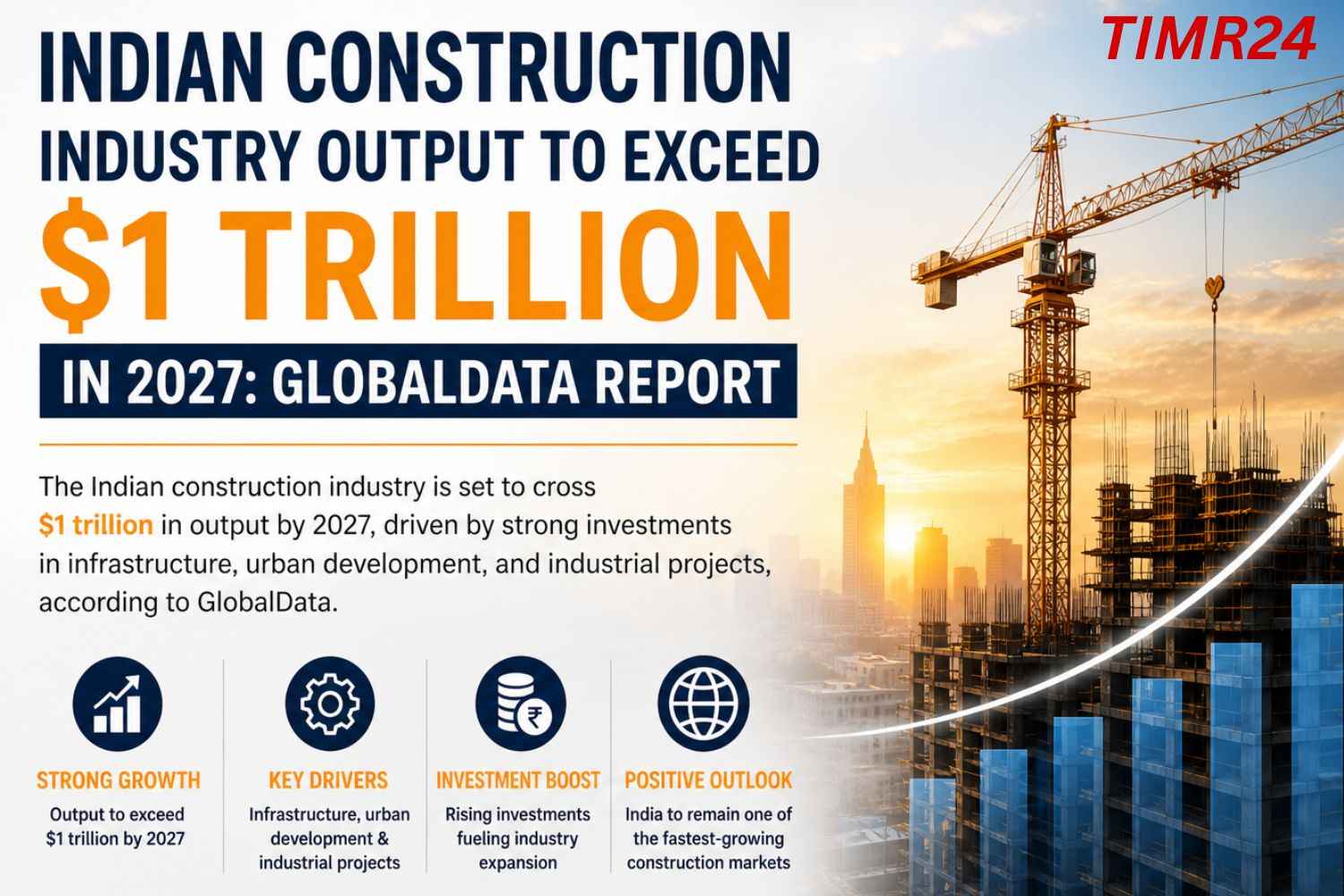













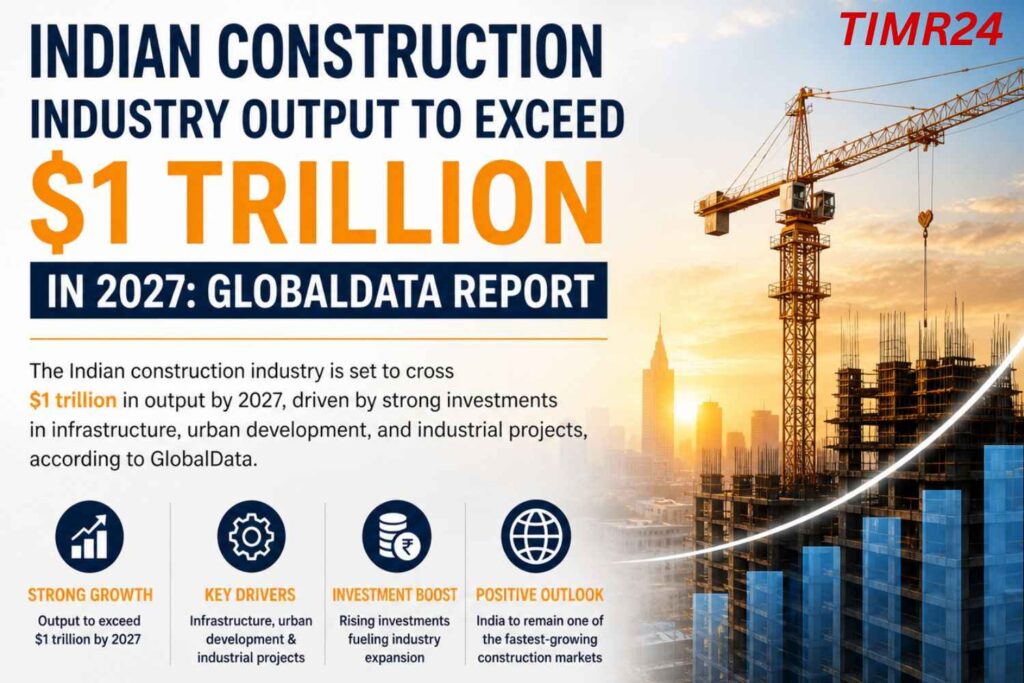
Despite challenges in 2025, India’s construction industry is poised for robust growth, projected to exceed $1 trillion by 2027, according to GlobalData. The FY2026-27 budget allocates 3.1% of GDP to capital expenditure, reflecting an 11.5% increase from FY2025-26. The industry is expected to maintain a 6% annual growth rate from 2027 to 2030, driven by investments in infrastructure, energy projects, and a government plan to build 500GW of non-fossil fuel power by 2030. Significant initiatives include a new high-speed road network worth INR11.2 trillion and a three-year PPP project pipeline valued at INR17 trillion. Analysts note that ongoing government focus on.
India’s Construction Industry Is Entering
Renewable energy and infrastructure will positively impact overall economic growth, contributing to the goal of a $5 trillion economy India’s construction industry is entering a transformative phase, with projections indicating that its total output will surpass $1 trillion by 2027. According to a recent report by GlobalData, this remarkable growth reflects the country’s accelerating economic momentum and its aggressive push toward infrastructure modernization. As one of the fastest-growing major economies in the world, India is leveraging construction as a core driver of development, job creation, and urban expansion. The industry’s growth trajectory is being fueled by a combination of public investments.
Private sector participation, and policy reforms that aim to build world-class infrastructure across the nation A major factor contributing to this growth is the government’s continuous focus on infrastructure development. Large-scale initiatives such as national highway expansions, dedicated freight corridors, metro rail projects, and smart city programs are creating massive demand for construction activities. These projects are not only improving connectivity but also enhancing economic efficiency by reducing logistics costs and boosting regional development. The increasing allocation of funds in union budgets toward infrastructure projects further reinforces.
Another Critical Driver Behind Expansion
The government’s commitment to long-term growth. Additionally, policies aimed at ease of doing business and faster project approvals are encouraging both domestic and international investors to participate in the sector Urbanization is another critical driver behind the expansion of the construction industry. With millions of people migrating to cities each year in search of better opportunities, the demand for residential, commercial, and social infrastructure is rising rapidly. This has led to a surge in housing projects, office spaces, shopping complexes, and public utilities. The push for affordable housing, supported by various government schemes, has significantly boosted construction.
Activities in tier-2 and tier-3 cities. At the same time, the development of smart cities is introducing advanced technologies and sustainable practices into urban planning, further elevating the quality and efficiency of construction projects The private sector is also playing a vital role in accelerating the industry’s growth. Real estate developers, infrastructure companies, and foreign investors are increasingly participating in large-scale projects, bringing in capital, expertise, and innovation. Public-private partnerships (PPPs) have emerged as a key model for executing complex infrastructure projects, enabling efficient risk sharing and faster execution.
Modeling (BIM), Artificial Intelligence
The entry of global players into the Indian market is further enhancing competitiveness and driving the adoption of modern construction techniques, including prefabrication, automation, and digital project management tools Technological advancements are (India)reshaping the construction landscape in India. The adoption of Building Information Modeling (BIM), artificial intelligence, and data analytics is improving project planning, execution, and monitoring. These technologies are helping companies reduce costs, minimize delays, and enhance overall productivity. Sustainable construction practices are also gaining traction, with an increasing focus on green buildings.
Energy efficiency, and environmentally friendly materials. This shift toward sustainability is not only aligned with global trends but also addresses the growing concerns related to climate change and resource conservation Despite its strong growth prospects, the construction industry faces several challenges that need to be addressed to sustain its momentum. Land acquisition issues, regulatory complexities, and project delays continue to pose significant hurdles. Additionally, fluctuations in raw material prices, such as steel and cement, can impact project costs and profitability. The industry also faces a shortage of skilled labor, which can affect the quality and speed of construction.
Including Sovereign Wealth Funds And Private Equity
Addressing these challenges will require coordinated efforts from the government, industry stakeholders, and policymakers to create a more conducive environment for growth Financial support and investment flows are crucial for maintaining the pace of (India) development in the construction sector. The increasing interest of institutional investors, including sovereign wealth funds and private equity firms, is providing a strong financial backbone to large infrastructure projects. The introduction of innovative financing mechanisms, such as infrastructure investment trusts (InvITs), is further enhancing capital availability. These financial instruments are attracting long-term investments and enabling.
The recycling of capital, which can be reinvested into new projects The growth of the construction industry is also having a significant impact on employment generation. As one of the largest employers in the country, the sector provides jobs to millions of people, ranging from skilled engineers to unskilled laborers. The expansion of construction activities is creating new opportunities across various segments, including design, engineering, project management, and material supply. This, in turn, is contributing to income generation and improving living standards for a large section of the population.
The future of India’s construction industry appears highly promising. With continued government support, increasing private investments, and rapid technological advancements, the sector is well-positioned to achieve its $1 trillion milestone by 2027. The focus on sustainable development, digital transformation, and efficient project execution will play a crucial role in shaping the industry’s future. As India continues to strengthen its infrastructure base, the construction sector will remain a key pillar of economic growth, driving progress and development across the country.
Q1. What is the projected size of India’s construction industry by 2027?
India’s construction output is expected to exceed $1 trillion by 2027.
Q2. Which organization released this report?
The report was released by GlobalData.
Q3. What are the main growth drivers?
Urbanization, government infrastructure spending, and private investments.
Q4. Which sectors are contributing most?
Roads, railways, housing, metro projects, and smart cities.
Q5. Why is this growth important?
It boosts GDP, creates jobs, and strengthens India’s global economic position.