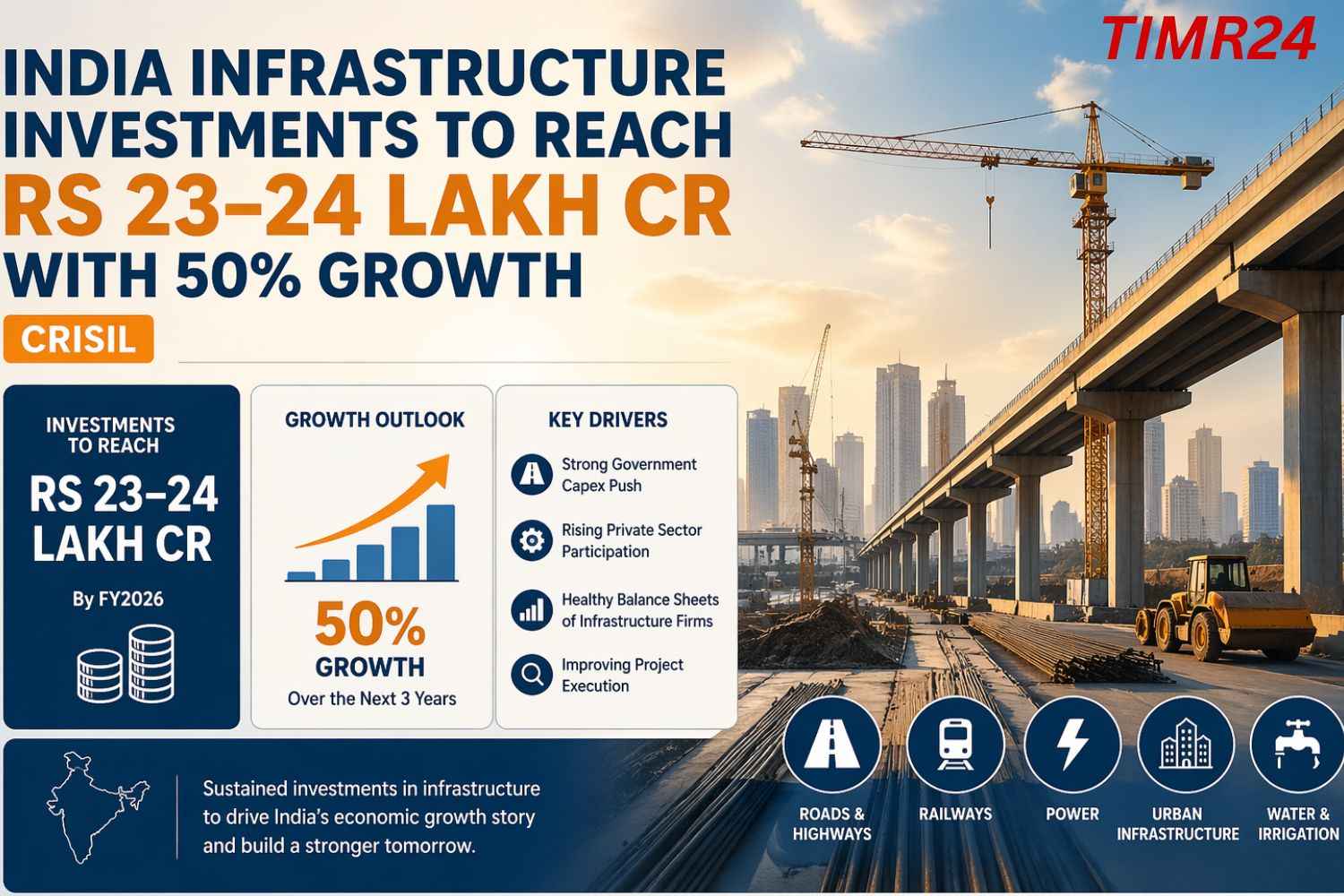

















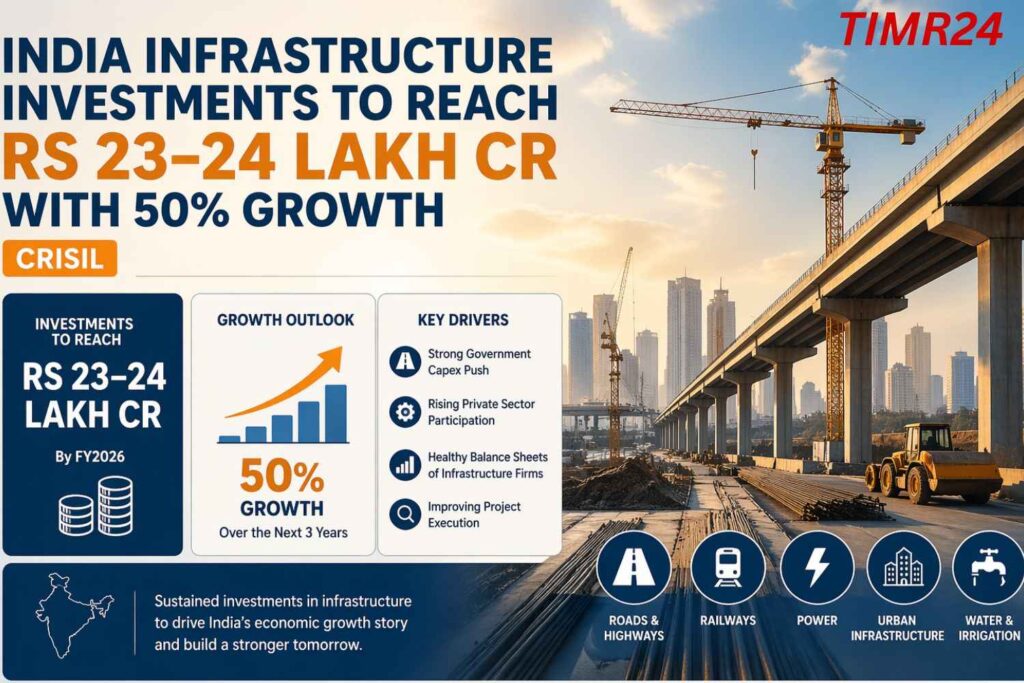
Investments in India’s key infrastructure sectors are projected to increase by 45-50% over the current and next financial year, reaching around Rs 23-24 lakh crore, propelled by robust policy support and domestic demand despite global uncertainties. The growth spans traditional areas like renewables and roads, as well as emerging sectors such as data centres and green hydrogen. Challenges such as delayed project offtake, increasing capital values in residential real estate, and reduced demand for commercial spaces from the IT sector remain. However, strong balance sheets of infrastructure players and government backing are anticipated to uphold growth momentum.
Landscape Requires Careful Monitoring Amidst
Despite some headwinds, the overall infrastructure investment trajectory is expected to contribute significantly to GDP growth and sees strong projections for renewable energy capacities and data centre expansions. Resilient credit profiles among established sector players (India) and gradual recovery in project awards further support this outlook, though the landscape requires careful monitoring amidst geopolitical tensions and evolving market dynamics India’s infrastructure sector is entering a transformative phase, with projected investments of ₹23–24 lakh crore signaling one of the most ambitious growth cycles in recent history. According to CRISIL.
This represents nearly a 50% increase compared to previous years, highlighting the country’s aggressive push toward modernization and economic expansion. This surge is not just a reflection of policy intent but also a response to growing urbanization, industrial demand, and the need for better connectivity across regions. The scale of this investment positions India among the fastest-growing infrastructure markets globally, attracting both domestic and international stakeholders A key driver behind this growth is the government’s proactive approach toward infrastructure development. Programs like the National Infrastructure Pipeline (NIP) and PM Gati Shakti have created.
A structured roadmap for coordinated development across sectors. These initiatives aim to reduce logistical inefficiencies and improve project execution timelines, ensuring that investments translate into tangible outcomes. By aligning multiple ministries and departments under a unified framework, the government is addressing long-standing bottlenecks that previously slowed down infrastructure progress Another significant factor contributing to this expansion is the increasing participation of the private sector. Public-Private Partnerships (PPPs) are gaining momentum, especially in sectors such as highways, airports, and renewable energy. Private investors are showing renewed confidence.
Efficient Utilization Of Resources
Due to improved regulatory frameworks, better risk-sharing models, and enhanced transparency in project execution. This collaboration between public and private entities is crucial for sustaining long-term growth and ensuring efficient utilization of resources The roads and highways sector continues to dominate infrastructure investments, accounting for a substantial share of the total projected spending. The expansion of national highways, expressways, and rural roads is expected to improve connectivity and reduce travel time significantly. Projects like Bharatmala are playing a critical role in linking remote regions with economic hubs.
Thereby boosting trade and commerce. Improved road infrastructure also supports logistics and supply chain efficiency, which is vital for India’s manufacturing and e-commerce sectors Railways are another major beneficiary of this investment surge. With a focus on modernization, electrification, and high-speed rail corridors, the railway sector is undergoing a significant transformation. Dedicated freight corridors are expected to enhance cargo movement efficiency, reducing costs and transit times. This not only benefits industries but also strengthens India’s position as a competitive global manufacturing hub Urban infrastructure development is also gaining prominence, driven by.
Citizens While Addressing Challenges Such
Rapid urbanization and the need for sustainable living solutions. Smart city projects, metro rail expansions, and affordable housing initiatives are reshaping urban landscapes. These developments aim to improve the quality of life for citizens while addressing challenges such as congestion, pollution, and inadequate public services Renewable energy infrastructure is another critical area witnessing significant investment. India’s commitment to achieving net-zero emissions and increasing renewable energy capacity is driving the development of solar parks, wind farms, and green hydrogen projects. This shift toward sustainable energy not only reduces environmental impact but also.
Creates new economic opportunities. The integration of renewable energy into the national grid requires robust infrastructure, further boosting investment in this sector Financing such large-scale infrastructure projects requires innovative funding mechanisms. Apart from traditional sources like government budgets and bank loans, new avenues such as infrastructure investment trusts (InvITs) and green bonds are gaining traction. These instruments provide investors with opportunities to participate in infrastructure growth while ensuring steady returns. The development of a strong financial ecosystem is essential for sustaining long-term investment momentum.
Reduces Costs, And Attracts Foreign Investment
The impact of this infrastructure boom extends beyond economic growth. It is expected to generate millions of jobs across construction, engineering, and related sectors. Additionally, improved infrastructure enhances productivity, reduces costs, and attracts foreign investment. These factors collectively contribute to India’s ambition of becoming a $5 trillion economy Despite the positive outlook, challenges remain. Land acquisition issues, regulatory delays, and financing constraints can hinder project execution. However, ongoing reforms and policy measures are aimed at addressing these challenges. The use of technology, such as digital project monitoring and data.
Analytics, is improving transparency and efficiency in project management India’s infrastructure investment trajectory reflects a strong commitment to economic development and modernization. The projected ₹23–24 lakh crore investment, backed by strategic planning and (India) collaborative efforts, sets the stage for a new era of growth. As the country continues to build and upgrade its infrastructure, the benefits will be felt across industries and regions, paving the way for a more connected and prosperous future.
Q1. What is the projected infrastructure investment in India?
India is expected to invest around ₹23–24 lakh crore in infrastructure.
Q2. What is driving this growth?
Government policies, private investment, and demand for urban development.
Q3. Which sectors will benefit the most?
Roads, railways, renewable energy, and urban infrastructure.
Q4. Who released this report?
The projection comes from CRISIL.
Q5. What is the expected growth rate?
Around 50% growth compared to the previous investment cycle.