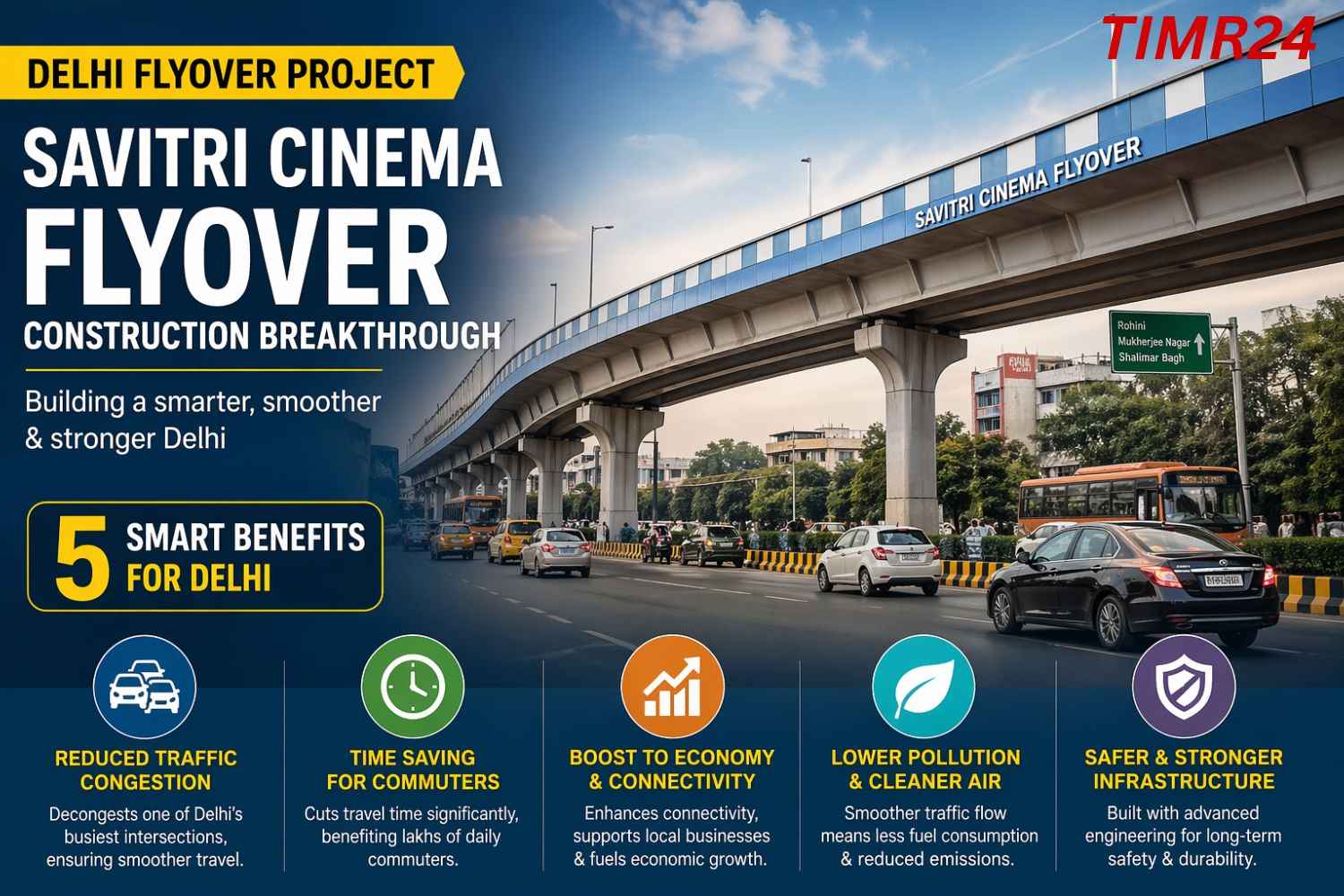












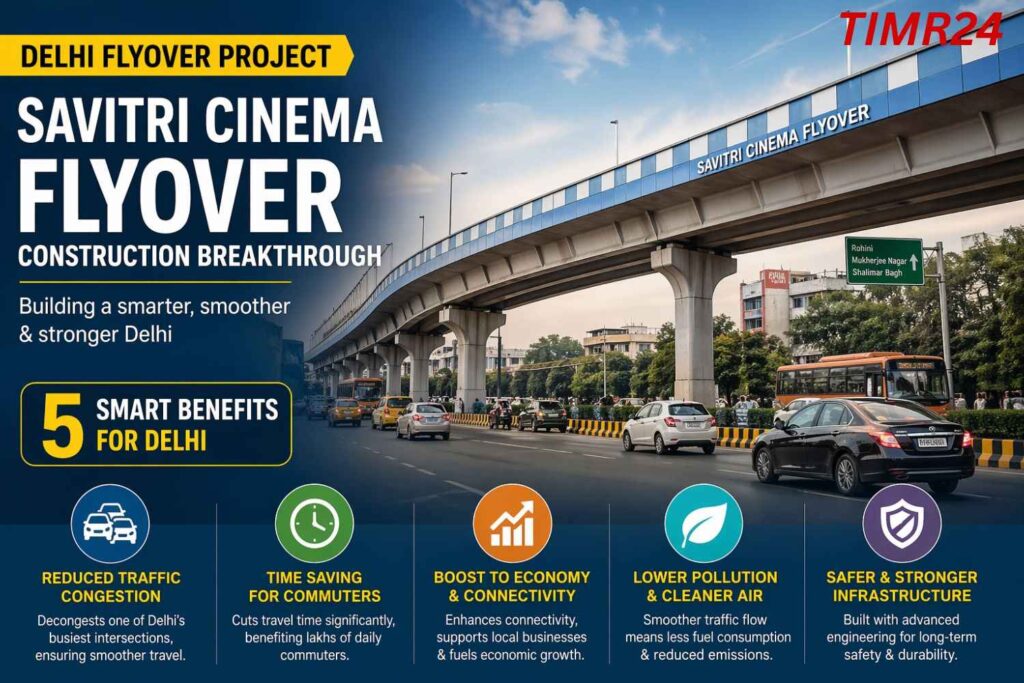
The Delhi Public Works Department will soon start constructing a second flyover at Savitri Cinema, with the foundation stone expected to be laid within a month. Approved in December, this new flyover will run parallel to the existing one to alleviate traffic congestion between Greater Kailash and Nehru Place. The need for this additional flyover was identified in 2016, and initial plans were approved by the Unified Traffic and Transportation Infrastructure (Planning & Engineering) Centre. The project also includes a new three-lane carriageway integrating the Modi Mill flyover with Kalkaji Temple road, costing Rs 312.94 crore, aimed at enhancing connectivity and reducing congestion in the area.
Traffic Congestion Issues
The city of Delhi is once again preparing for a major infrastructure upgrade as authorities move forward with the construction of the second flyover near Savitri Cinema. This project is being seen as a crucial step in addressing the long-standing traffic congestion issues in one of South Delhi’s busiest corridors. The intersection near Savitri Cinema connects key areas such as Nehru Place, Greater Kailash, and Kalkaji, making it a vital route for daily commuters, office-goers, and commercial transport Over the past few years, this junction has experienced significant traffic pressure, especially during peak hours. Despite the presence of an existing flyover.
The increasing number of vehicles has made it insufficient to handle the load. As a result, long queues, delays, and frequent bottlenecks have become a daily challenge for commuters. The decision to construct a second flyover comes as part of a broader effort by the Delhi government to modernize urban infrastructure and improve mobility across the city The proposed flyover will be designed to streamline traffic movement and reduce dependency on ground-level intersections. By separating traffic flows, it will help eliminate unnecessary stops and reduce signal waiting time. This is expected to significantly improve travel efficiency, particularly for.
Potential Economic Impact Areas Surrounding
Those commuting between South Delhi’s residential and commercial hubs. The project is also aligned with Delhi’s long-term vision of becoming a smarter and more connected urban center Another important aspect of this development is its potential economic impact. The areas surrounding Savitri Cinema, including Nehru Place, are major commercial zones with a high concentration of offices, retail outlets, and service providers. Improved connectivity will not only benefit daily commuters but also enhance business operations by ensuring smoother logistics and reduced delays. This could lead to increased productivity and economic activity in the region.
In addition to easing congestion, the flyover project is expected to contribute to improved road safety. Traffic congestion often leads to chaotic driving conditions, increasing the risk of accidents. With better traffic management and structured road design, the new flyover will help create a safer environment for both drivers and pedestrians. Authorities are also expected to incorporate modern safety features and engineering standards into the project to ensure long-term reliability Environmental considerations are also playing a role in the planning of this infrastructure upgrade. Reduced traffic congestion means fewer idling vehicles, which in turn can help lower emissions and improve.
Minimize Construction-Related Disruptions
Air quality in the surrounding areas. While construction activities may temporarily impact the environment, the long-term benefits of smoother traffic flow are likely to outweigh these concerns. The government is expected to implement measures to minimize (India) construction-related disruptions and environmental impact The timeline for the project indicates that construction will begin soon, following the completion of necessary approvals and planning processes. Authorities are focusing on ensuring timely execution to avoid prolonged inconvenience to the public. Traffic diversions and alternative routes may be implemented during the construction phase, and commuters are advised to stay updated through official announcements.
This project also reflects a broader trend in urban planning across India, where cities are investing heavily in infrastructure to cope with rapid population growth and urbanization. Flyovers, underpasses, and elevated corridors are becoming essential tools for managing traffic in densely populated areas. The Savitri Cinema flyover project is a clear example of how targeted interventions can address specific problem areas and improve overall city functionality Internal planning strategies for such projects often include coordination between multiple agencies, including traffic police, municipal bodies, and urban development departments.
Execution Efficiency From a Commuter’s Perspective
Efficient collaboration is crucial to ensure that the project is completed without major delays and delivers the intended benefits. Lessons learned from previous infrastructure projects in Delhi are likely to be applied here to enhance execution efficiency From a commuter’s perspective, the new flyover is expected to bring noticeable improvements in daily travel. Reduced travel time, less stress, and better predictability of journeys are some of the key advantages. For residents living in nearby areas, the project may also lead to improved accessibility and connectivity to other parts of the city For those interested in understanding similar infrastructure developments.
Road Transport and Highways which provides insights into national-level road and transport initiatives. Additionally, urban planning updates and city infrastructure projects can often be tracked through official Delhi government portals and transport department releases construction of the second Savitri Cinema flyover marks a significant step forward in Delhi’s infrastructure development journey.
By addressing a critical traffic bottleneck, the project aims to improve mobility, enhance safety, and support economic growth in one of the city’s busiest (India) regions. While temporary disruptions during construction are inevitable, the long-term benefits are expected to make a meaningful difference in the daily lives of commuters. As Delhi continues to evolve, such projects highlight the importance of strategic planning and investment in building a more efficient and sustainable urban environment.
Q1. Where is the Savitri Cinema flyover located?
It is located in South Delhi near Nehru Place and Greater Kailash.
Q2. Why is a second flyover being constructed?
To reduce heavy traffic congestion and improve connectivity.
Q3. Who is responsible for the project?
The Delhi government and related infrastructure agencies.
Q4. What are the benefits of this flyover?
Reduced travel time, smoother traffic flow, and improved safety.
Q5. When will construction begin?
Construction is expected to start soon as approvals are finalized.