















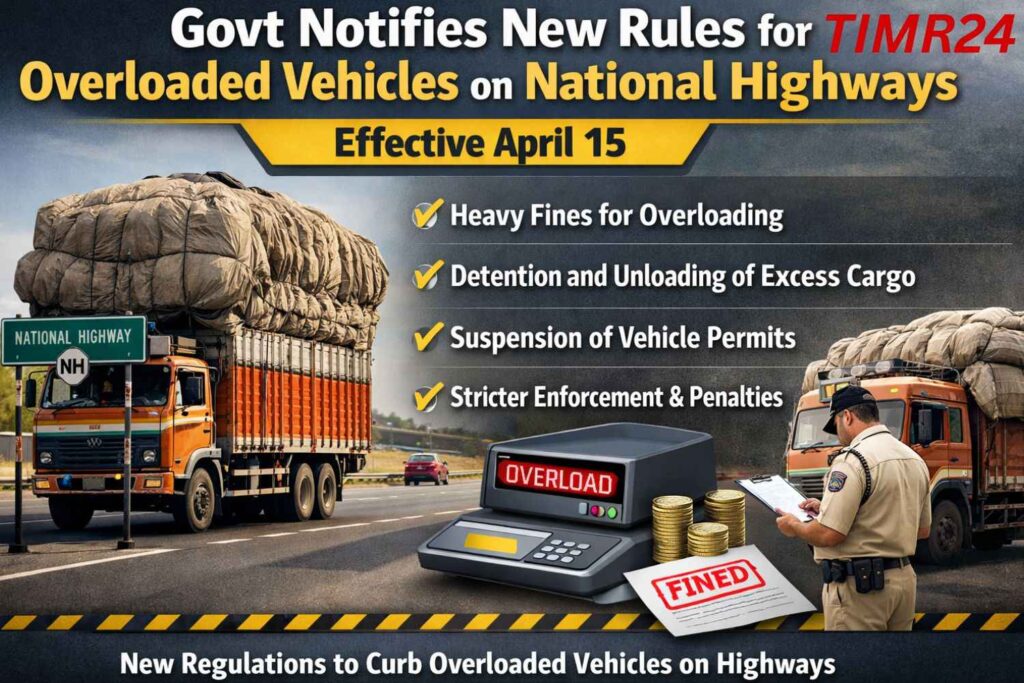
The Govt Ministry of Road Transport and Highways has introduced the National Highways Fee (Determination of Rates and Collection) Fourth Amendment Rules, 2026, effective from April 15, 2026. These rules implement stricter enforcement of Gross Vehicle Weight (GVW) limits to enhance road safety and protect highway infrastructure. Vehicles exceeding permissible weight limits will incur fees based on the level of overloading, which will be monitored using certified weighment systems at toll plazas. The rules also require digital fee collection via FASTag and reporting of violations to the VAHAN system. This amendment aims to ensure compliance with load norms.
Vehicles Operating On National Highways, Effective
Reduce infrastructure damage, and improve freight movement efficiency on national highways The Government of India has taken a significant step toward strengthening road safety and infrastructure protection by notifying new rules for overloaded vehicles operating on national highways, effective from April 15. This regulatory update marks a crucial shift in how freight transportation is monitored and controlled across the country. Over the years, overloading has remained a persistent issue, leading to accelerated road damage, increased accident risks, and inefficiencies in the logistics ecosystem. With these new rules, the government aims to bring discipline.
Transparency, and accountability into the transport sector while ensuring smoother and safer highway operations The newly introduced regulations focus on stricter enforcement of permissible axle load limits, backed by advanced digital monitoring systems. Authorities are increasingly relying on weigh-in-motion (WIM) technology, which allows vehicles to be checked without stopping traffic flow. This ensures seamless monitoring while minimizing delays for compliant operators. The integration of such smart systems reflects a broader push toward digitization in infrastructure management, aligning with India’s long-term vision of modernizing its logistics and transport framework.
Potholes, And Structural Weakening
Businesses operating in the logistics sector One of the primary objectives behind these rules is to reduce the damage caused to national highways. Overloaded trucks exert excessive pressure on road surfaces, leading to cracks, potholes, and structural weakening. This not only increases maintenance costs for the government but also disrupts transportation efficiency. By enforcing strict load limits, authorities expect to extend the lifespan of highways and reduce repair expenses The impact of these regulations will be particularly significant for logistics companies and fleet operators. Many businesses have traditionally relied on overloading to maximize profits by reducing the number of trips required.
However, under the new rules, such practices will result in heavy penalties, making compliance a more cost-effective option in the long run. Companies will need to revisit their operational strategies, optimize load distribution, and invest in better fleet management systems. This transition may initially increase operational costs, but it is expected to create a more sustainable and organized logistics environment Another critical aspect of the new rules is the imposition of stricter penalties for violations. Authorities have been empowered to levy substantial fines, detain vehicles, and enforce immediate corrective actions. This zero-tolerance approach sends.
Expected To Significantly Reduce Instances
A clear message that non-compliance will no longer be overlooked. Additionally, the use of digital records and centralized databases ensures that repeat offenders can be easily tracked and penalized accordingly. Such measures are expected to significantly reduce instances of overloading and promote a culture of compliance across the industry The broader implications of these rules extend beyond just enforcement. They are likely to improve overall road safety by reducing the risk of accidents caused by overloaded vehicles. Excess weight affects braking efficiency, vehicle stability, and tire performance, making trucks more prone to accidents.
By ensuring that vehicles operate within safe limits, the government is addressing one of the key contributors to highway accidents. This aligns with national road safety goals and supports efforts to reduce fatalities and injuries on Indian roads From an economic perspective, the new rules could lead to more balanced freight pricing and fair competition within the transport sector. When overloading is eliminated, companies will need to adopt standardized pricing models based on legal load capacities. This creates a level playing field, preventing unfair advantages for operators who previously relied on overloading. Over time, this shift is expected to.
Enhance efficiency and transparency in the supply chain, benefiting both businesses and consumers The enforcement of these rules also highlights the growing importance of compliance-driven operations in India’s logistics landscape. Companies that proactively (India) adapt to regulatory changes will gain a competitive edge, while those that resist may face operational disruptions and financial losses The new overloading rules are a clear reflection of this evolving trend In addition to operational changes, the rules may encourage investments in fleet modernization. Transporters may opt for higher-capacity vehicles designed to carry legal loads efficiently.
Companies That Proactively Adapt To Regulatory
Rather than relying on overloading smaller trucks. This could lead to improved fuel efficiency, reduced emissions, and better overall performance. Such developments are in line with India’s sustainability goals and efforts to reduce the environmental impact of the transport sector The government’s decision to implement these rules also underscores its commitment to strengthening infrastructure governance. By addressing the issue of overloading, authorities are not only protecting existing assets but also ensuring that future investments deliver maximum value. This holistic approach is essential for supporting India’s rapid economic growth and expanding logistics needs.
With increasing demand for faster and more reliable freight movement, maintaining high-quality highways is critical new rules for overloaded vehicles on national highways represent a transformative step toward a safer, more efficient, and sustainable transport ecosystem in India. While the transition may pose challenges for transporters and logistics companies, the long-term (India) benefits far outweigh the initial adjustments.
Improved road conditions, enhanced safety, fair competition, and greater regulatory compliance are expected to drive positive outcomes across the sector. As the industry adapts to these changes, businesses that embrace innovation and compliance will be better positioned to thrive in the evolving logistics landscape.