


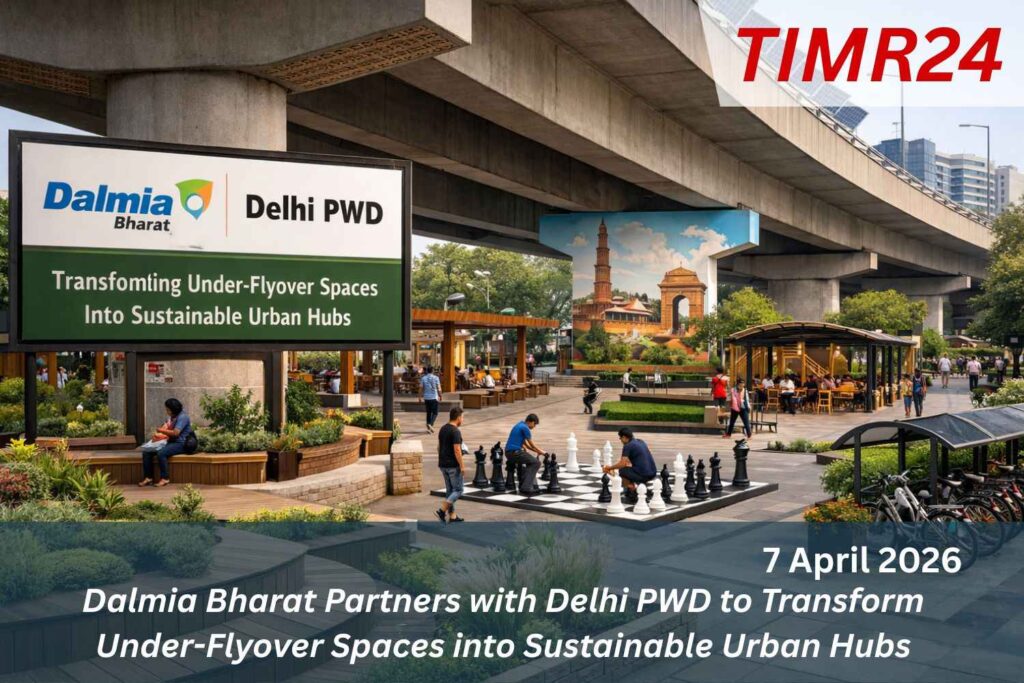
Dalmia Bharat Ltd. has entered a partnership with the Delhi government’s Public Works Department to beautify select areas beneath key flyovers and a road stretch in the capital. The MoU, signed on April 6, 2026, aims to enhance urban aesthetics while fostering environmental sustainability and biodiversity restoration. The project covers Lodhi Flyover, Oberoi Flyover, Mangi Bridge, and Hanuman Setu. Dalmia Bharat will design, develop, and maintain these sites for three years following completion. The initiative aligns with Dalmia Bharat’s CSR commitment and reinforces its role as Monument Mitra for the Red Fort. Puneet Dalmia, MD & CEO, emphasized.
Environmentally Friendly Transformations
The potential of these open spaces to improve the city’s visual appeal and promote community connections through environmentally friendly transformations and cultural experiences The collaboration between Dalmia Bharat and the Delhi Public Works Department (PWD) marks a transformative step in redefining how urban spaces are utilized in India’s rapidly expanding metropolitan regions. In a city like Delhi, where space constraints and population density continue to challenge urban planners, the innovative idea of converting under-flyover areas into sustainable urban hubs introduces a forward-thinking solution that blends functionality with environmental consciousness.
This initiative is not merely about beautification; it represents a shift toward smarter, more inclusive city planning where even neglected spaces are given a new purpose Traditionally, under-flyover areas in most Indian cities have remained underutilized, often turning into dumping grounds, parking chaos zones, or unsafe areas due to lack of lighting and maintenance. However, with increasing awareness around sustainable urban development, these forgotten zones are now being recognized as valuable real estate. Through this partnership, Dalmia Bharat is bringing its expertise in infrastructure and sustainable construction to reimagine these spaces into vibrant, usable environments.
Transformation Of Under-Flyover Spaces Includes
One of the core aspects of this project is sustainability. Modern urban development is no longer limited to construction alone; it demands environmentally responsible practices that reduce carbon footprints and improve quality of life. The transformation of under-flyover spaces includes the use of eco-friendly materials, energy-efficient lighting, and landscape designs that promote biodiversity. Such efforts align closely with India’s broader goals under initiatives like smart city development and climate-conscious infrastructure planning. Another significant advantage of this initiative is its social impact. By converting neglected spaces into active public zones.
The project directly contributes to community engagement and safety. Well-lit, clean, and organized environments discourage illegal activities and create safer surroundings for pedestrians. Families, local residents, and daily commuters benefit from these spaces as they can use them for relaxation, small gatherings, or even informal recreational activities. This shift not only enhances the visual appeal of the city but also strengthens the social fabric by encouraging public interaction The economic implications of such projects are equally noteworthy. Revitalizing unused urban land increases its indirect economic value. Improved surroundings can boost nearby.
Property prices, attract local businesses, and create opportunities for small vendors. Moreover, such developments often generate employment during both construction and maintenance phases. Dalmia Bharat’s involvement ensures that high-quality standards are maintained, which further reinforces trust in public-private partnerships. For more insights into infrastructure-driven economic growth private entity like Dalmia Bharat and a government body such as Delhi PWD highlights the growing importance of collaborative models in urban development. Governments alone may not always have the resources or expertise to execute large-scale transformation projects efficiently.
Often Struggle With Pollution, Heat Islands
Private sector participation brings innovation, funding support, and execution efficiency, making such collaborations essential for modern city planning Environmental benefits form a crucial pillar of this initiative. Urban areas often struggle with pollution, heat islands, and lack of green cover. By introducing landscaped zones and vegetation under flyovers, the project contributes to improving air quality and reducing heat levels. Even small green interventions can have a cumulative positive effect on the environment. Additionally, proper waste management and maintenance strategies ensure that these areas remain clean and functional in the long term.
Another important dimension is urban aesthetics. Cities are not just functional spaces; they represent identity and culture. Well-designed public areas enhance the visual character of a city and create a positive impression for both residents and visitors. Under-flyover transformations (India) often include artistic elements such as murals, creative lighting, and themed designs that reflect local culture. This not only improves the look of the city but also promotes a sense of pride among citizens The project also aligns with global trends in urban redevelopment. Cities worldwide are focusing on optimizing every inch of available space to accommodate growing populations while maintaining sustainability.
Adopting Global Best Practices While
From New York to Singapore, underutilized areas are being transformed into parks, recreational zones, and commercial spaces. Delhi’s initiative, supported by Dalmia Bharat, places it on a similar path, showcasing India’s commitment to adopting global best practices while tailoring them to local needs Long-term sustainability and maintenance are critical for the success of such projects. While initial development is important, continuous upkeep ensures that these spaces do not fall back into neglect. The involvement of experienced organizations like Dalmia Bharat increases the likelihood of implementing structured maintenance plans, ensuring durability and long-term usability.
This also sets a benchmark for future projects across other cities in India The partnership between Dalmia Bharat and Delhi PWD to transform under-flyover spaces into sustainable urban hubs represents a significant milestone in India’s urban development journey. It demonstrates (India) how innovative thinking, combined with strategic collaboration, can turn challenges into opportunities. By focusing on sustainability, community engagement, and efficient land use, this initiative not only improves the physical landscape of the city but also enhances the overall quality of urban life.
Q1. What is the Dalmia Bharat and Delhi PWD project about?
It focuses on converting unused under-flyover areas into eco-friendly, functional urban spaces.
Q2. What are sustainable urban hubs?
These are spaces designed with greenery, seating, lighting, and public-friendly infrastructure.
Q3. How will this benefit the public?
It improves safety, aesthetics, and provides recreational and usable spaces.
Q4. Why are under-flyover spaces important?
They are often neglected but have high potential for urban development.
Q5. Is this part of smart city development?
Yes, it aligns with sustainable and smart urban planning goals.