










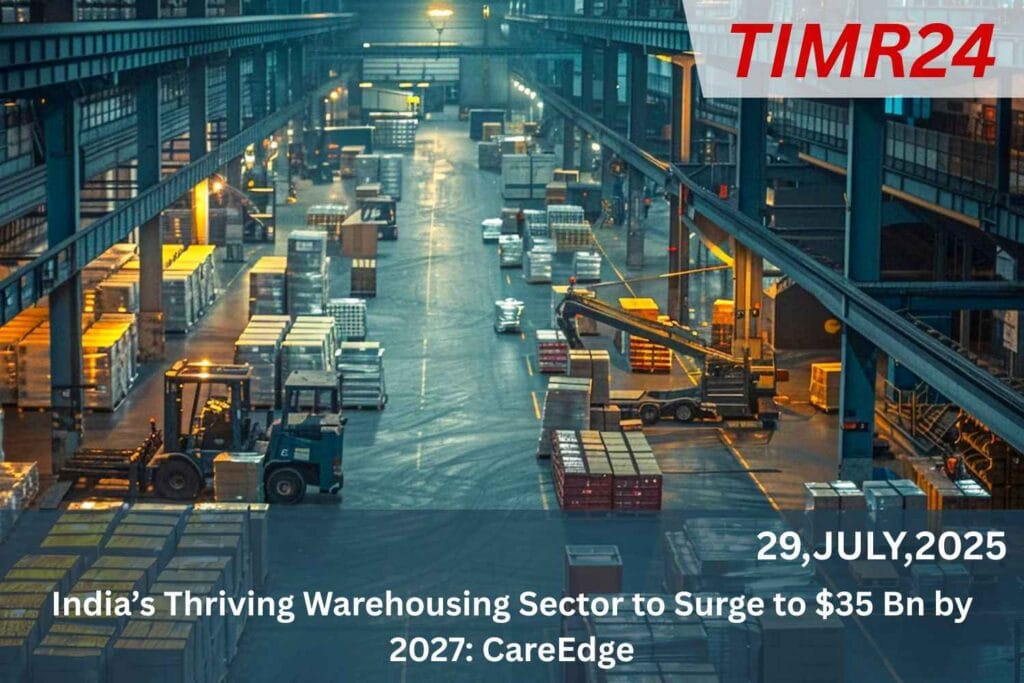
India’s warehousing sector is expected to reach $35 billion by 2027, with a CAGR of around 15% from 2022. The sector is transforming from a fragmented and traditional industry to an organized segment central to the nation’s economic growth, driven by escalating demand for modern, large-scale warehouses. The surge in demand is primarily driven by the expansion of third-party logistics (3PL) providers, manufacturing sectors, and the burgeoning e-commerce industry, leading to historically low vacancy rates of about 8%.
However, the industry faces structural headwinds such as hurdles in land acquisition, regulatory fragmentation across states, and model-specific risks. To fully harness the sector’s potential, streamlined regulatory frameworks, focused workforce training programs, and enhanced public-private collaboration are needed. Warehouse rentals are rising due to strong demand and limited supply, especially in key consumption-led micro-markets. The rise of quick-commerce intensifies the need for strategically located in-city warehouses to facilitate swift deliveries. The geography of warehousing in India is rapidly changing, with new location preferences emerging in Tier 2 and Tier 3 cities.
India’s warehousing sector is set to witness unprecedented growth, with CareEdge Ratings projecting its market value to reach $35 billion by 2027. This surge is driven by a combination of rising e-commerce demand, infrastructure development, and growing investments in supply chain modernization. The warehousing ecosystem is evolving rapidly, becoming a critical component of India’s logistics and economic framework…(Warehousing Project)
Growth Drivers of the Warehousing Sector
Several factors are propelling this expansion. The e-commerce boom continues to dominate as a major demand generator. Companies across fashion, electronics, grocery, and pharmaceuticals require strategically located warehouses to enable same-day or next-day delivery capabilities. Additionally, the government’s focus on improving multimodal logistics infrastructure—including the rollout of dedicated freight corridors, industrial corridors, and logistics parks—has further accelerated the need for modern storage solutions. The Make in India initiative and the PLI (Production Linked Incentive) schemes are also boosting domestic manufacturing, leading to increased requirements for warehousing and distribution hubs across Tier 1 and Tier 2 cities. (CareEdge)
Shifts in Warehouse Design and Technology
Modern warehouses are shifting away from traditional storage structures to become tech-enabled, scalable hubs. The integration of automation, IoT sensors, warehouse management systems (WMS), and data analytics is allowing for real-time inventory tracking, reduced lead times, and improved operational efficiency. The growth of Grade-A warehouses, offering better flooring, ceiling height, fire safety, and racking systems, is becoming standard across industrial clusters. Companies are now prioritizing built-to-suit facilities over traditional leasing models, particularly in sectors like 3PL, FMCG, and auto components.
Key Geographical Hotspots
Metro cities like Mumbai, Delhi-NCR, Bengaluru, Chennai, and Hyderabad remain central hubs, but non-metro locations like Nagpur, Lucknow, Coimbatore, and Indore are rapidly emerging as strategic warehousing zones. These are supported by better road connectivity under the Bharatmala Pariyojana and improved rail freight infrastructure.
According to CareEdge Ratings, more than 50 million sq. ft. of new warehousing space is expected to be added annually, with both domestic and international investors showing interest in this high-potential segment. The influx of foreign direct investment (FDI) into industrial real estate has further validated the sector’s long-term promise.
ESG and Sustainability Focus
Sustainability is also shaping warehouse construction. Developers are increasingly opting for green warehousing solutions, including solar panels, rainwater harvesting systems, and energy-efficient lighting. Certifications like IGBC (Indian Green Building Council) and LEED are becoming the norm in new projects. Such eco-friendly practices not only reduce the carbon footprint but also align with global standards, attracting ESG-conscious investors and multinational tenants.
Conclusion
With its projected valuation of $35 billion by 2027, India’s warehousing sector is at the heart of the country’s supply chain transformation. Supported by policy initiatives, demand from e-commerce and manufacturing, and a shift toward automation and sustainability, the sector is poised for robust and organized growth. For further details and insights, you can visit the official site for the report.
Q1. What is driving the growth of India’s warehousing sector?
The surge is fuelled by rising e-commerce demand, government infrastructure initiatives, and increased investments in logistics parks and multi-modal hubs.
Q2. What is the projected market size of India’s warehousing sector by 2027?
According to CareEdge Ratings, the warehousing sector is expected to reach $35 billion by 2027.
Q3. Which regions in India are witnessing the highest warehousing development?
Top growth regions include Delhi-NCR, Mumbai, Bengaluru, Hyderabad, and emerging Tier-2 cities like Lucknow and Coimbatore.
Q4. How is technology impacting the warehousing industry?
Automation, AI, and smart inventory systems are improving efficiency, reducing costs, and optimizing space utilization.
Q5. What role is the government playing in warehousing expansion?
The government is promoting growth through PM Gati Shakti, tax incentives, and infrastructure upgrades in logistics corridors.