
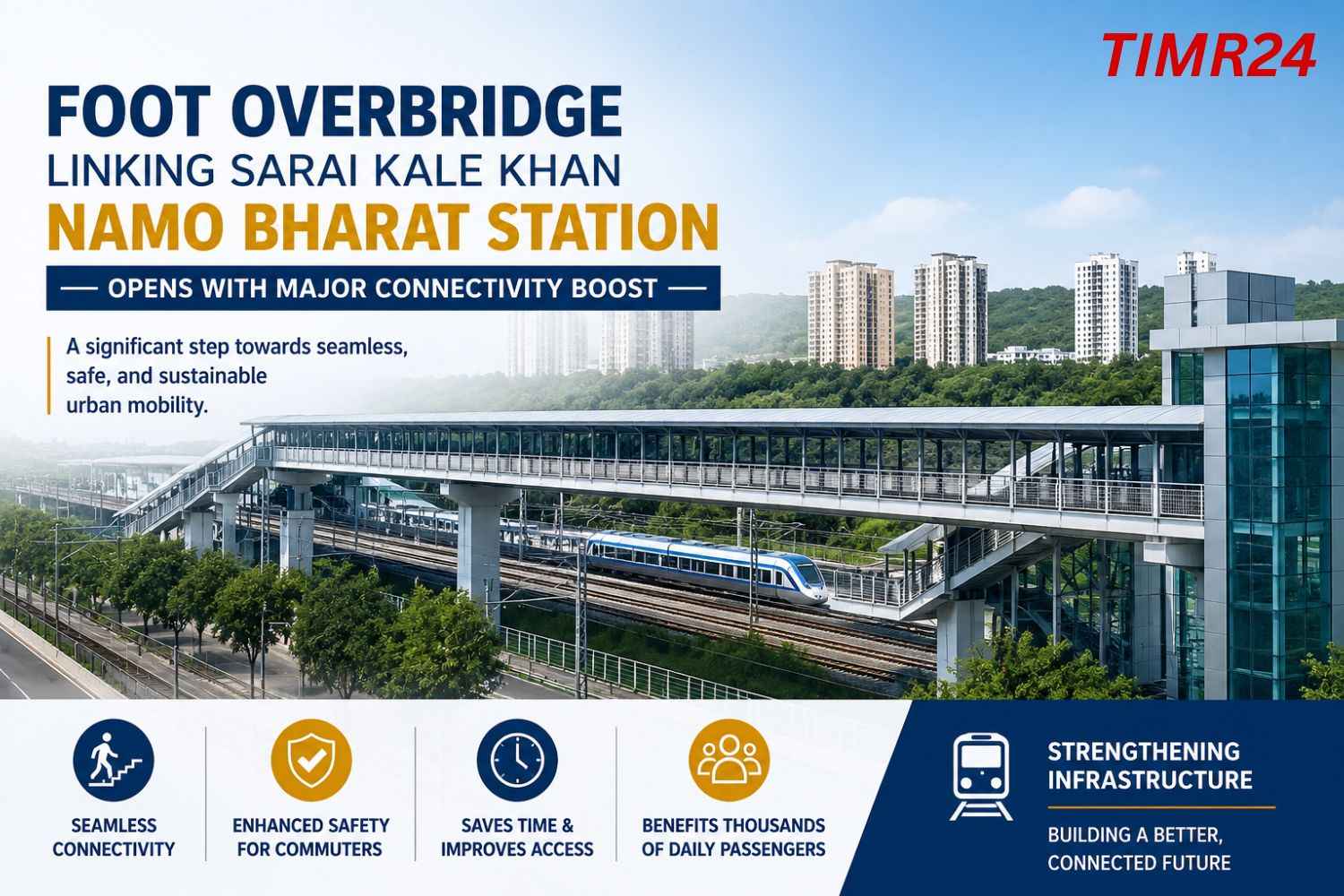












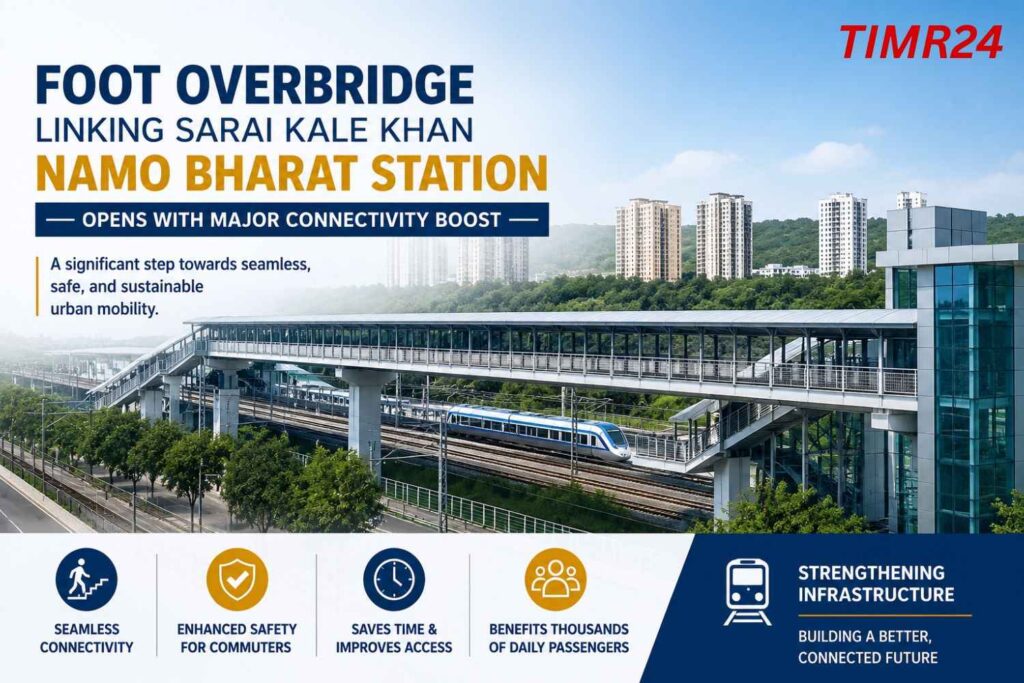
The newly opened foot overbridge at Sarai Kale Khan Namo Bharat Station enhances connectivity with Hazrat Nizamuddin railway station, developed by the National Capital Region Transport Corporation as part of the Delhi-Ghaziabad-Meerut RRTS corridor. This infrastructure aims to ease commuter movement in the busy transit zone, reduce congestion, and ensure safer pedestrian access between various transport services, including the metro and bus terminals. Future plans include adding staircases and escalators for better integration with the nearby Delhi Metro station Delhi NCR’s transportation network has received another major infrastructure boost with.
Railway Stations, Metro Systems, And Rapid Rail Networks
The opening of the new foot overbridge connecting Sarai Kale Khan Namo Bharat Station and Hazrat Nizamuddin Railway Station. The development is being viewed as an important step toward improving multimodal connectivity in the national capital region. With increasing passenger traffic across railway stations, metro systems, and rapid rail networks, the need for seamless movement between transit hubs has become more critical than ever. This newly operational bridge is expected to significantly reduce travel inconvenience for thousands of daily commuters while strengthening Delhi’s broader urban mobility ecosystem.
The foot overbridge has been designed to create direct access between the Namo Bharat transit system and one of Delhi’s busiest railway stations, Hazrat Nizamuddin. Earlier, passengers had to depend on congested roads, auto-rickshaws, or longer walking routes to switch between transport systems. The new infrastructure now offers a safer, faster, and more organized commuting experience. The project aligns with India’s ongoing focus on integrated public transport systems and smart urban planning initiatives. Travelers moving between regional rapid transit services and Indian Railways can now save considerable time during interchanges.
Passenger Circulation While Minimizing Traffic
The Sarai Kale Khan region is emerging as one of the most important transport hubs in Delhi NCR. The location already handles heavy passenger flow due to the presence of interstate bus terminals, metro connectivity, railway infrastructure, and the upcoming Namo Bharat network. The addition of this foot overbridge is expected to streamline passenger circulation while minimizing traffic congestion around the station area. Authorities believe the project will also encourage greater adoption of public transportation by making intermodal transfers efficient and commuter-friendly The Namo Bharat corridor itself is one of India’s most ambitious rapid rail transit projects aimed at.
Transforming regional travel across Delhi NCR. Once fully operational, the corridor will provide high-speed, comfortable, and modern transit services connecting Delhi, Ghaziabad, and Meerut. Infrastructure projects like this bridge play a crucial role in ensuring the success of such transit systems. Efficient station integration directly impacts commuter satisfaction, travel speed, and overall network performance Another significant aspect of the bridge is pedestrian safety. Urban transport experts have frequently highlighted the risks faced by commuters crossing busy roads near large transit hubs. By providing a dedicated elevated passageway.
Passenger Movement Intensifies Across
The new bridge helps reduce pedestrian exposure to road traffic and improves overall crowd management. The structure is expected to be especially beneficial during peak travel hours, festive seasons, and railway rush periods when passenger movement intensifies across the Nizamuddin area. Infrastructure upgrades focused on pedestrian accessibility are increasingly becoming central to modern city planning across India The bridge opening also reflects the government’s growing investment in urban infrastructure modernization. Delhi NCR has witnessed rapid expansion in metro rail, expressways, smart roads, and regional transit systems over the last few years.
Projects focused on integrated transport networks not only improve convenience but also contribute to reduced vehicle emissions and sustainable urban growth. Public transportation becomes more attractive when travelers experience smooth transfers without unnecessary (India) delays or physical barriers. Similar infrastructure developments are being planned around other major stations and mobility hubs in India as cities prepare for future population growth and rising transportation demand Officials associated with the project have emphasized that the foot overbridge has been developed with passenger convenience in mind. Features such as wide walking areas, improved accessibility, and organized.
Increased Commercial Activity And Real Estate Growth
Entry-exit movement are expected to support better commuter flow management. The bridge is also likely to enhance last-mile connectivity for travelers heading toward nearby commercial zones, offices, and residential areas. Delhi’s evolving transport infrastructure strategy increasingly focuses on creating interconnected systems rather than isolated transit modes The opening of the Sarai Kale Khan and Hazrat Nizamuddin connecting bridge comes at a time when India is aggressively pursuing infrastructure-led economic growth. Large-scale transportation projects generate long-term benefits not only for passengers but also for local businesses, tourism.
Employment, and regional economic integration. Improved accessibility around major railway stations often contributes to increased commercial activity and real estate growth in surrounding areas. Experts believe transport-oriented development models will (India) continue shaping the future of Indian cities over the next decade For daily commuters, however, the impact is immediate and practical.
Reduced walking distances, easier navigation, and quicker transit changes can dramatically improve the overall travel experience. Office workers, interstate passengers, students, tourists, and regular railway users are among the groups expected to benefit from the new infrastructure. As passenger volumes continue to rise in Delhi NCR, projects focused on convenience and operational efficiency are becoming increasingly essential. The new foot overbridge represents another important milestone in Delhi’s journey toward a smarter.
Q1. What is the new foot overbridge project?
The project connects Sarai Kale Khan Namo Bharat Station directly with Hazrat Nizamuddin Railway Station for easier passenger movement.
Q2. Why is this bridge important?
It reduces walking time and improves connectivity between regional rail and railway services.
Q3. Which commuters will benefit the most?
Daily passengers, interstate travelers, office workers, and railway commuters will benefit significantly.
Q4. Does the bridge improve Delhi transport infrastructure?
Yes, it strengthens multimodal integration and supports smart urban mobility in Delhi NCR.
Q5. Is the bridge part of the Namo Bharat corridor?
Yes, it supports the Delhi-Ghaziabad-Meerut Namo Bharat transit corridor infrastructure.