



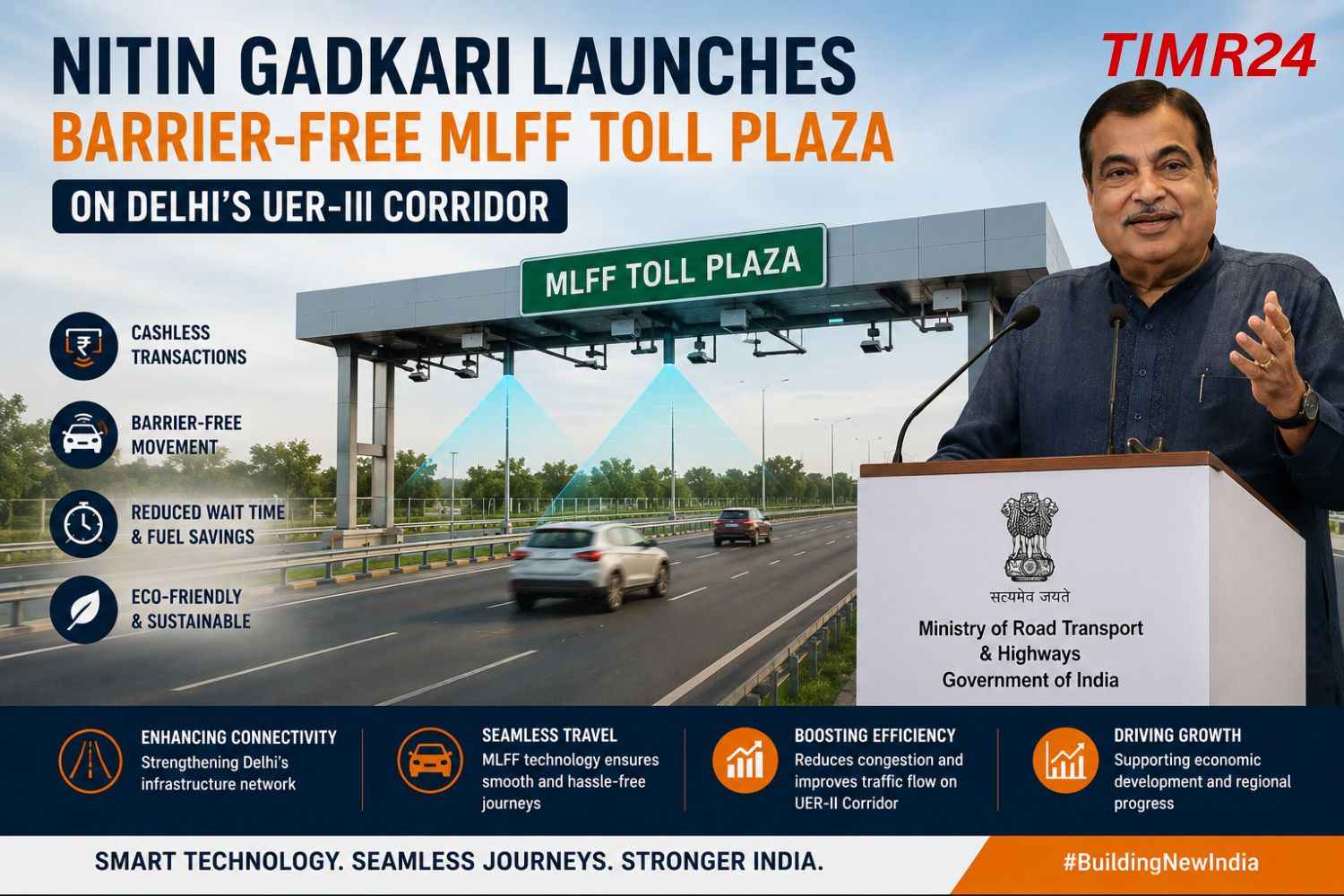







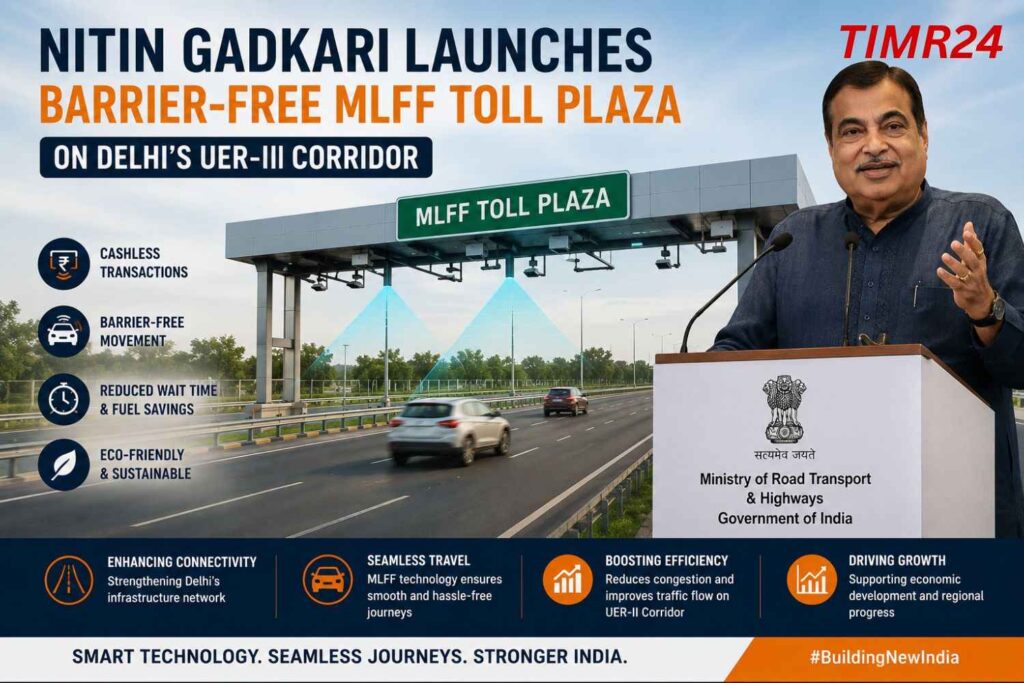
India is advancing its highway infrastructure with the introduction of the Multi-Lane Free Flow (MLFF) tolling system, launched by Union Minister Nitin Gadkari at the first barrier-less toll plaza in Mundka–Bakkarwala. This contactless tolling system aims to enhance traffic flow by allowing vehicles to pass without stopping, thus reducing congestion and improving fuel efficiency. The MLFF is expected to lower operational costs from 15% to approximately 3-4%, potentially saving ₹5,000-6,000 crore annually. The initiative also aims to conserve about 250 crore litres of fuel yearly and reduce carbon emissions by roughly 81,000 tonnes.
Automatic Number Plate Recognition
Gadkari emphasized the use of innovative materials in road construction, such as bio-bitumen from waste, and the importance of road safety awareness. The MLFF system integrates advanced technologies, including Automatic Number Plate Recognition (ANPR), to streamline toll collection and enhance travel efficiency for National Highway users India’s road infrastructure sector is entering a new digital era as Union Minister Nitin Gadkari officially launched the country’s advanced barrier-free Multi-Lane Free Flow (MLFF) toll plaza on Delhi’s Urban Extension Road-II (UER-II) corridor. The development is being seen as a major breakthrough in India’s highway modernization strategy and reflects.
The government’s growing focus on intelligent transportation systems, seamless mobility, and congestion-free road travel. The new MLFF tolling technology is expected to transform the way toll collection operates across national highways by eliminating long queues, reducing travel delays, and enhancing overall driving efficiency for commuters and commercial vehicles alike The launch of the MLFF toll plaza on the UER-II corridor is particularly significant because Delhi continues to face increasing traffic pressure due to rapid urbanization and rising vehicle numbers. Urban Extension Road-II has been designed as a major connectivity corridor that will divert traffic away from central.
Stopping At Traditional Toll booths Modern Tolling
Delhi and improve transportation efficiency between key highways and peripheral regions. With the introduction of barrier-free tolling, commuters traveling through the corridor can now experience uninterrupted movement without stopping at traditional toll booths. This modern tolling mechanism uses advanced camera systems, FASTag integration, and automatic vehicle identification technology to collect toll charges digitally while vehicles continue moving at normal speeds Traditional toll plazas have long been associated with congestion, fuel wastage, and increased travel time. During peak traffic hours, vehicles often remain stuck for several minutes.
Resulting in unnecessary emissions and operational inefficiencies. The MLFF system aims to solve these long-standing problems by creating a contactless and highly automated toll collection environment. The system captures vehicle information through high-speed cameras and sensor-based infrastructure installed across the highway corridor. Once the vehicle passes through the tolling point, the applicable toll amount is automatically deducted from the linked FASTag or digital payment account. This eliminates the need for physical barriers, manual ticketing, or vehicle stoppages The government has repeatedly emphasized the importance of adopting.
Ministry Of Road Transport And Highways
Smart transportation technologies to support India’s fast-growing infrastructure ecosystem. Under the leadership of Nitin Gadkari, the Ministry of Road Transport and Highways has accelerated the implementation of digital toll collection systems, green mobility initiatives, and next-generation highway projects across the country. The MLFF tolling model aligns with the ministry’s broader objective of creating world-class road infrastructure that matches global standards. Officials believe the technology will not only improve commuter convenience but also strengthen revenue collection efficiency and operational transparency for highway authorities.
Q1. What is the MLFF toll system?
MLFF stands for Multi-Lane Free Flow tolling, a technology that allows vehicles to pass through toll plazas without stopping.
Q2. Where has the new MLFF toll plaza been launched?
The new barrier-free toll plaza has been launched on Delhi’s Urban Extension Road-II (UER-II) corridor.
Q3. How does MLFF technology benefit commuters?
It reduces traffic congestion, saves fuel, minimizes waiting time, and improves overall highway efficiency.
Q4. Will FASTag work on MLFF toll plazas?
Yes, FASTag and advanced vehicle identification systems are integrated into the MLFF toll collection system.
Q5. Why is UER-II important for Delhi?
UER-II is a major infrastructure corridor aimed at reducing traffic pressure in Delhi and improving regional connectivity.