







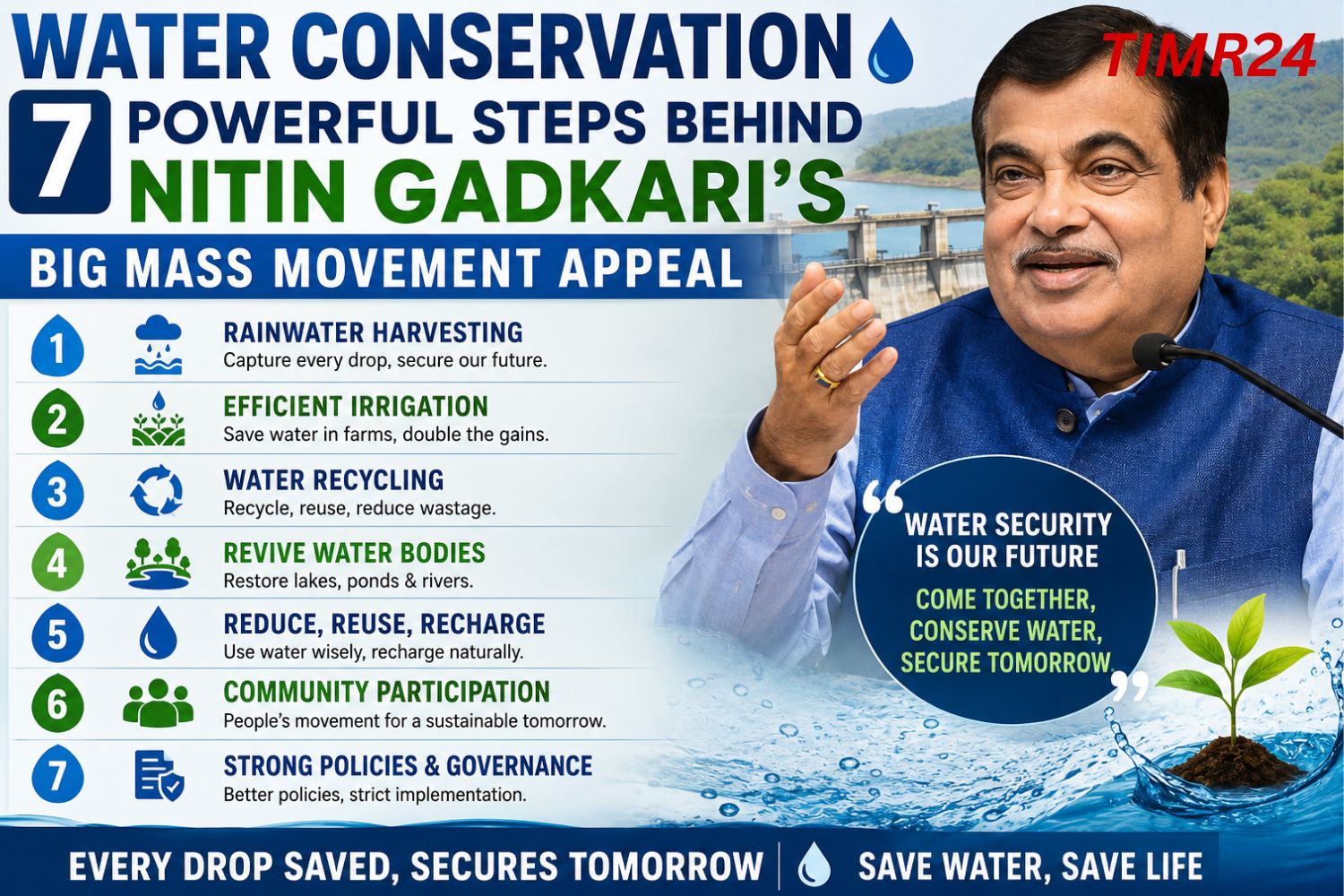

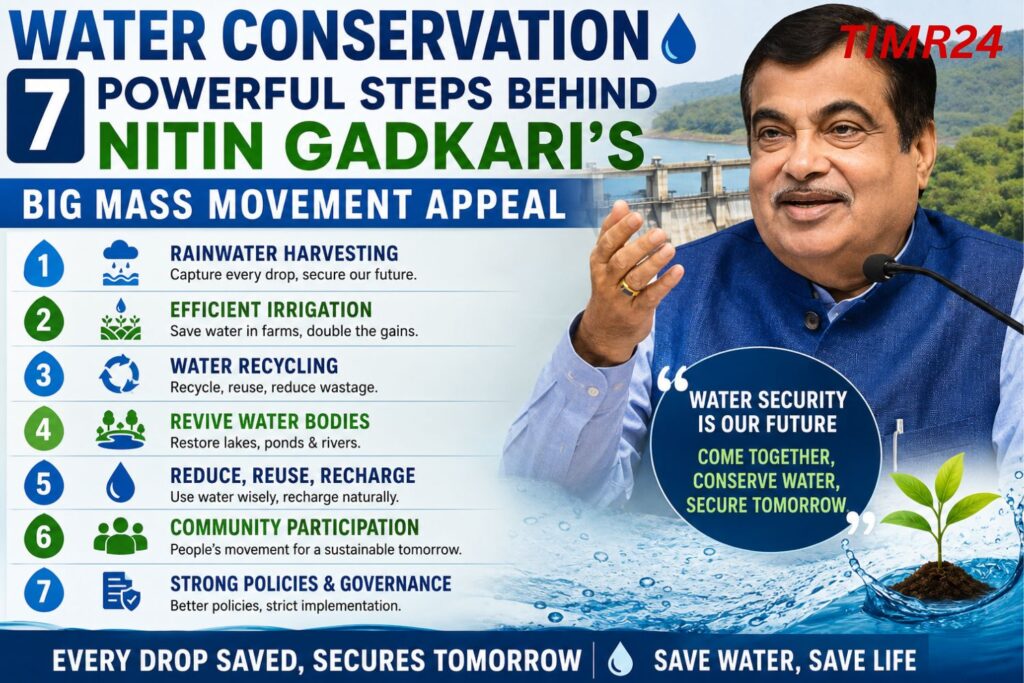
Union Minister Shri Nitin Gadkari called for water conservation to become a mass movement in Vidarbha, emphasizing its importance in tackling agrarian distress and ensuring regional prosperity. Ahead of the “Jalsamvad” and “Jalkranti” conferences in Nagpur, he discussed initiatives like river deepening, groundwater recharge, and farm pond development in water-stressed areas. Gadkari noted that soil from farm ponds has been utilized in National Highway projects, aiding groundwater levels in several districts. He also highlighted modern agricultural practices such as drip irrigation and organic farming for efficient water management.
Growing Pressure On Water Resources Across
The conferences will address sustainable irrigation solutions to enhance agricultural resilience in Vidarbha India is standing at a critical point where sustainable development and environmental responsibility must move together. The growing pressure on water resources across urban and rural regions has made conservation one of the country’s biggest priorities. During a recent address, Union Minister Nitin Gadkari appealed to citizens to transform water conservation into a nationwide mass movement. His statement reflects the urgent need for collective participation in preserving one of the most valuable natural resources for future generations.
With climate change, rising population, rapid urbanization, and industrial expansion increasing pressure on water availability, India’s long-term development depends heavily on effective water management strategies The minister highlighted that water is not only essential for human survival but also for agriculture, infrastructure, industries, and economic growth. India has witnessed several regions facing severe water shortages during summer months, while floods continue to affect other areas during monsoon seasons. This imbalance shows that proper water storage, recycling, and conservation systems are urgently needed. The government has already launched several initiatives aimed at improving water.
Urban Consumption Has Resulted In Declining Groundwater
Infrastructure, river rejuvenation, irrigation efficiency, and rainwater harvesting. However, the minister stressed that government efforts alone are not enough unless citizens actively participate in protecting water resources Water conservation has become increasingly important because India is among the world’s largest users of groundwater. Excessive extraction for agriculture and urban consumption has resulted in declining groundwater levels in many states. Cities are facing challenges related to water supply, while farmers are struggling with irrigation issues due to unpredictable rainfall patterns. Experts believe that without immediate conservation measures.
The country may face a more severe water crisis in the coming decades. This is why policymakers, environmental experts, and infrastructure planners are encouraging communities to adopt sustainable water practices One of the key aspects discussed by the minister was rainwater harvesting. Rainwater harvesting allows households, commercial buildings, schools, and industries to collect and store rainwater for future use. This method not only reduces dependence on groundwater but also helps recharge underground water reserves. Several Indian states have already introduced policies that make rainwater harvesting systems mandatory for large buildings.
Urban Infrastructure Development
Experts believe that wider implementation of such systems can significantly improve water availability in urban areas. Readers interested in sustainable city planning can also explore internal topics related to Smart City Water Management Projects and Urban Infrastructure Development Another major concern raised during the discussion was water wastage in daily life. Millions of liters of clean water are wasted every day due to leaking pipelines, inefficient irrigation systems, and careless consumption patterns. The minister encouraged citizens to adopt responsible habits such as turning off taps when not in use, repairing leakage systems quickly, and using water-efficient appliances.
Small changes at the household level can collectively create a massive impact on national water conservation goals. Educational institutions and community organizations are also being encouraged to spread awareness about responsible water use among young generations Agriculture remains one of the largest consumers of water in India. Traditional irrigation methods often lead to excessive water loss, especially in drought-prone regions. The government has been promoting modern irrigation technologies such as drip irrigation and sprinkler systems to improve efficiency. These technologies help farmers reduce water consumption while improving crop productivity.
Rural Economies And Improve Food Security Industrial
Sustainable agriculture practices are becoming increasingly important as climate conditions continue to change. Infrastructure experts believe that efficient irrigation networks combined with water storage systems can strengthen rural economies and improve food security Industrial water management is another important area highlighted in discussions around conservation. Manufacturing units, construction projects, and processing industries consume enormous quantities of water every day. Industries are now being encouraged to adopt wastewater recycling systems and sustainable production methods to reduce freshwater dependency.
Green infrastructure and environmentally responsible industrial planning are becoming major priorities for India’s long-term development strategy. Readers can connect this topic with internal content related to Sustainable Infrastructure Policies and Green Highway Development Programs Urbanization has also intensified pressure on water resources. Rapid expansion of cities has increased demand for drinking water, sanitation, and infrastructure services. Many urban areas continue to face challenges related to water distribution, groundwater depletion, and drainage systems. Experts believe that future urban planning must integrate water-sensitive infrastructure solutions.
Modern Water Management Systems To Improve
Smart drainage systems, recycled water networks, sewage treatment plants, and water-efficient public infrastructure can help cities become more sustainable. Governments and municipal authorities are gradually investing in modern water management systems to improve long-term urban resilience Climate change is another major factor affecting water security across the country. Rising temperatures, changing rainfall patterns, and extreme weather events are creating additional stress on water resources. Floods, droughts, and heatwaves are becoming more frequent in several regions. Environmental experts believe that conservation efforts must now be integrated with climate adaptation strategies.
Protecting lakes, rivers, forests, and wetlands can help maintain ecological balance and improve water availability. Public awareness campaigns focused on sustainability and environmental protection are expected to play a critical role in strengthening conservation efforts The (India) appeal made by Nitin Gadkari also reflects a broader vision for national development. Infrastructure growth, economic progress, and environmental sustainability can no longer be treated separately. Future development models must ensure efficient use of natural resources while supporting economic expansion. Water conservation is now becoming an essential component of infrastructure planning, urban development, and industrial policy.
Water Conservation Villages, Resident Welfare Associations
Policymakers are increasingly focusing on integrated approaches that combine technology, environmental protection, and community participation Community involvement will remain one of the strongest pillars of successful water conservation. Villages, resident welfare associations, educational institutions, and private organizations can contribute significantly by organizing awareness programs, plantation drives, water audits, and rainwater harvesting projects. Public participation creates long-term behavioral change and helps build a culture of sustainability. Several successful water conservation projects across India have demonstrated that community-led initiatives can transform.
Local ecosystems and improve water security for thousands of people India’s future growth will depend heavily on how effectively the country manages its natural resources. Water conservation is not just an environmental issue but also an economic and social necessity. Sustainable (India) water management supports agriculture, industries, infrastructure, healthcare, and overall quality of life. The message delivered by Union Minister Nitin Gadkari serves as a strong reminder that every citizen has a role to play in protecting water resources. Turning conservation into a nationwide movement can help India create a more secure, sustainable, and environmentally responsible future for generations to come.
Q1. Why did Nitin Gadkari stress water conservation?
Nitin Gadkari emphasized water conservation to address India’s growing water crisis, groundwater depletion, and climate-related challenges.
Q2. What is meant by a mass movement for water conservation?
It means involving citizens, industries, farmers, schools, and local communities in saving and managing water collectively.
Q3. How can individuals contribute to water conservation?
People can harvest rainwater, reduce wastage, reuse water, and adopt sustainable practices in homes and workplaces.
Q4. Why is water conservation important for India?
India faces irregular rainfall, rising population pressure, and declining groundwater levels, making conservation essential for future sustainability.
Q5. What role does technology play in water conservation?
Modern irrigation systems, wastewater recycling, smart monitoring, and water-efficient infrastructure help improve water management.