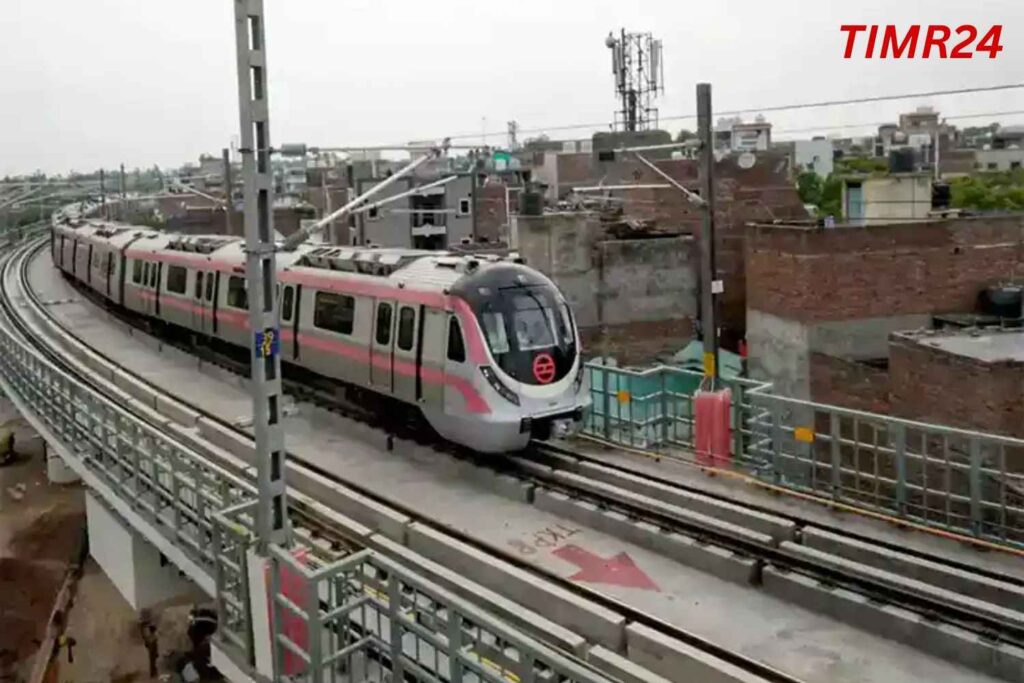
The new phase of metro development is likely to connect emerging residential zones, business districts, industrial hubs, and densely populated suburban areas that currently face transportation challenges. Improved connectivity between Delhi and neighboring regions is anticipated to enhance daily commuting experiences for lakhs of passengers. The expansion will also support the broader objective of reducing dependence on private vehicles, thereby helping to lower pollution levels and traffic congestion in the capital region. With Delhi frequently battling air quality concerns and overcrowded road networks, investment in mass rapid transit systems has become increasingly important for.
Investments, And Boosting Retail Development
Sustainable urban development According to infrastructure experts, the Phase V expansion could significantly accelerate economic activities in several underdeveloped and semi-developed areas of Delhi NCR. Metro connectivity has historically played a major role in transforming local real estate markets, increasing commercial investments, and boosting retail development around station zones. Areas located near metro corridors often witness increased residential demand due to improved accessibility and reduced commuting time. This trend is expected to continue with the new Phase V routes, potentially creating fresh opportunities for developers, investors, and homebuyers in the region.
The expansion project also highlights India’s growing focus on world-class public infrastructure. Over the last two decades, Delhi Metro has emerged as a benchmark for urban transportation systems in India, known for its operational efficiency, punctuality, cleanliness, and advanced engineering. The upcoming Phase V project is expected to incorporate modern signaling systems, improved passenger amenities, energy-efficient technologies, and enhanced multimodal integration to create a seamless commuting experience. Authorities are also likely to emphasize environmentally sustainable construction methods and energy conservation measures during project execution.
Expansion And Infrastructure Efficiency
The growing metro network is playing an increasingly important role in shaping urban planning across the national capital region. Transit-oriented development has become a major strategy for improving city infrastructure while minimizing urban sprawl. With metro stations often acting as growth centers, commercial complexes, office spaces, retail hubs, and residential projects tend to develop rapidly around these corridors. This integrated approach not only improves urban mobility but also supports organized city expansion and infrastructure efficiency. The Delhi Metro Phase V expansion is therefore expected to have a far-reaching impact beyond transportation alone.
Construction and infrastructure sectors are also likely to benefit significantly from the project. Large-scale metro developments generate substantial demand for engineering services, construction materials, tunneling technologies, electrical systems, and workforce employment. Indian infrastructure companies involved in metro rail construction may receive new business opportunities as the project progresses. Additionally, the expansion could support local manufacturing under infrastructure development initiatives and strengthen India’s metro rail ecosystem. As urban mobility projects gain momentum across multiple cities in the country, Delhi Metro continues to remain a flagship model for future transport planning.
Enhanced Metro Connectivity Substantially
Another important aspect of the Phase V expansion is its expected impact on travel convenience and time savings for commuters. Daily passengers in Delhi NCR often spend long hours navigating traffic congestion on major roads. Enhanced metro connectivity can substantially reduce travel duration while providing safer and more predictable transportation options. The metro system has already become a preferred commuting choice for office workers, students, and business travelers due to its affordability and operational reliability. The new corridors under Phase V may further increase ridership numbers and improve accessibility to underserved regions.
Urban infrastructure analysts also believe that projects like Delhi Metro Phase V are essential for supporting future population growth in metropolitan regions. Delhi NCR continues to witness rapid urbanization with increasing migration, residential development, and (India) commercial expansion. Without large-scale investments in public transportation infrastructure, road congestion and environmental challenges could intensify further in the coming years. Metro rail systems offer a scalable and environmentally efficient solution for managing high passenger volumes while reducing carbon emissions associated with private vehicle usage.
Productivity Gains, Improved Connectivity
The project’s large investment size of Rs 48,204 crore demonstrates the government’s commitment toward infrastructure-led economic growth. Public transportation projects often generate long-term economic value through productivity gains, improved connectivity, and increased regional competitiveness. Efficient urban transit systems can positively influence employment generation, tourism, retail activity, and overall economic integration within metropolitan areas. Delhi Metro’s continuous expansion reflects the evolving transportation needs of a modern urban economy and the increasing importance of sustainable infrastructure development in India.
Experts from the transport and urban planning sectors have repeatedly emphasized the need for integrated mobility solutions that combine metro connectivity with buses, pedestrian infrastructure, parking facilities, and last-mile transport systems multimodal transportation (India) planning to ensure smooth passenger movement across different transit networks. Such integration can significantly improve commuter convenience and maximize the efficiency of public transportation systems The Delhi Metro Phase V expansion also carries symbolic importance as India strengthens its position as a global infrastructure development hub. Large-scale urban transit projects showcase.
International Investors And Infrastructure Stakeholders
The country’s engineering capabilities, technological progress, and commitment to sustainable modernization. International investors and infrastructure stakeholders closely monitor such projects as indicators of long-term urban development potential. Successful implementation of the new metro corridors may further encourage investments in smart city initiatives, real estate development, and public infrastructure across the region.
As Delhi NCR prepares for another major phase of metro growth, the project is expected to reshape commuting patterns, unlock new economic opportunities, and improve the quality of urban living for millions of residents. With expanding urban boundaries and rising transportation demands, projects like Delhi Metro Phase V are becoming increasingly critical for ensuring efficient, sustainable, and future-ready infrastructure development in India’s capital region.