













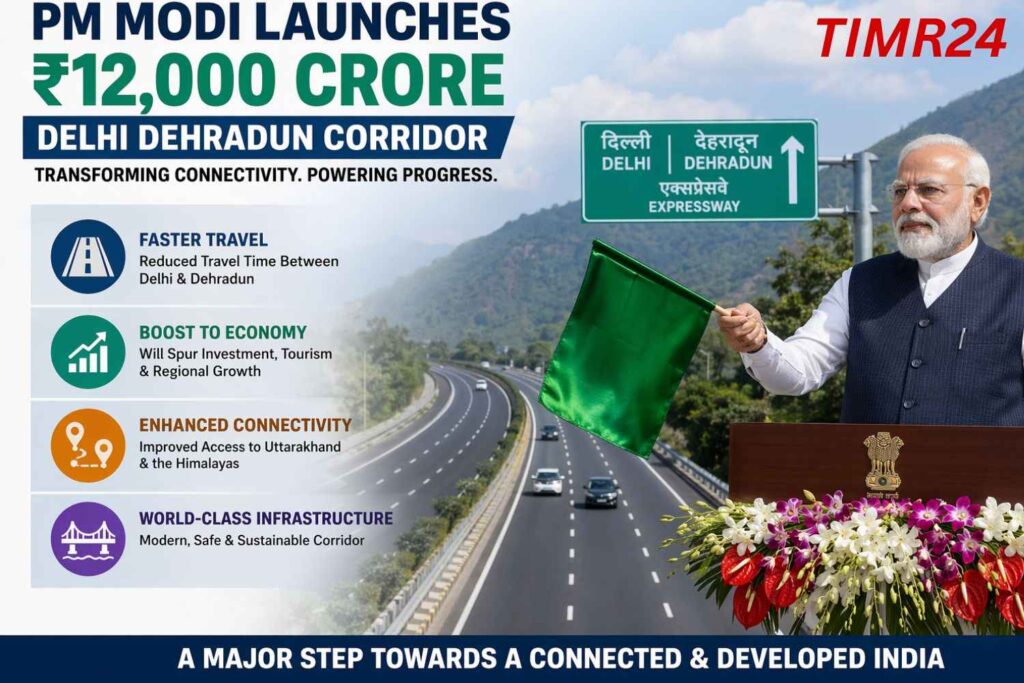
PM Narendra Modi inaugurated the Delhi–Dehradun Economic Corridor, a significant highway project with an investment of Rs 12,000 crore aimed at enhancing connectivity between Delhi, Uttar Pradesh, and Uttarakhand. The corridor traverses key locations such as Ghaziabad, Baghpat, Shamli, and Saharanpur, significantly reducing travel time and logistics costs while improving the movement of goods and passengers. It includes a 12 km elevated wildlife corridor to ensure safe animal movement and minimize environmental impact. The project is anticipated to create jobs during its construction and improve access to major tourist destinations, thus promoting economic growth in the region.
India’s Rapidly Evolving Infrastructure Landscape
The inauguration of the ₹12,000 crore Delhi–Dehradun Economic Corridor by Narendra Modi marks a significant milestone in India’s rapidly evolving infrastructure landscape. This ambitious highway project is designed to redefine connectivity between the national capital and the capital city of Uttarakhand, offering not only faster travel but also a strong push to regional economic development. With increasing urban expansion and demand for efficient transportation, such mega infrastructure projects are becoming the backbone of India’s growth story.
The Delhi–Dehradun Economic Corridor is expected to reduce travel time drastically, bringing it down from approximately six hours to just about two and a half hours. This transformation is not just about saving time; it reflects a broader vision of creating seamless mobility across states. Improved road connectivity enhances accessibility, encourages tourism, and creates a ripple effect across industries such as hospitality, logistics, and real estate. For instance, similar growth trends have already been observed in projects like the Delhi-Mumbai Expressway One of the most notable aspects of this corridor is its focus on sustainability and environmental conservation.
Initiatives Align With Global Standards
The project includes Asia’s longest elevated wildlife corridor, ensuring minimal disruption to natural habitats. This approach a shift in infrastructure development where ecological balance is considered alongside economic progress. Such initiatives align with global standards and reinforce India’s commitment to sustainable growth From a real estate perspective, the corridor is expected to unlock immense potential across regions in Uttar Pradesh and Uttarakhand. Areas along the corridor are likely to witness increased demand for residential, commercial, and industrial developments. Improved accessibility often leads to land value appreciation, making.
It an attractive opportunity for investors and developers. Locations such as Saharanpur, Baghpat, and parts of Dehradun are already gaining attention The economic implications of the corridor extend far beyond real estate. It will significantly enhance logistics efficiency, enabling faster movement of goods between North India and the hill regions. This is particularly beneficial for industries relying on timely transportation, such as agriculture, FMCG, and manufacturing. Reduced travel time also translates to lower fuel consumption and operational costs, making businesses more competitive Another important factor is employment generation. Large-scale projects like.
Contributes To Overall Socio-Economic Development
This create thousands of direct and indirect job opportunities during both construction and operational phases. From engineers and construction workers to service providers and local businesses, the benefits are widespread. This contributes to overall socio-economic development and improves the standard of living in surrounding areas Tourism is another sector that stands to gain immensely from the Delhi–Dehradun Economic Corridor. Dehradun, along with nearby destinations like Mussoorie and Rishikesh, attracts millions of tourists every year. Faster and more comfortable travel will encourage more frequent visits, boosting local economies. Weekend tourism from Delhi-NCR is expected to rise significantly.
The corridor also reflects the government’s strong focus on modernizing India’s infrastructure network. With advanced engineering techniques, smart traffic (India) management systems, and high safety standards, the project represents a new era of highway development. Features such as controlled access, service lanes, and digital monitoring systems ensure a smooth and secure travel experience. These developments are part of a larger strategy to position India as a global leader in infrastructure excellence Financially, the ₹12,000 crore investment demonstrates confidence in long-term economic returns. Infrastructure projects of this scale typically generate high multiplier effects.
Economic And Logistical Benefits
Meaning that the initial investment leads to multiple layers of economic activity. Increased connectivity attracts businesses, boosts trade, and enhances productivity, ultimately contributing to GDP growth In addition to economic and logistical benefits, the corridor also improves quality of life for commuters. Reduced travel time means less fatigue, better work-life balance, and increased productivity. For daily commuters and frequent travelers, this is a significant improvement. Moreover, better roads lead to fewer accidents and enhanced safety, addressing a critical concern in India’s transportation system The Delhi–Dehradun Economic Corridor is not just.
A road project; it is a symbol of India’s progress and ambition. It showcases how strategic planning, technological innovation, and sustainable practices can come together to create world-class infrastructure. As the country continues to invest in such transformative projects, the long-term benefits will be visible across multiple sectors, from real estate and tourism to industry and employment.
This corridor is set to become a game-changer for North India. It will strengthen connectivity, drive economic growth, and open new opportunities for (India) investment and development. With its blend of speed, sustainability, and strategic importance, the Delhi–Dehradun Economic Corridor stands as a testament to India’s commitment to building a modern and efficient infrastructure network.
Q1. What is the Delhi–Dehradun Economic Corridor?
It is a high-speed highway project aimed at improving connectivity between Delhi and Dehradun.
Q2. What is the total cost of the project?
The total investment is approximately ₹12,000 crore.
Q3. How much travel time will be reduced?
Travel time will reduce from around 6 hours to 2.5 hours.
Q4. What are the key features of the corridor?
It includes elevated roads, tunnels, wildlife crossings, and smart traffic systems.
Q5. How will this impact real estate?
It will increase property demand and development along the corridor region.