


















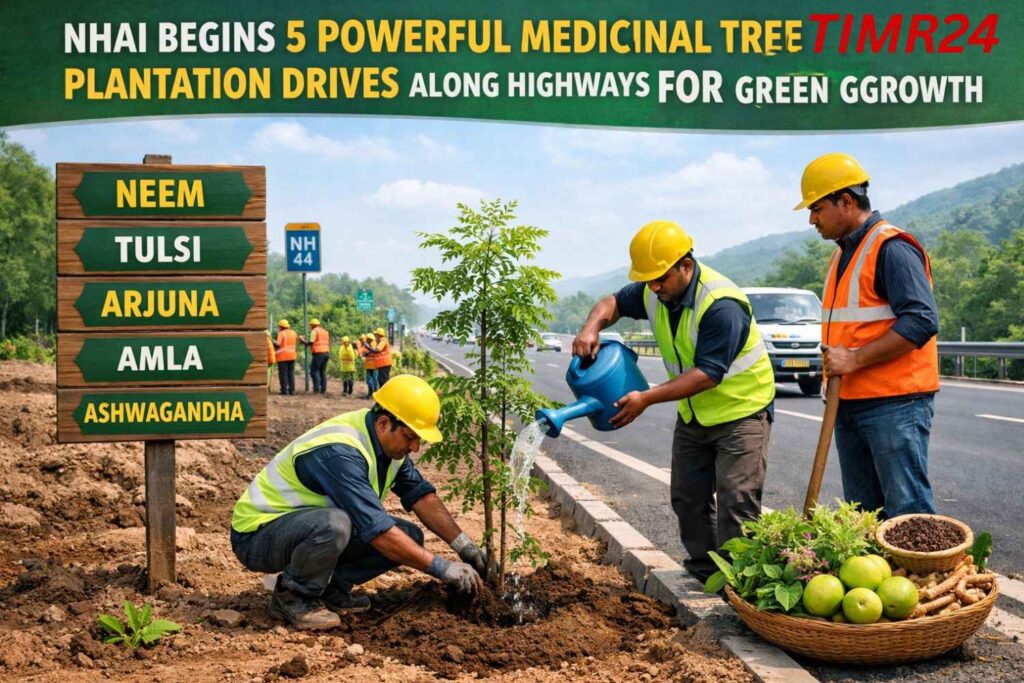
In a significant initiative to enhance biodiversity and ecological sustainability, the National Highways Authority of India (NHAI) has launched ‘Arogya Van’, a project focused on planting medicinal trees along National Highways. The first phase includes an action plan for 17 land parcels covering 62.8 hectares, with plans to plant around 67,462 medicinal trees across various states including Madhya Pradesh, Haryana, and Tamil Nadu. Species like Neem, Amla, and Jamun have been identified for planting based on agro-climatic suitability, prioritizing areas near tolls and amenities for public awareness. NHAI aims to use approximately 188 hectares of vacant land for further plantation to.
Environmentally Sustainable Infrastructure And Public
Ensure sustainability and adherence to government guidelines. This initiative promotes traditional medicinal practices, creating living repositories that raise awareness about India’s medicinal flora while reinforcing NHAI’s commitment to environmentally sustainable infrastructure and public outreach The National Highways Authority of India (NHAI) has officially launched a major medicinal tree plantation drive along highways under its newly introduced Arogya Van initiative, marking another significant step toward sustainable infrastructure development in India. This initiative aims to transform vacant land parcels located along national highways into green medicinal forests.
Combining environmental sustainability with public health awareness while enhancing the visual appeal of the country’s rapidly expanding highway network India has witnessed unprecedented highway development over the last decade, with thousands of kilometers of roads being constructed and upgraded annually. While this expansion has significantly improved connectivity and logistics efficiency, it has also increased the need for environmental balancing measures. Recognizing this, NHAI has introduced the Arogya Van concept as part of its broader green highway development strategy. The medicinal plantation drive is designed not only to improve roadside.
Health And Environmental Benefits
Greenery but also to create thematic medicinal gardens that promote awareness about India’s traditional herbal ecosystem Under this initiative, NHAI will identify unused and vacant land parcels situated along national highways and convert them into dedicated medicinal tree plantation zones. These plantations will include native and medicinal species such as Neem, Amla, Arjun, Ashoka, Tulsi, Bael, Giloy, and several other Ayurvedic plants that are known for their health and environmental benefits. The focus on native species ensures ecological compatibility while reducing maintenance requirements and improving long-term survival rates.
One of the primary objectives behind the medicinal tree plantation drive is to increase green cover along transportation corridors. Highways often pass through urban, semi-urban, and rural regions where increasing vegetation can significantly help in reducing dust pollution, absorbing vehicular carbon emissions, and improving local air quality. In addition, the medicinal plantations are expected to act as natural carbon sinks, supporting India’s climate commitments and environmental sustainability goals The Arogya Van initiative also aligns with the government’s broader mission of integrating sustainability into infrastructure development.
Authority Is Effectively Maximizing Land Productivity
Modern infrastructure planning increasingly emphasizes balancing economic growth with environmental conservation, and NHAI’s latest plantation drive reflects this evolving approach. By utilizing vacant land that would otherwise remain unused, the authority is effectively maximizing land productivity while generating ecological and social benefits Another major benefit of the initiative is highway beautification. Travelers on national highways will experience greener and more aesthetically pleasing road corridors, enhancing driving comfort and visual appeal. This could indirectly contribute to improved tourism and regional attractiveness, particularly in areas.
Where highways connect scenic or heritage destinations. Green landscapes also have proven psychological benefits, helping reduce travel fatigue and improving commuter experience The medicinal tree plantation drive is expected to be implemented in phases across multiple states, depending on land availability and regional ecological suitability. NHAI may collaborate with forest departments, environmental agencies, NGOs, and local communities to ensure proper plantation, maintenance, and monitoring of the medicinal forests. Such collaborations can improve project execution while generating local employment opportunities in plantation and maintenance activities.
Ecological Restoration Into Transportation Networks
Experts believe this move could become a model for environmentally integrated infrastructure planning in India. Highway authorities in many countries are increasingly incorporating green corridors, noise barriers, solar panels, and ecological restoration into transportation networks. NHAI’s medicinal plantation strategy adds a uniquely Indian dimension by incorporating traditional medicinal plants into modern infrastructure development, blending sustainability with cultural and health relevance From a policy perspective, the Arogya Van initiative supports multiple national objectives simultaneously. It strengthens green infrastructure development, contributes to climate resilience.
Supports biodiversity conservation, and aligns with India’s push toward sustainable urbanization and eco-friendly public projects. The project may also encourage awareness among citizens regarding medicinal plants and their importance in traditional healthcare systems like Ayurveda the initiative can have educational value. Informational signage and awareness boards installed near plantation zones could educate travelers and local residents about the medicinal significance of various plant species. This would convert highway green belts into learning spaces, promoting environmental and health literacy among the public Financially, while plantation and maintenance.
Policy Discussions Across India Government Agencies
Involve upfront investment, the long-term environmental and social returns can be substantial. Improved greenery reduces soil erosion, helps in rainwater retention, lowers ambient temperatures in nearby zones, and contributes to healthier ecosystems. These ecological (India) benefits often translate into reduced environmental remediation costs over time The launch of the medicinal tree plantation drive comes at a time when infrastructure sustainability is becoming central to policy discussions across India. Government agencies are increasingly focusing on green certification, carbon-neutral construction methods, renewable energy integration, and ecological restoration as part of infrastructure projects.
NHAI’s move demonstrates how large-scale transportation infrastructure can evolve beyond concrete and asphalt to become part of a broader environmental ecosystem This plantation initiative may also complement other ongoing highway sustainability programs, including rainwater harvesting, solar lighting, waste management, and avenue plantation drives. Together, these measures can significantly improve the environmental footprint of India’s road transportation network As India continues to invest heavily in highways, expressways, and logistics corridors, initiatives like Arogya Van show that infrastructure growth and environmental responsibility can progress hand in hand.
The medicinal tree plantation drive reflects a forward-looking approach where transportation development is not just about faster travel, but also about creating healthier, greener, and more sustainable public assets NHAI’s medicinal plantation strategy could inspire similar (India) programs in railway corridors, urban roads, industrial zones, and public institutions, multiplying its impact beyond highways. If executed effectively and maintained properly, the initiative may emerge as one of India’s most innovative green infrastructure programs in recent years.
Q1. What is NHAI’s medicinal tree plantation drive?
It is a green initiative by NHAI to plant medicinal trees along national highways under the Arogya Van program.
Q2. What is the purpose of Arogya Van?
The initiative aims to improve green cover, promote medicinal plants, and support environmental sustainability.
Q3. Where will the plantations take place?
Plantations will be developed on vacant land parcels along national highways across India.
Q4. Which types of trees will be planted?
Medicinal species like Neem, Amla, Ashoka, Arjun, Tulsi, and other native plants.
Q5. How will this benefit the environment?
It will improve air quality, reduce carbon emissions, enhance biodiversity, and beautify highways.