












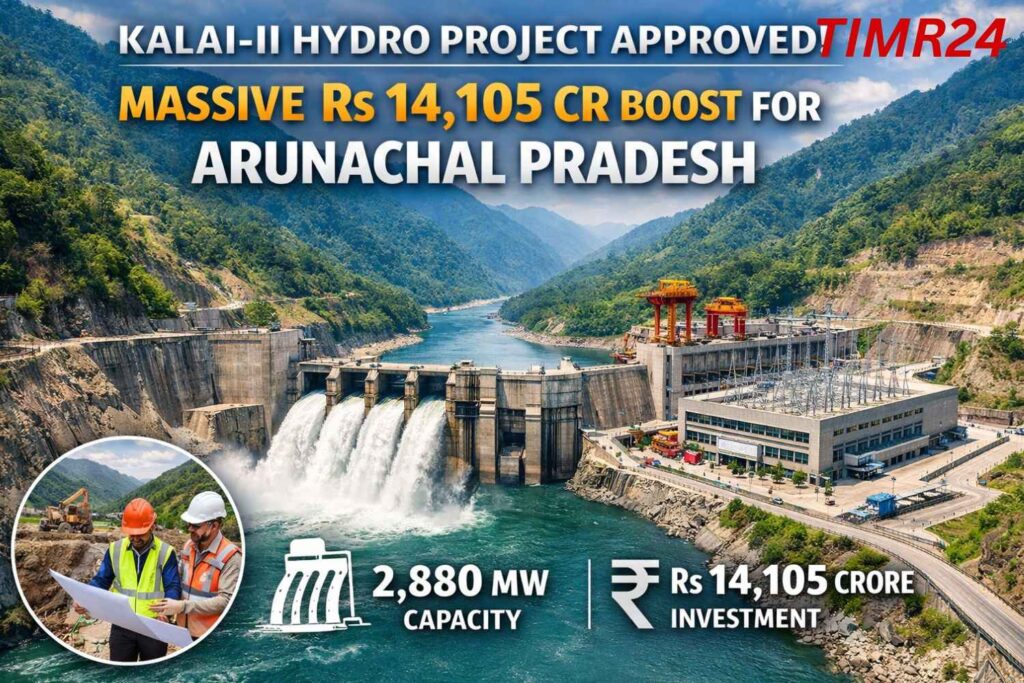
The Kalai Cabinet Committee on Economic Affairs, chaired by Prime Minister Narendra Modi, approved an investment of ₹14,105.83 crore for the Kalai-II Hydro Electric Project on the Lohit river in Arunachal Pradesh, with an estimated completion period of 78 months. The project, with an installed capacity of 1200 MW, is expected to generate 4852.95 MU of energy annually, enhancing power supply, supporting peak demand management, and contributing to the national grid. Implemented through a joint venture between THDC India Limited and the Arunachal Pradesh government, it will receive ₹599.88 crore for infrastructure support and ₹750 crore in central financial assistance.
Infrastructure And Socio-Economic Benefits
The State will benefit from 12% free power and 1% for local development, alongside significant improvements in local infrastructure and socio-economic benefits for the communities in Namsai and Anjaw Districts The approval of the Rs 14,105 crore Kalai-II Hydro Project in Arunachal Pradesh marks a significant milestone in India’s journey toward strengthening its renewable energy infrastructure. This ambitious project reflects the government’s strong commitment to expanding clean energy capacity while ensuring sustainable development in one of the country’s most resource-rich yet underdeveloped regions. With hydropower being one of the most reliable sources of renewable energy.
The Kalai-II project is expected to play a crucial role in meeting rising electricity demand while reducing dependence on fossil fuels Arunachal Pradesh, known for its vast hydropower potential due to its river systems and geographical advantages, has been identified as a key hub for energy generation. The Kalai-II Hydro Project will harness the natural flow of water resources in the region, converting it into clean electricity that can be distributed across multiple states From an environmental perspective, the Kalai-II Hydro Project aligns with India’s global commitments toward reducing carbon emissions and promoting green energy solutions.
Additionally, Development Of Supporting Infrastructure
Hydropower projects produce significantly lower greenhouse gas emissions compared to traditional coal-based power plants. The economic impact of this project is expected to be substantial. Large-scale investments like Rs 14,105 crore bring significant financial activity into the region, creating direct and indirect employment opportunities. Local communities will benefit from job creation during both the construction and operational phases. Additionally, the development of supporting infrastructure will encourage businesses, tourism, and other industries to grow in the region Another key advantage of the Kalai-II Hydro Project is its contribution to energy stability in the Northeast region.
Many areas in this region face power shortages and inconsistent electricity supply. By adding substantial capacity to the grid, this project will improve reliability and ensure a steady flow of electricity to households, businesses, and industries. This improved power infrastructure will also attract further investments, as industries prefer regions with stable energy supply. In comparison to other major government-backed initiatives, this project stands out as a long-term solution for regional energy challenges Strategically, the project also strengthens India’s position in terms of energy independence. Reducing reliance on imported fossil fuels is a critical priority for the country, and renewable energy projects like.
Require Careful Planning, Environmental Clearances
Kalai-II play a key role in achieving this objective. With increasing global focus on sustainability, such initiatives also enhance India’s image as a responsible and forward-thinking nation The development of the Kalai-II Hydro Project also reflects improved coordination (India) between central and state governments. Large infrastructure projects require careful planning, environmental clearances, and stakeholder engagement. The approval of this project indicates that these processes have been successfully managed, paving the way for timely execution. Efficient implementation will be crucial to ensure that the project delivers its intended benefits without delays or cost overruns.
In addition to economic and environmental benefits, the project will also contribute to social development. Improved infrastructure and employment opportunities will lead to better living standards for local communities. Access to reliable electricity will enhance education, healthcare, and overall quality of life. Such holistic development is essential for bridging regional disparities and ensuring inclusive growth across the country.
Overall, the Cabinet’s approval of the Kalai-II Hydro Project represents a significant step forward in India’s infrastructure and energy development journey. It showcases the government’s commitment to balancing economic growth with environmental (India) sustainability. By focusing on renewable energy, regional development, and long-term benefits, this project is set to become a cornerstone of India’s green energy strategy.
Q1. What is the Kalai-II Hydro Project?
It is a major hydropower project approved by the Indian government to generate renewable electricity in Arunachal Pradesh.
Q2. What is the total cost of the project?
The project has been approved with an investment of Rs 14,105 crore.
Q3. Where is the project located?
It is located in Arunachal Pradesh, a key region for hydropower development.
Q4. What are the benefits of this project?
It will boost clean energy production, create jobs, and improve infrastructure.
Q5. Why is this project important?
It supports India’s renewable energy goals and strengthens power supply in the Northeast.