
















IST - Friday, April 10, 2026 11:50 am
Hot News

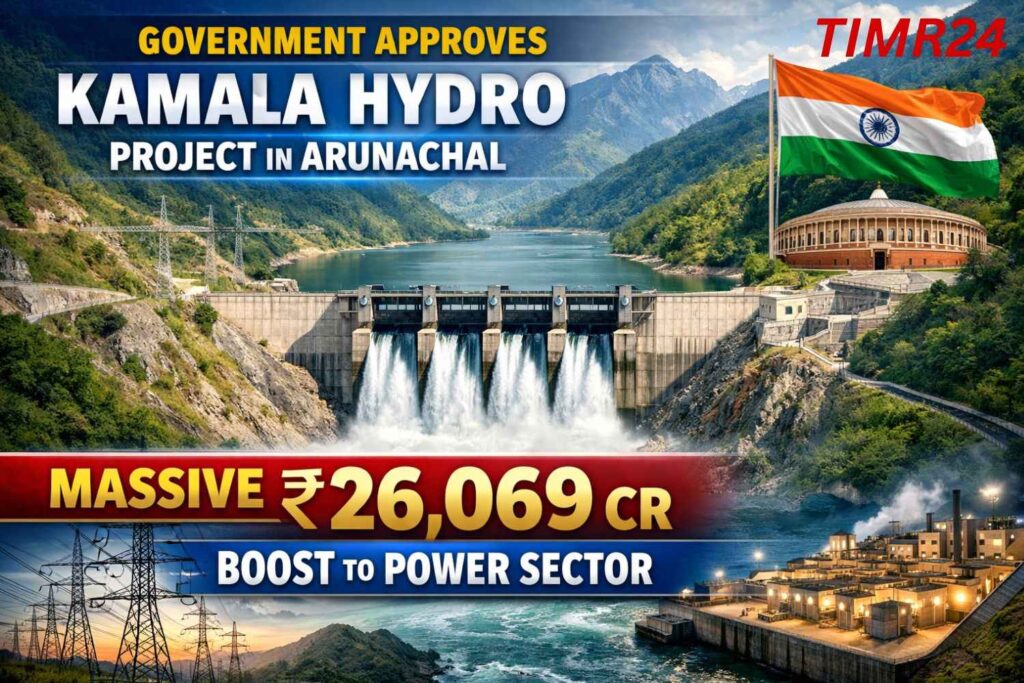
Government Approves Kamala Hydro Project in Arunachal Massive ₹26,069 Cr Boost to Power Sector

Soniya Gupta

Updated on:

Government

The Government Cabinet Committee on Economic Affairs, led by Prime Minister Narendra Modi, has approved an investment of Rs. 26,069.50 crore for the Kamala Hydro Electric Project (HEP) in Arunachal Pradesh, with a completion period of 96 months. The project, featuring an installed capacity of 1720 MW, is set to generate 6870 MU of energy, enhancing the state’s power supply and supporting national grid stability. The implementation will involve a Joint Venture between NHPC Limited and the Arunachal Pradesh government, with significant budgetary support for flood moderation and infrastructure development. The project will provide 12% free power to the state.

Local Area Development Fund Secured From project

Alongside additional benefits for local infrastructure such as roads, hospitals, and schools. Other major projects by NHPC in the region include Subansiri Lower, Dibang Multipurpose, and Etalin HEPs, all designed to foster local development through a Local Area Development Fund secured from project revenue The approval of the ₹26,069 crore Kamala Hydro Project in Arunachal Pradesh marks a significant milestone in India’s journey toward strengthening its renewable energy infrastructure and achieving long-term energy security. With increasing demand for electricity across the country and the urgent need to shift toward cleaner energy sources.

This project comes at a crucial time The northeastern region, particularly Arunachal Pradesh, has long been recognized for its vast untapped hydropower potential, and this development signals a renewed focus by the government on utilizing these natural resources efficiently and sustainably Hydropower plays a vital role in India’s renewable energy mix, offering a reliable and consistent source of electricity compared to solar and wind energy, which are dependent on weather conditions. The Kamala Hydro Project is expected to significantly contribute to this segment by generating a substantial amount of clean power.

This will not only reduce the country’s dependence on fossil fuels but also help in lowering carbon emissions, aligning with India’s commitments under global climate agreements. The government’s decision reflects its strategic intent to balance economic growth with environmental responsibility, ensuring that development does not come at the cost of ecological degradation.


Geographical Challenges And Limited Infrastructure

Arunachal Pradesh, where the project is being developed, is considered one of the most resource-rich states in terms of hydropower potential. Despite this, the region has remained underdeveloped due to geographical challenges and limited infrastructure. The Kamala Hydro Project is expected to act as a catalyst for change, bringing in investments, improving connectivity, and creating employment opportunities for local communities. The construction phase alone will generate thousands of jobs, while the operational phase will continue to support livelihoods and boost the regional economy Another critical aspect of this project is its contribution to strengthening India’s power grid.

With rising urbanization and industrialization, the demand for uninterrupted electricity supply is growing rapidly. Projects like Kamala Hydro will enhance grid stability and ensure a steady supply of power across different states. This is particularly important for industries and businesses that rely heavily on consistent electricity for their operations. By integrating hydropower into the national grid, the government aims to create a more resilient and efficient energy system that can meet future demands effectively In addition to economic and energy benefits, the project is also expected to improve infrastructure in remote areas. Roads, bridges, and communication.

Networks developed as part of the project will enhance accessibility and connectivity in the region. This will open up new opportunities for tourism, trade, and overall development, transforming the socio-economic landscape of Arunachal Pradesh. Improved infrastructure will also make it easier for the government to deliver essential services such as healthcare and education to remote communities, further enhancing the quality of life for residents large-scale infrastructure projects often come with challenges, particularly in environmentally sensitive regions like Arunachal Pradesh. Ensuring minimal ecological impact will be crucial for the success of the Kamala Hydro Project.

Assessments, And Implement Mitigation Measures

The government and project developers will need to adopt sustainable practices, conduct thorough environmental assessments, and implement mitigation measures to protect local biodiversity. Balancing development with conservation will be key to ensuring that the project (India) delivers long-term benefits without causing irreversible damage to the environment From a strategic perspective, the project also strengthens India’s position in the northeastern region, which shares borders with several neighboring countries. Developing infrastructure and boosting economic activity in this region is essential for both national security and regional integration.

The Kamala Hydro Project aligns with the government’s broader vision of enhancing connectivity and development in the Northeast, making it an integral part of India’s growth story The financial scale of the project, with an investment of ₹26,069 crore, highlights the government’s commitment to investing in large-scale infrastructure initiatives. Such investments not only drive economic growth but also attract private sector participation, creating a multiplier effect across various industries. The project is likely to benefit sectors such as construction, engineering, and logistics, further contributing to economic development.

Renewable Energy And Infrastructure Development

For investors and stakeholders, the approval of the Kamala Hydro Project sends a positive signal about the government’s focus on renewable energy and infrastructure development. It reinforces confidence in the sector and encourages further investments in similar projects. As India continues to expand its renewable energy capacity, initiatives like this will play a crucial role in achieving the country’s ambitious targets.

The Kamala Hydro Project is more than just a power generation initiative; it is a transformative project that has the potential to reshape the economic and social (India) landscape of Arunachal Pradesh while contributing significantly to India’s renewable energy goals. With proper planning, execution, and sustainability measures, it can serve as a model for future projects, demonstrating how large-scale infrastructure development can be aligned with environmental and social priorities.

Q1. What is the Kamala Hydro Project?
The Kamala Hydro Project is a large-scale hydroelectric power project approved in Arunachal Pradesh to generate clean energy.

Q2. What is the total cost of the project?
The project has been approved with an investment of ₹26,069 crore.

Q3. Why is this project important?
It supports renewable energy goals, reduces carbon emissions, and strengthens India’s power infrastructure.

Q4. Where is the project located?
It is located in Arunachal Pradesh, a region known for its hydroelectric potential.

Q5. What are the benefits for local people?
It will create jobs, improve infrastructure, and boost economic development in the region.