In addition to easing traffic congestion, the project is expected to play a crucial role in boosting economic activity in the region. Efficient road connectivity is a major factor in attracting investments, supporting businesses, and enhancing trade opportunities. Vijayawada serves as a commercial hub, and improved logistics will allow goods and services to move faster and more efficiently. This will benefit industries, small businesses, and local vendors alike. Another important aspect of the project is employment generation. Large-scale infrastructure projects create job opportunities at multiple levels, including construction, engineering, project management, and supply chain activities.
This not only provides short-term employment during the construction phase but also contributes to long-term economic stability by supporting related industries. As infrastructure continues to expand across India, job creation remains one of its most significant benefits The government has also emphasized the importance of using modern construction techniques and sustainable practices in the execution of these projects. This includes better materials, improved design standards, and long-lasting road structures that require less maintenance over time. By adopting such practices, the state ensures that public funds are utilized efficiently while delivering high-quality infrastructure.
This approach aligns with national standards promoted by organizations like the Ministry of Road Transport and Highways and the National Highways Authority of India the development of improved road infrastructure will enhance connectivity between different parts of (India) Vijayawada and nearby regions. This is particularly important for supporting regional growth, as better connectivity encourages movement of people, goods, and services beyond city limits. It also strengthens links with neighboring towns and districts, contributing to balanced regional development The Rs 105 crore road initiative also reflects the government’s commitment to long-term urban planning.
Reducing Need For Frequent Upgrades And Minimizing
Instead of temporary solutions, the focus is on building infrastructure that can support future growth and increasing population demands. Proper planning ensures that roads are designed to handle higher traffic volumes in the coming years, reducing the need for frequent upgrades and minimizing disruptions. This forward-thinking approach is essential for developing cities that are both efficient and sustainable From a social perspective, better roads improve accessibility to essential services such as healthcare, education, and emergency response. Faster and smoother transportation enables residents to reach hospitals, schools, and workplaces more easily.
Thereby improving overall living standards. In emergencies, well-developed roads can significantly reduce response times, potentially saving lives The project also aligns with Andhra Pradesh’s broader development vision, which includes transforming major cities into smart urban centers. Smart infrastructure, including advanced road networks, plays a critical role in achieving this goal. By integrating modern design and efficient planning, Vijayawada is moving closer to becoming a model city for urban development in India.
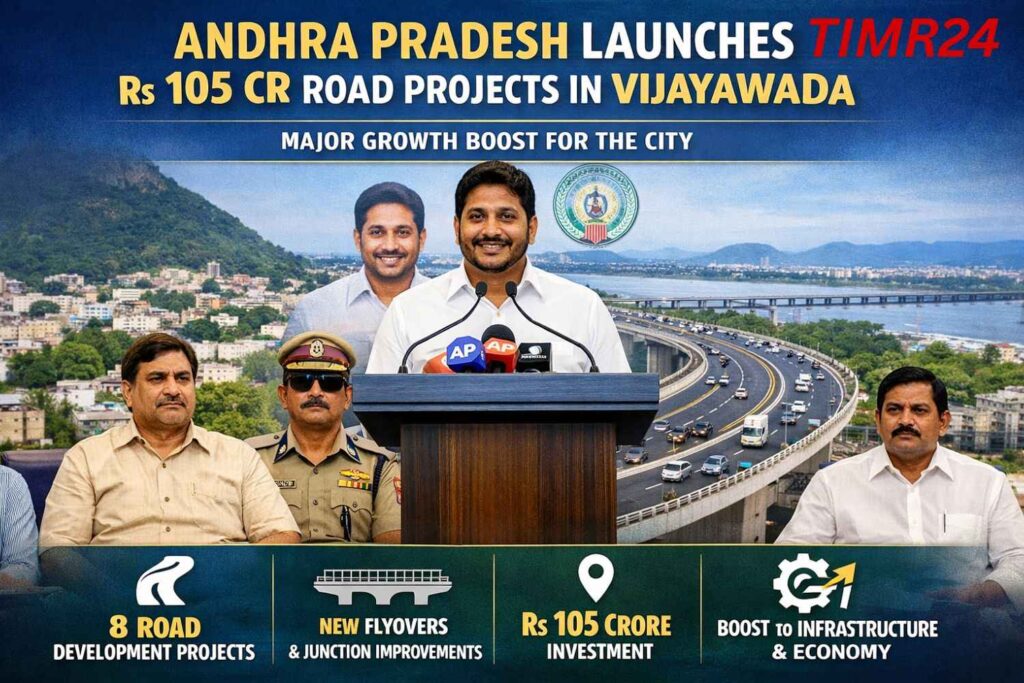
The launch of Rs 105 crore road development projects in Vijayawada marks a significant milestone in Andhra Pradesh’s infrastructure journey. The initiative addresses key urban challenges such as traffic congestion, connectivity gaps, and economic limitations while (India) paving the way for future growth. With improved roads, enhanced mobility, and better economic opportunities, Vijayawada is set to experience a major transformation. This project not only benefits the city today but also lays a strong foundation for sustainable development in the years to come.
Q1. What is the total cost of the Vijayawada road projects?
The total cost is Rs 105 crore.
Q2. What is the main objective of these projects?
To improve road connectivity, reduce traffic congestion, and support urban growth.
Q3. Which areas will benefit the most?
Major urban routes and high-traffic zones in Vijayawada.
Q4. Will this project create jobs?
Yes, it is expected to generate employment during construction and related activities.
Q5. How will it impact local businesses?
Improved logistics and connectivity will boost business efficiency and growth.