














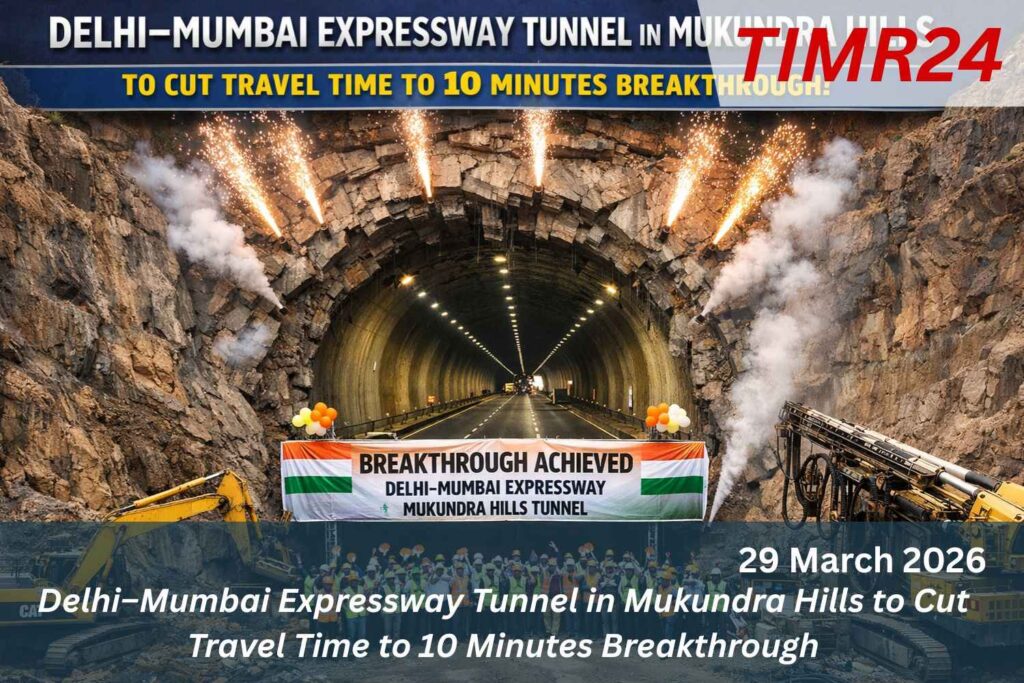
The Umedpura–Nayagaon tunnel project on the Delhi–Mumbai Expressway will significantly improve travel through the Mukundra Hills in Rajasthan. The 8.3 km twin-tube tunnel will reduce travel time from almost 50 minutes to 5–10 minutes, enhancing commute efficiency. Utilizing advanced engineering, it will alleviate congestion on NH-52 and promote economic activity by improving regional connectivity along the expressway corridor The Delhi–Mumbai Expressway is one of India’s most ambitious infrastructure projects, aimed at transforming road connectivity between the national capital and the financial hub of the country.
Technological Advancement And Environmental
Among its many engineering marvels, the Mukundra Hills tunnel stands out as a critical component that reflects both technological advancement and environmental sensitivity. Located in Rajasthan, this tunnel is designed to pass through the Mukundra Hills, a region known for its ecological importance, particularly as part of the Mukundra Tiger Reserve. By constructing a tunnel instead of a traditional road through the hills, the project ensures that wildlife habitats remain undisturbed while still delivering a high-speed travel experience for commuters The most significant advantage of this tunnel is the drastic reduction in travel time.
Previously, navigating through the hilly terrain required vehicles to take longer, winding routes that not only increased travel duration but also posed safety risks. With the new tunnel in place, vehicles can pass through the stretch in just about 10 minutes, making the journey smoother and more efficient. This improvement is particularly beneficial for logistics and freight movement, where time savings directly translate into cost reductions. Faster transportation also enhances supply chain efficiency, which is crucial for economic growth From an engineering perspective, the Mukundra Hills tunnel represents a remarkable achievement. Building a tunnel in a sensitive ecological.
Ventilation Systems, Emergency Exits, And Advanced
Zone requires careful planning, advanced technology, and strict adherence to environmental guidelines. Engineers have used modern tunneling methods to minimize disruption to the natural landscape. The design includes features such as proper ventilation systems, emergency exits, and advanced monitoring mechanisms to ensure safety for all users. These elements make the tunnel not only efficient but also secure for long-distance travel Another important aspect of the project is its focus on sustainability. The Mukundra Tiger Reserve is home to a variety of wildlife species, including tigers, leopards, and other animals. Constructing a conventional road through this area could have led to.
Habitat fragmentation and increased human-wildlife conflict. By opting for a tunnel, authorities have taken a step towards preserving biodiversity while still meeting infrastructure needs. This approach aligns with global best practices, where development projects are designed to coexist with nature rather than disrupt it The Delhi–Mumbai Expressway itself is a game-changer for India’s transportation network. Spanning multiple states, it is expected to reduce the overall travel time between Delhi and Mumbai significantly. The addition of the Mukundra Hills tunnel further strengthens this network by addressing one of the most challenging segments of the route.
Smaller Towns And Cities Along Route
As a result, the expressway will offer a seamless travel experience, attracting both passenger vehicles and commercial traffic. This increased usage will, in turn, contribute to regional development by improving connectivity to smaller towns and cities along the route For businesses, the benefits of this project are substantial. Reduced travel time means faster delivery of goods, lower fuel consumption, and improved efficiency. Industries that rely on road transport, such as manufacturing and retail, will particularly benefit from these improvements. Additionally, better connectivity can attract new investments to the region, creating job opportunities and boosting local economies.
The tunnel, therefore, is not just an infrastructure project but also a catalyst for economic growth Safety is another key consideration in the design of the Mukundra Hills tunnel. Long tunnels require robust safety systems to handle emergencies such as vehicle breakdowns or accidents. The tunnel is equipped with advanced surveillance systems, fire detection mechanisms, and communication networks to ensure quick response in case of any incident. These features are essential for maintaining user confidence and ensuring that the expressway remains a reliable mode of transport The project also highlights the importance of integrating technology into infrastructure development.
From planning and design to construction and operation, modern tools and techniques have been used to achieve high standards of quality and efficiency. This approach not only ensures the durability of the tunnel but also reduces maintenance requirements in the (India) long run. As India continues to invest in infrastructure, such projects set a benchmark for future developments In terms of environmental impact, the Mukundra Hills tunnel serves as an example of how infrastructure projects can be designed responsibly. Measures have been taken to minimize noise pollution, control emissions, and protect the surrounding ecosystem. These efforts are crucial in maintaining the ecological balance of the region.
Road Connectivity Makes It Easier For Travelers
By adopting such practices, the project demonstrates that economic development and environmental conservation can go hand in hand The completion of this tunnel is expected to have a positive impact on tourism as well. Improved road connectivity makes it easier for travelers to access various destinations in Rajasthan and nearby areas. This increased accessibility can boost tourism, benefiting local businesses such as hotels, restaurants, and transport services. Over time, the region may see a rise in visitor numbers, further contributing to its economic development The Mukundra Hills tunnel is likely to play a vital role in shaping the future of India’s transportation infrastructure.
As more sections of the Delhi–Mumbai Expressway become operational, the overall efficiency of the route will improve significantly. The tunnel, with its advanced features and strategic importance, will remain a key highlight of this project. It not only addresses current transportation challenges but also sets the stage for future growth The Mukundra Hills tunnel on the Delhi–Mumbai Expressway is a landmark project that combines engineering excellence with environmental responsibility.
By reducing travel time to just 10 minutes, it enhances connectivity and supports economic development. At the same time, it preserves the ecological integrity of (India) the Mukundra Tiger Reserve, showcasing a balanced approach to infrastructure development. As India continues to modernize its transportation network, projects like this serve as a testament to the country’s ability to innovate and adapt to changing needs.
Q1. What is the Mukundra Hills tunnel project?
It is a key tunnel on the Delhi–Mumbai Expressway designed to reduce travel time through the Mukundra range.
Q2. How much travel time will be reduced?
The tunnel will cut travel time to approximately 10 minutes across this stretch.
Q3. Why was a tunnel needed here?
To protect wildlife in the Mukundra Tiger Reserve and ensure smooth traffic movement.
Q4. Which states benefit from this project?
Primarily Rajasthan, along with improved connectivity between Delhi and Mumbai.
Q5. Is the tunnel environmentally safe?
Yes, it is designed with eco-friendly measures to minimize environmental impact.