
















The Infra report outlines the status of 1,948 ongoing projects under 17 central ministries, with a revised total project cost of Rs 41.98 lakh crore compared to the original Rs 36.32 lakh crore. Cumulative expenditure has reached Rs 19.71 lakh crore, indicating 46.95% of the revised cost has been expended, signaling steady implementation progress. Notably, 740 projects have surpassed 80% physical progress, while 250 have exceeded 80% financial completion. The transport and logistics sector leads with 1,421 projects, estimated at Rs 22.96 lakh crore. Among these, 793 are classified as mega projects (Rs 1,000 crore and above, totaling Rs 30.93 lakh crore), and 1,155 are major projects.
Economic Growth, Is Currently Facing
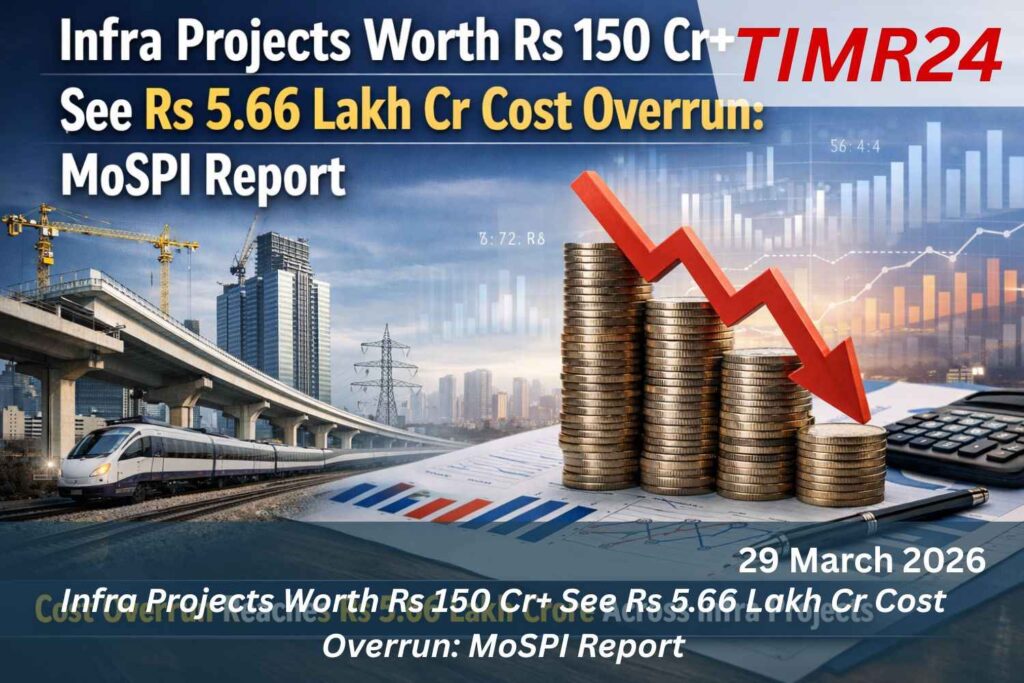
Costing up to Rs 1,000 crore, totaling Rs 5.39 lakh crore India’s infrastructure sector, which is often considered the backbone of economic growth, is currently facing a serious challenge in the form of massive cost overruns. According to the latest report released by the Ministry of Statistics and Programme Implementation (MoSPI), infrastructure projects worth ₹150 crore and above have collectively recorded a cost overrun of ₹5.66 lakh crore. This alarming figure highlights not only the scale of financial inefficiencies but also raises concerns about project planning, execution, and monitoring mechanisms in the country. For a nation aiming to become a global economic powerhouse.
Such delays and budget escalations could slow down progress significantly The report clearly indicates that a large number of ongoing projects across sectors like railways, highways, power, and urban development are running behind schedule. These delays are one of the primary reasons for the cost escalation. When projects are not completed on time, the overall expenses automatically increase due to inflation, rising material costs, and extended labor requirements This situation creates a domino effect where delayed completion leads to financial strain on both the government and private investors Another major factor contributing to cost overruns is the complexity involved in land acquisition.
Increase Project Costs Significantly
In India, acquiring land for large-scale infrastructure projects is often a time-consuming process due to legal disputes, compensation issues, and resistance from local communities. These delays not only halt construction activities but also increase project costs significantly. Additionally, regulatory approvals from multiple authorities further slow down the process. Even though reforms have been introduced to streamline approvals, the ground-level implementation still faces challenges, making it difficult to maintain project timelines Rising input costs have also played a crucial role in increasing project budgets. The prices of essential construction materials such as steel, cement, and fuel have seen.
Considerable fluctuations in recent years. These variations directly impact the overall cost of infrastructure projects. This unpredictability makes it difficult for project planners to estimate accurate costs at the initial stage, leading to financial mismatches later on In addition to economic factors, poor project management and lack of proper monitoring systems also contribute to delays and cost overruns. Many projects suffer from inadequate planning, unrealistic timelines, and inefficient coordination between different stakeholders. Without proper tracking mechanisms, it becomes challenging to identify issues at an early stage and take corrective action.
Availability Of Funds For Other Development Activities
This is where digital tools and modern project management techniques can play a significant role. Implementing real-time monitoring systems can help authorities keep track of progress and ensure timely completion of projects The impact of such large-scale cost (India) overruns is not limited to the infrastructure sector alone; it affects the overall economy as well. When government projects exceed their budgets, it leads to increased fiscal pressure and reduces the availability of funds for other development activities. This can slow down economic growth and impact the country’s financial stability. Moreover, delays in infrastructure development also affect industries that depend on efficient transportation, logistics, and energy supply.
Q1. What is the total cost overrun reported by MoSPI?
The total cost overrun is approximately ₹5.66 lakh crore.
Q2. Which projects are included in this report?
Projects costing ₹150 crore or more across sectors like infrastructure, railways, and power.
Q3. What are the main reasons for cost overruns?
Delays in land acquisition, regulatory approvals, and rising material costs.
Q4. How does cost overrun impact the economy?
It increases financial burden, delays development, and affects investor confidence.
Q5. What solutions are suggested?
Better planning, strict monitoring, faster approvals, and use of technology.