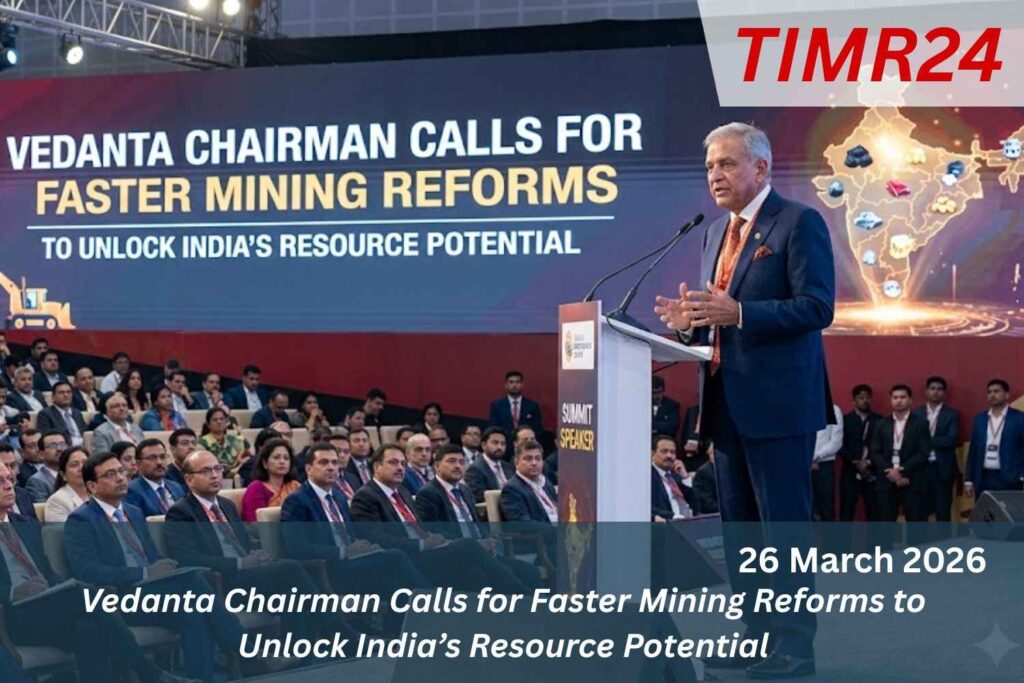
Anil Agarwal, Chairman of Vedanta Limited, highlighted the need to expedite the operationalisation of auctioned mining blocks in India to improve mineral security and reduce import dependence. He noted that 85% of auctioned blocks are non-operational, limiting job creation and resource utilization at a critical time for global energy and resource security. Key challenges include difficulties in land acquisition, lack of necessary approvals, and high premiums that render some operations unviable. Agarwal proposed a technology-led approach for land acquisition, simplified approvals, and maintaining premiums at no more than 60% to enhance commercial viability.
He emphasized India’s potential to become a global hub for minerals and urged collective efforts toward achieving an Atmanirbhar Bharat, aligned with the Prime Minister’s vision India’s mining sector stands at a critical crossroads, where policy reforms and regulatory efficiency can significantly shape the country’s economic future. The chairman of Vedanta Limited has recently emphasized the urgent need for faster mining reforms to unlock the vast resource potential that India possesses. Despite being rich in minerals such as coal, iron ore, bauxite, and zinc, the country has not fully capitalized on its natural wealth due to systemic bottlenecks and slow administrative processes.
The Current State of India’s Mining Sector
This call for reform is not just a corporate demand but a broader industry perspective that aligns with India’s ambition to become a global economic powerhouse. India’s mining industry contributes significantly to industrial growth, yet its share in GDP remains relatively modest compared to its potential. The sector is often constrained by delays in approvals, complex regulatory frameworks, and inconsistent policies across states. As discussed in our internal analysis on India Infrastructure Growth Trends, mining acts as the backbone for sectors like construction, power, and manufacturing. Without a strong and efficient mining ecosystem, these industries face supply disruptions and cost escalations.
Moreover, India continues to rely heavily on imports for several critical minerals, which puts pressure on foreign exchange reserves and exposes the economy to global price volatility. Faster reforms can help reduce this dependency and strengthen domestic supply chains.
Key Challenges Hindering Growth
One of the major concerns raised by industry leaders is the lengthy approval process for mining projects. Environmental clearances, land acquisition, and multiple regulatory permissions often lead to delays that can stretch for years. These challenges discourage investors and reduce the overall competitiveness of the sector Another critical issue is the lack of modern infrastructure and technology adoption. While countries with advanced mining ecosystems leverage automation and digital tools, India still lags in integrating such innovations at scale.
The Need For Policy Reforms
The chairman of Vedanta has stressed that simplifying policies and ensuring faster approvals can transform the mining landscape. Transparent auction processes, stable taxation policies, and investor-friendly regulations are essential to attract both domestic and foreign investments Reforms should also focus on improving ease of doing business within the sector. This includes reducing bureaucratic hurdles and creating a single-window clearance system to streamline approvals. Such measures can significantly reduce project timelines and encourage more companies to participate in mining activities.
Economic Impact of Unlocking Resource Potential
Unlocking India’s mineral wealth can have a multiplier effect on the economy. Increased mining output can support the growth of core industries, generate employment opportunities, and contribute to infrastructure development Additionally, boosting domestic production can help stabilize commodity prices and reduce dependence on imports. This is particularly important in the context of global geopolitical uncertainties that often disrupt supply chains.
Role Of Private Sector And Investments
Private sector participation is crucial for the growth of the mining industry. Companies like Vedanta bring not only capital but also expertise and advanced technologies that can enhance operational efficiency. Encouraging private investments through favorable policies can accelerate (India) the development of new mining projects and improve existing operations Foreign direct investment (FDI) can also play a significant role in bringing global best practices to India’s mining sector. By creating a transparent and predictable regulatory environment, the government can attract international players and foster healthy competition.
Balancing Growth With Sustainability
While the focus on mining reforms is essential, it is equally important to ensure that growth is sustainable and environmentally responsible. Modern mining practices emphasize minimizing environmental impact, rehabilitating mined areas, and ensuring community welfare The government and industry stakeholders must work together to implement strict environmental standards while promoting responsible mining practices. This balance is crucial for maintaining ecological integrity and gaining public trust.
Future Outlook for India’s Mining Sector
The future of India’s mining sector largely depends on how quickly and effectively reforms are implemented. With the right policy framework, the sector has the potential to become a major contributor to the country’s GDP and a key driver of industrial growth As India continues its journey towards becoming a $5 trillion economy, unlocking resource potential through efficient mining practices will be a critical step. The call by Vedanta’s chairman serves as a timely reminder that reforms are not just necessary but urgent.
Conclusion
The push for faster mining reforms highlights the untapped opportunities within India’s natural resource sector. Addressing regulatory challenges, encouraging private participation, and adopting modern technologies can transform the mining industry into a powerhouse of (India) economic growth. With strategic policy interventions and a focus on sustainability, India can unlock its full resource potential and strengthen its position in the global economy.
Q1. Why is Vedanta pushing for mining reforms in India?
Vedanta believes faster reforms will unlock untapped mineral resources, boost GDP, and reduce imports.
Q2. What are the key challenges in India’s mining sector?
Slow approvals, regulatory hurdles, land acquisition issues, and lack of infrastructure.
Q3. How can mining reforms benefit the economy?
They can increase investment, create jobs, and support industries like steel, power, and construction.
Q4. What role does private sector play in mining growth?
Private companies bring capital, technology, and efficiency to improve production.
Q5. Are environmental concerns addressed in reforms?
Yes, sustainable mining and stricter environmental regulations are key parts of policy changes.