



















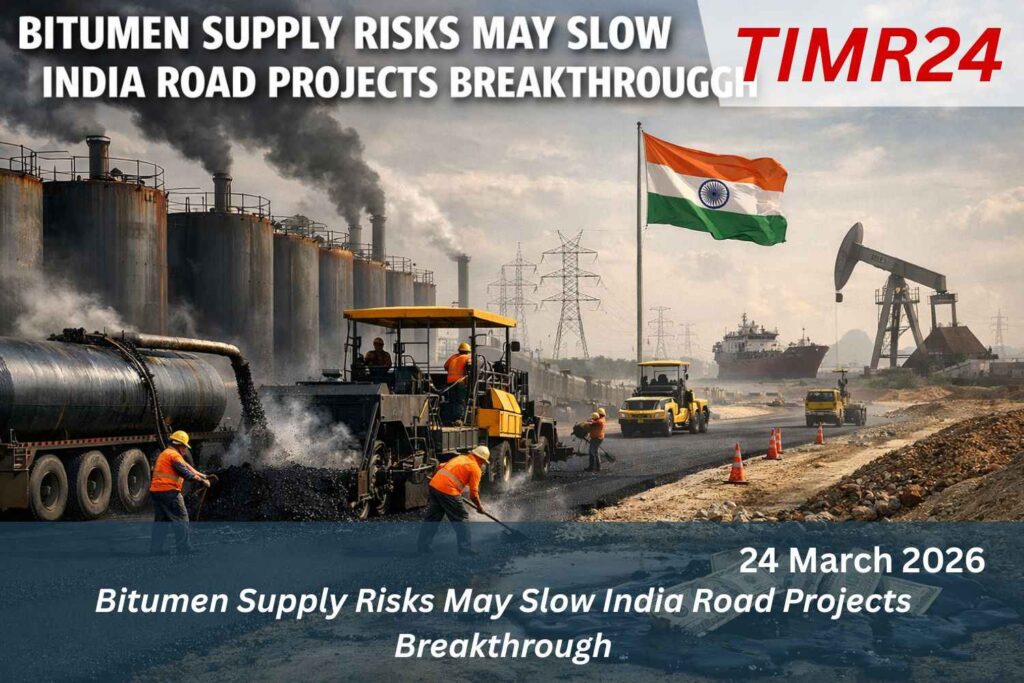
India Ratings and Research (Ind-Ra) warns that ongoing geopolitical risks in the Gulf are jeopardizing India’s bitumen supply chain, particularly affecting state and regional road projects heavily reliant on imported bitumen. While national highway projects experience minimal exposure, disturbances at the Strait of Hormuz and rising crude prices threaten cost increases and execution delays. Bitumen costs typically represent 8%-12% of National Highways Authority of India (NHAI) HAM projects, with projected price rises potentially impacting road EPC players’ margins by 150 to 250bp State and regional projects are more vulnerable, relying on nearly 40% of imported bitumen.
Usually Cheaper, Risks Becoming Significantly
Thus facing supply tightness due to geopolitical tensions. Execution of these projects is likely to slow during the peak construction season of February to June, exacerbated by limited inventories among contractors. Moreover, imported bitumen, usually cheaper, risks becoming significantly costlier, threatening project viability and leading to potential time extensions or re-tenders. While NHAI HAM projects incorporate inflation-linked mechanisms, which provide some protection, most state projects do not, leaving them susceptible to significant cost overruns amidst volatile market conditions India’s infrastructure sector has been one of the strongest pillars of economic growth.
Road construction playing a central role in improving connectivity, boosting trade, and generating employment. However, recent developments indicate that bitumen supply risks could slow down road construction projects across the country. Bitumen, a critical component used in road surfacing, is facing supply uncertainties due to global geopolitical tensions and logistical disruptions. This emerging challenge is raising concerns among policymakers, contractors, and infrastructure developers To understand the full impact, it is important to first look at India’s dependence on bitumen. A significant portion of India’s bitumen demand is met through imports.
However, Supply Disruptions In Major Exporting
As domestic production is not sufficient to fulfill the growing infrastructure needs. With the government aggressively pushing highway expansion under programs like Bharatmala, the demand for bitumen has increased substantially. However, supply disruptions in major exporting countries and fluctuations in crude oil prices are creating volatility in availability and pricing According to (India) industry experts, geopolitical tensions in key oil-producing regions have directly impacted the global supply chain. When supply chains are disrupted, transportation costs increase, and delivery timelines become uncertain. This creates a ripple effect across the construction industry.
Contractors often face delays in receiving raw material Another major issue is the rising cost of bitumen. Since bitumen is derived from crude oil, any increase in crude prices directly affects its cost. Over the past few months, fluctuations in international oil markets have led to unstable bitumen prices. For contractors working on fixed-price contracts, this becomes a serious challenge, as they have limited flexibility to absorb increased costs. This situation may discourage new project bids and slow down execution speed In addition to pricing, logistics is also a critical factor. Importing bitumen involves shipping, storage, and inland transportation. Any disruption in these processes can delay material availability.
Project Timelines Are Extended, Additional Costs
Ports may face congestion, shipping routes may be affected by geopolitical issues, and inland transport costs may rise due to fuel price hikes. All these factors together contribute to slowing down road construction projects The impact of bitumen supply risks is not limited to delays alone. It also affects the overall cost of infrastructure development. When project timelines are extended, additional costs are incurred in terms of labor, equipment, and financing. This ultimately increases the burden on both private contractors and government agencies. In the long term, it could affect budget allocations and slow down future infrastructure investments.
Despite these challenges, the Indian government and industry stakeholders are actively exploring solutions. One of the key strategies is to increase domestic production of bitumen. By enhancing refining capacity and encouraging local production, India can reduce its dependency (India) on imports. This will help stabilize supply and reduce vulnerability to global disruptions. Another approach being considered is the use of alternative materials. Researchers and engineers are exploring eco-friendly and cost-effective substitutes that can partially replace bitumen in road construction. Technologies such as plastic roads and cold mix asphalt are gaining attention as sustainable alternatives.
Supply Chain Planning, Companies Can Minimize
While these solutions are still evolving, they offer promising opportunities to reduce dependency on traditional materials Contractors are also adopting better risk management strategies. This includes diversifying suppliers, maintaining buffer stock, and using advanced forecasting tools to anticipate supply disruptions. By improving supply chain planning, companies can minimize delays and maintain project timelines more effectively this situation highlights the importance of building a resilient infrastructure ecosystem. Dependence on a single source or region for critical materials can create vulnerabilities. Therefore, diversification and strategic planning are essential to ensure long-term stability.
Governments, industry players, and policymakers must work together to create a robust framework that can withstand global uncertainties the outlook remains cautiously optimistic. While bitumen supply risks pose short-term challenges, they also present an opportunity to strengthen domestic capabilities and adopt innovative solutions. With the right policies and strategic investments, India can overcome these obstacles and continue its infrastructure growth journey
Bitumen supply risks are a significant concern for India’s road construction sector, but they are not insurmountable. By focusing on domestic production, alternative materials, and efficient supply chain management, the country can mitigate these risks effectively. The coming months will be crucial in determining how quickly the industry adapts and responds to these challenges. If managed well, this situation could ultimately lead to a more resilient and self-reliant infrastructure sector in India.
Q1. What is bitumen and why is it important?
Bitumen is a key material used in road construction for binding aggregates and creating durable surfaces.
Q2. Why is there a supply risk?
Due to geopolitical tensions, import dependency, and global price fluctuations.
Q3. How will it impact India’s road projects?
It may delay construction timelines and increase project costs.
Q4. Is India dependent on imports?
Yes, India imports a significant portion of bitumen requirements.
Q5. What solutions are being considered?
Domestic production boost, alternative materials, and diversified sourcing.