


















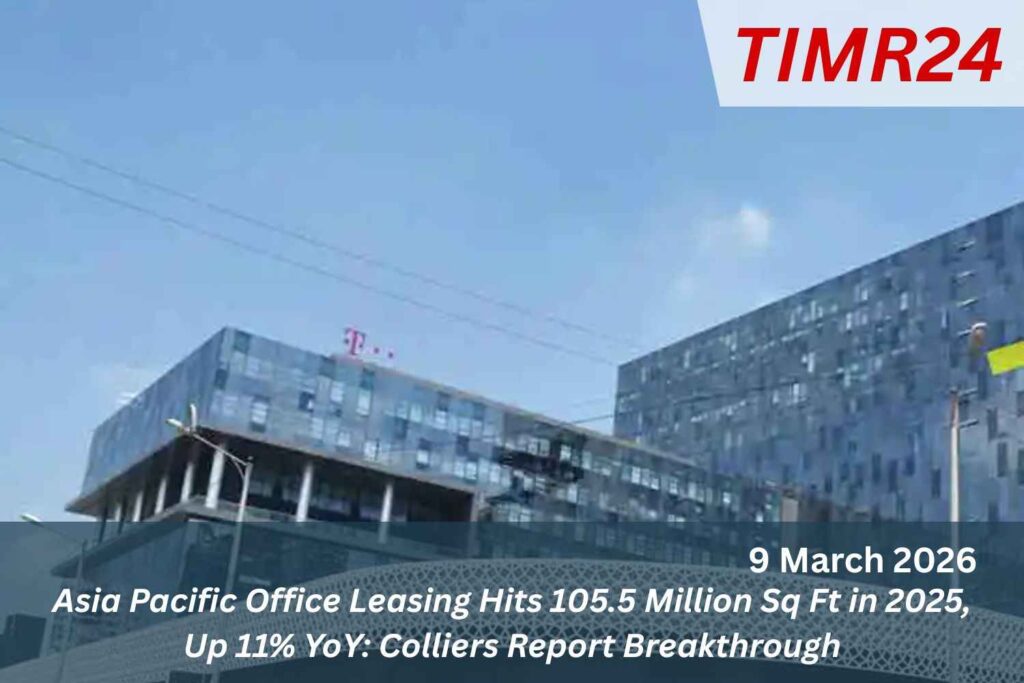
Total office leasing in 11 major Asia Pacific markets reached 9.8 million square metres in 2025, an 11% increase year-on-year, driven by strong demand for Grade A office space in countries like India, China, and Japan. The Philippines, New Zealand, and Hong Kong also showed notable demand growth. New office supply increased by 19% to 9.6 million square metres, with India, Mainland China, and Singapore providing 82% of this new supply. Looking ahead to 2026, demand and supply are expected to remain strong, although tightening vacancy and selective occupiers may influence real estate decisions. India emerged as a dominant demand center, accounting.
For 68% of leasing and 55% of new supply, positioning it for continued growth. The report indicates a shift in strategy for office space acquisition, focusing more on location and purpose rather than scale, as businesses become more deliberate in securing office spaces The Asia Pacific commercial real estate market recorded a strong rebound in 2025 as office leasing activity reached approximately 105.5 million square feet, marking an 11 percent year-on-year growth, according to the latest market research by Colliers. The report highlights renewed corporate expansion, improving business confidence, and sustained demand from sectors such as technology, financial services, and flexible workspace providers.
The region’s office market had experienced volatility during the pandemic years, when remote work and economic uncertainty slowed corporate leasing decisions. However, 2025 has witnessed a noticeable recovery as organizations increasingly adopt hybrid work models while still prioritizing collaborative office spaces. Many companies are now focusing on quality workplaces that support productivity, employee wellbeing, and sustainability goals In several major business hubs across the Asia Pacific region, office leasing activity has surpassed pre-pandemic levels. Cities such as Singapore, Bengaluru, Sydney, Tokyo, and Hong Kong have continued to attract.
Growth Drivers Behind the Leasing Surge
Multinational corporations and expanding domestic enterprises seeking modern office environments. The rise in leasing activity across the Asia Pacific region is largely attributed to economic resilience and expanding business sectors. Technology companies remain among the largest occupiers of office space, particularly in innovation-driven cities like Bengaluru and Singapore. Startups, fintech firms, and global tech giants continue to scale operations in these markets, creating sustained demand for flexible and high-quality office environments.
Another important driver has been the increasing demand for flexible workspace solutions. Managed office operators and coworking providers have expanded rapidly in recent years, offering businesses scalable office solutions without long-term commitments. Companies looking to adapt quickly to changing workforce patterns are turning to flexible office models that allow them to adjust space requirements efficiently The financial services sector has also contributed significantly to leasing growth. Major banking and financial institutions are consolidating operations in premium business districts while upgrading to sustainable buildings equipped with modern digital infrastructure.
Key Cities Leading Office Demand
This shift toward Grade-A office assets is influencing leasing trends across key markets. Among Asia Pacific markets, India has emerged as one of the fastest-growing destinations for office leasing. Cities such as Bengaluru, Hyderabad, and Mumbai continue to attract multinational corporations, particularly in IT services, global capability centers, and engineering sectors Bengaluru alone accounted for a significant share of office leasing demand due to its strong technology ecosystem and large skilled workforce. The city’s office supply pipeline remains robust, with developers delivering new commercial projects designed to meet global workplace standards.
Meanwhile, Singapore has maintained its status as a regional financial hub. Global companies establishing Asia Pacific headquarters frequently select Singapore for its stable business environment and strong connectivity to international markets. Premium office spaces in the city’s central business district continue to experience healthy demand despite rising rental levels In Australia, Sydney’s commercial property market has demonstrated resilience as organizations prioritize high-quality office spaces in prime locations. Leasing activity in Sydney has been supported by growth in financial services, professional consulting firms, and technology companies expanding their regional footprints.
Corporate Strategy and Workplace Transformation
Another factor influencing leasing activity is the evolution of corporate workplace strategies. Instead of large traditional offices designed for full-time occupancy, many organizations are transitioning to collaborative and experience-driven workplaces. These offices emphasize meeting zones, creative spaces, and employee wellness facilities Hybrid work models are now widely accepted across the Asia Pacific region. Companies are encouraging employees to return to offices for collaboration, training, and team engagement while allowing flexible remote work arrangements. This has led to a shift in office design, where companies require more efficient layouts rather than simply expanding floor area.
Supply Pipeline And Real Estate Investment Trends
Sustainability has also become a major priority for occupiers. Businesses increasingly prefer buildings with green certifications, energy-efficient systems, and environmentally responsible construction practices. Developers across the region are responding by integrating smart building technologies and sustainable infrastructure into new office developments. The strong leasing momentum is also supported by a steady supply of new commercial developments. Developers across Asia Pacific cities are launching modern office towers that meet international standards for sustainability, connectivity, and workplace experience Real estate investors are actively monitoring.
The office sector’s recovery as leasing volumes continue to rise. Institutional investors, sovereign wealth funds, and real estate investment trusts are focusing on prime commercial assets in major cities where long-term demand remains stable Investment activity is also being driven by the region’s growing urban economies. Rapid digital transformation and the expansion of technology ecosystems are creating new opportunities for office development in emerging business districts.
India’s Expanding Role in the Asia Pacific Office Market
India has become one of the most attractive markets for global corporations establishing technology and operations centers. The country’s large talent pool, competitive operating costs, and expanding digital infrastructure continue to attract foreign investment (India) Global capability centers operated by multinational companies are playing a particularly important role in India’s office leasing growth. Many organizations are expanding their engineering, research, and analytics operations in cities such as Bengaluru, Hyderabad, and Pune India’s commercial real estate sector has also seen increased interest from international investors who view.
Future Outlook for Asia Pacific Office Leasing
The country as a long-term growth market. Office developments designed for multinational tenants are being built across major urban centers, further strengthening the region’s commercial property ecosystem. According to the Colliers report, the Asia Pacific office leasing market is expected to maintain stable growth over the next few years. Economic recovery across major economies, combined with ongoing digital transformation, will continue to drive corporate expansion Flexible workspace providers are expected to capture a larger share of leasing demand as businesses seek agile solutions for evolving workforce needs. Meanwhile, technology firms, financial institutions.
Urban infrastructure development across the region is also expected to support commercial property growth. Governments in several countries are investing heavily in transportation, digital infrastructure, and smart city initiatives that improve business connectivity and (India) urban livability As organizations rethink workplace strategies in the post-pandemic era, the demand for high-quality office environments will remain strong. The combination of economic resilience, evolving corporate needs, and increasing investor confidence is positioning the Asia Pacific region as a key global hub for commercial real estate growth.
Q1. What was the total office leasing volume in Asia Pacific in 2025?
Office leasing across the Asia Pacific region reached approximately 105.5 million square feet in 2025, showing an 11% annual growth.
Q2. Which sectors are driving office leasing demand?
Technology companies, financial services firms, and flexible workspace providers are the key sectors driving leasing activity.
Q3. Which cities are leading office leasing growth?
Major cities include Bengaluru, Singapore, Sydney, Tokyo, and Hong Kong.
Q4. Why is demand for flexible workspaces increasing?
Businesses prefer flexible offices because they allow companies to scale space requirements and adapt to hybrid work models.
Q5. What is the future outlook for Asia Pacific office leasing?
The market is expected to remain stable with continued demand from tech companies, financial institutions, and multinational corporations.