














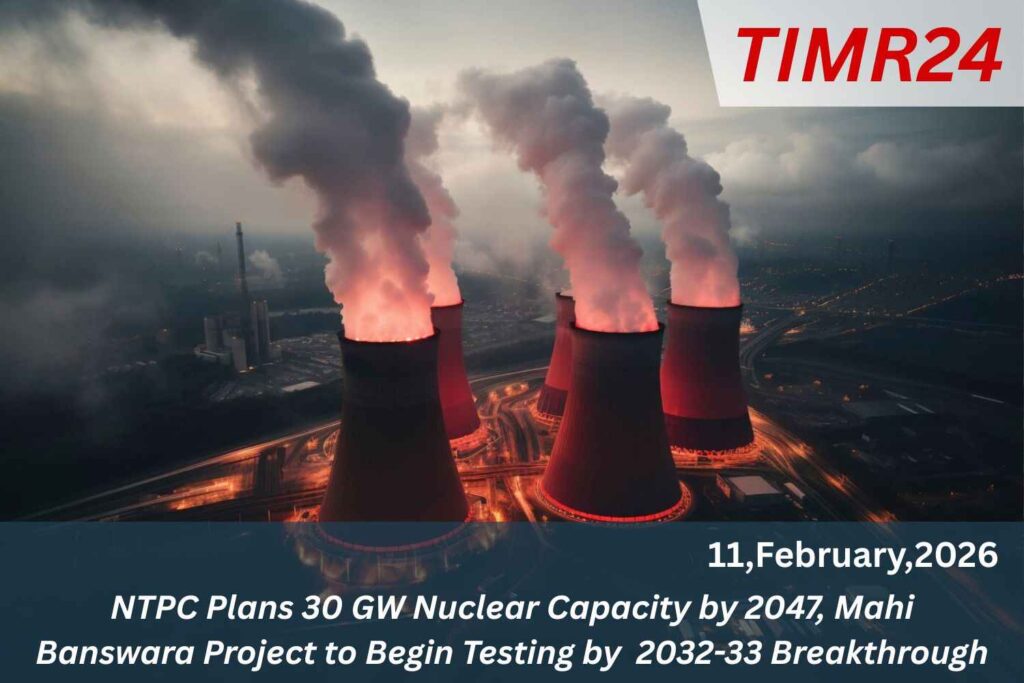
NTPC Ltd plans to develop 30 GW of nuclear power capacity by 2047 as part of India’s goal of 100 GW. This expansion will involve joint ventures and a dedicated nuclear subsidiary, with Anu Shakti Vidyut Nigam Limited working on a 4×700 MW project in Rajasthan. The wholly owned subsidiary, NTPC Parmanu Urja Nigam Limited, was established on January 7, 2025. NTPC is also seeking global collaborations through an Expression of Interest, and the first 700 MW unit of the Mahi Banswara project is expected to begin initial testing by 2032-33, contributing significantly to India’s nuclear energy future India’s largest power producer NTPC Limited has announced an.
Trengthening Energy Security
Ambitious plan to establish 30 GW of nuclear power capacity by 2047, marking a significant step in the country’s long-term energy transition strategy. This initiative aligns with India’s commitment to achieving net-zero emissions and strengthening energy security while ensuring sustainable electricity generation. Among the key projects supporting this vision is the Mahi Banswara Nuclear Power Project in Rajasthan, which is expected to begin testing operations by 2032–33. The development represents a major milestone in India’s nuclear power expansion and reflects the government’s increasing focus on low-carbon energy solutions.
NTPC’s entry into nuclear energy marks a strategic shift in India’s power generation landscape. Traditionally known for thermal power generation, NTPC has been diversifying its energy portfolio to include renewable and clean energy sources. The company’s nuclear expansion plan complements its broader strategy of reducing dependence on coal-based power while ensuring reliable electricity supply to support India’s growing industrial and infrastructure needs The Mahi Banswara Nuclear Power Project plays a central role in NTPC’s nuclear ambitions. Located in Rajasthan, the project is being developed in collaboration with Nuclear Power Corporation of India Limited (NPCIL).
Expected To Rise Substantially Over
The country’s primary nuclear power operator India’s growing energy demand is a major driver behind NTPC’s nuclear expansion strategy. As the economy continues to grow and urbanization accelerates, electricity consumption is expected to rise substantially over the next two decades. Nuclear power offers a reliable solution because it provides consistent electricity generation unlike renewable sources such as solar and wind, which depend on weather conditions. This reliability ensures uninterrupted power supply for industries, infrastructure, and households, making nuclear energy an essential component of India’s future energy mix.
The government’s policy support has also played an important role in promoting nuclear energy development. India’s long-term energy roadmap emphasizes the need to expand non-fossil fuel capacity to reduce carbon emissions and meet climate commitments From an environmental perspective, nuclear power offers several advantages. Unlike coal-based power plants, nuclear reactors generate electricity without emitting greenhouse gases during operation. This makes nuclear energy an effective solution for addressing climate change and improving air quality The development of nuclear infrastructure also brings significant economic benefits.
Industries Additionally, Nuclear Power
Large-scale projects like Mahi Banswara create employment opportunities during construction, operation, and maintenance phases. They also stimulate regional economic development by improving infrastructure, transportation, and local industries. Additionally, nuclear power plants require advanced engineering, research, and technological expertise, encouraging innovation and skill development in the country’s energy sector NTPC’s nuclear initiative also supports India’s energy independence goals. The country currently relies heavily on fossil fuel imports to meet its energy needs, which exposes the economy to global price fluctuations and supply uncertainties.
By increasing domestic nuclear power generation, India can reduce its dependence on imported fuels and strengthen its energy security. This shift is particularly important in the context of global energy market volatility and increasing geopolitical challenges affecting fuel supply chains Another important aspect of NTPC’s nuclear strategy is technological collaboration and knowledge transfer. The partnership with NPCIL enables NTPC to leverage decades of nuclear expertise and operational experience. This collaboration ensures adherence to safety standards, regulatory compliance, and efficient project execution. Nuclear power development involves complex engineering processes.
Nuclear Projects Typically Require
Including reactor design, radiation safety, waste management, and emergency preparedness, all of which require specialized technical capabilities The timeline for achieving 30 GW nuclear capacity by 2047 reflects India’s long-term planning approach. Nuclear projects typically require extended development periods due to regulatory approvals, safety assessments, and infrastructure requirements. The phased implementation strategy allows NTPC to gradually build capacity while ensuring operational safety and financial sustainability. The Mahi Banswara project’s testing schedule for 2032–33 represents an important milestone within this broader timeline.
In the broader context of India’s energy transition, nuclear power complements renewable energy expansion. While solar and wind energy have experienced rapid growth, their intermittent nature makes it necessary to have stable power sources that ensure grid reliability. Nuclear energy provides continuous electricity generation, supporting grid stability and enabling greater integration of renewable power sources. This balanced energy approach helps India achieve sustainable growth while maintaining energy reliability The success of NTPC’s nuclear expansion will depend on several factors, including regulatory support, technological advancements.
Economic Development Justify
Financial investments, and public acceptance. Nuclear energy projects often require significant capital investment and long-term commitment from stakeholders. However, the long-term benefits in terms of clean energy, energy security, and economic development justify the (India) investment Public awareness and community engagement are also critical components of nuclear power development. Ensuring transparency, safety communication, and environmental responsibility helps build trust among local communities. Modern nuclear technologies incorporate advanced safety features designed to prevent accidents and minimize risks, reinforcing confidence in nuclear energy as a reliable power source.
India’s commitment to expanding nuclear power also strengthens its position in global climate action efforts. As countries worldwide transition toward low-carbon energy systems, India’s nuclear expansion demonstrates its proactive approach to addressing environmental challenges. The combination of renewable energy growth and nuclear power development positions the country as a major player in global clean energy transformation NTPC’s 30 GW nuclear capacity target represents more than just an energy expansion plan; it reflects India’s vision for sustainable development, technological advancement, and economic resilience. The Mahi Banswara Nuclear Project serves as.
Banswara Project Mark
A critical step toward achieving this vision, showcasing the country’s capability to develop large-scale clean energy infrastructure NTPC’s plan to establish 30 GW nuclear capacity by 2047 and the development of the Mahi Banswara project mark a transformative phase in India’s energy journey. The initiative supports environmental sustainability, enhances energy security, (India) promotes economic development, and strengthens technological capabilities. As India continues to expand its power infrastructure, nuclear energy will play a vital role in ensuring reliable, clean, and sustainable electricity for future generations while contributing to the nation’s long-term growth and global climate commitments.
Q1. What is NTPC’s nuclear power capacity target?
NTPC aims to develop 30 GW of nuclear power capacity by 2047 to support India’s clean energy goals.
Q2. What is the Mahi Banswara Nuclear Project?
It is a nuclear power project in Rajasthan developed by NTPC and NPCIL, expected to begin testing by 2032–33.
Q3. Why is NTPC investing in nuclear energy?
To reduce carbon emissions, strengthen energy security, and support India’s net-zero targets.
Q4. How will nuclear power help India’s energy sector?
It provides reliable, low-carbon base-load electricity and reduces dependence on fossil fuels.
Q5. Which organizations are involved in NTPC’s nuclear projects?
NTPC collaborates with Nuclear Power Corporation of India Limited (NPCIL) for technology and operations.