















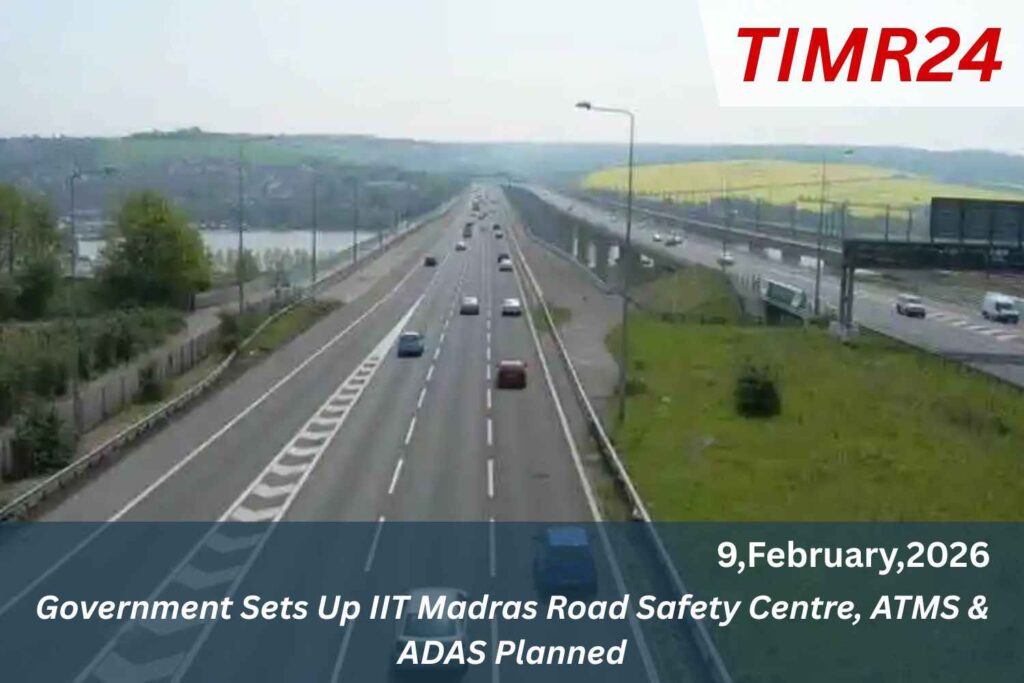
The Government Ministry of Road Transport and Highways has set up a Centre of Excellence for Road Safety at IIT Madras to integrate global best practices and foster collaboration among academia, industry, and government. National Highways projects adhere to standards from the Indian Roads Congress, based on international norms. The ministry aims to enhance safety through Advanced Traffic Management Systems, featuring AI-driven incident detection and monitoring technologies, and will mandate advanced braking systems for certain vehicle categories from January 2027. Additionally, Advanced Driver Assistance Systems will be implemented for various vehicle models from October 2027.
Modernising Highway Infrastructure
The government is addressing high fatality areas on National Highways and conducts annual road safety campaigns to raise awareness and reduce accidents The Government of India has taken a decisive step towards improving road safety and modernising highway infrastructure by setting up a Centre of Excellence for Road Safety at IIT Madras. This initiative reflects the government’s growing focus on combining academic expertise, advanced technology, and real-time data systems to address the rising challenges of traffic congestion and road accidents across national highways. With plans to deploy Advanced Traffic Management Systems (ATMS) and Advanced Driver Assistance Systems (ADAS).
The move is expected to significantly strengthen India’s transition toward safer and smarter highways The newly established Centre of Excellence at IIT Madras will act as a national knowledge hub for research, testing, validation, and implementation of cutting-edge road safety solutions. IIT Madras, known for its strong engineering and transport research ecosystem, will collaborate closely with government agencies, industry stakeholders, and technology providers. The objective is not limited to academic research but extends to practical, scalable solutions that can be implemented across India’s extensive highway network. This initiative aligns with the broader national push for smart infrastructure development.
Monitor Traffic Conditions
A key focus area of the centre will be the development and deployment of Advanced Traffic Management Systems. ATMS integrates surveillance cameras, sensors, variable message signs, and centralized command centres to monitor traffic conditions in real time. These systems help authorities detect accidents quickly, manage congestion, regulate speed, and provide timely information to road users. On high-density corridors and accident-prone stretches, ATMS can play a crucial role in reducing response times and preventing secondary accidents. The National Highways Authority of India, which oversees many such initiatives, continues to expand technology-driven traffic solutions across highways.
Alongside ATMS, the government is planning the gradual rollout of Advanced Driver Assistance Systems on national highways. ADAS technologies include features such as lane departure warnings, collision avoidance alerts, adaptive cruise control, and blind-spot detection. While ADAS is typically associated with modern vehicles, highway-level integration is equally important. Well-marked lanes, smart signages, digital mapping, and connected infrastructure enable vehicles equipped with ADAS to function more effectively. The IIT Madras centre will support testing and standardisation of such infrastructure requirements, ensuring that Indian highways are future-ready and compatible with evolving vehicle technologies.
Leveraging Artificial Intelligence
Road safety remains a critical concern in India, which accounts for a significant share of global road accident fatalities. The establishment of this centre signals a shift from reactive measures to a preventive and data-driven approach. By leveraging artificial intelligence, machine learning, and big data analytics, the centre will analyse accident patterns, driver behaviour, and road design flaws. These insights will help policymakers design safer roads, enforce better regulations, and improve driver awareness programs. The Ministry of Road Transport and Highways, which is spearheading this initiative, has consistently emphasized technology-led solutions.
Another important dimension of the IIT Madras Centre of Excellence is capacity building. The centre will train engineers, policymakers, enforcement officials, and private-sector professionals in modern road safety practices. Skill development programs will focus on traffic engineering, intelligent transport systems, and digital highway management. This knowledge transfer is crucial for ensuring uniform implementation of safety technologies across states and regions. Readers interested in how digital systems are transforming public infrastructure can also explore our insights on digital transport initiatives shaping India’s mobility landscape.
Efficient Transportation Corridors
The integration of ATMS and ADAS also supports India’s vision of smart highways under broader infrastructure modernization programs. Smart highways are not just about faster travel but about safer, cleaner, and more efficient transportation corridors. Real-time traffic monitoring reduces fuel wastage caused by congestion, while automated incident detection improves emergency response. Over time, these systems contribute to lower emissions and improved commuter experience. This aligns with national manufacturing and innovation goals promoted under initiatives From an industry perspective, the Centre of Excellence is expected to catalyse.
Innovation and private-sector participation. Startups, technology firms, and infrastructure developers will gain access to testing facilities and research expertise. This collaborative ecosystem will encourage the development of indigenous road safety solutions tailored to Indian (India) traffic conditions. IIT Madras has already demonstrated strong industry-academia collaboration across domains, and this centre will further strengthen The long-term impact of this initiative extends beyond highways. Urban roads, state highways, and expressways can also benefit from the frameworks and technologies developed at the centre. As India moves toward connected and autonomous mobility.
Intelligent Transport Systems
Standardised safety infrastructure will become increasingly important. The research outputs from IIT Madras will help create national guidelines for intelligent transport systems, ensuring consistency and interoperability across regions. smart infrastructure development in India The government’s decision to set up the IIT Madras Centre of Excellence for Road Safety marks a significant milestone in India’s infrastructure journey.
By combining academic excellence, advanced technologies like ATMS and ADAS, and strong institutional support, the initiative promises to enhance highway safety and efficiency. As these systems are rolled out across national highways, they will not only save lives but also redefine how India plans, (India) builds, and manages its transport infrastructure. This initiative stands as a clear example of how technology, policy, and research can come together to create safer roads for the future.