






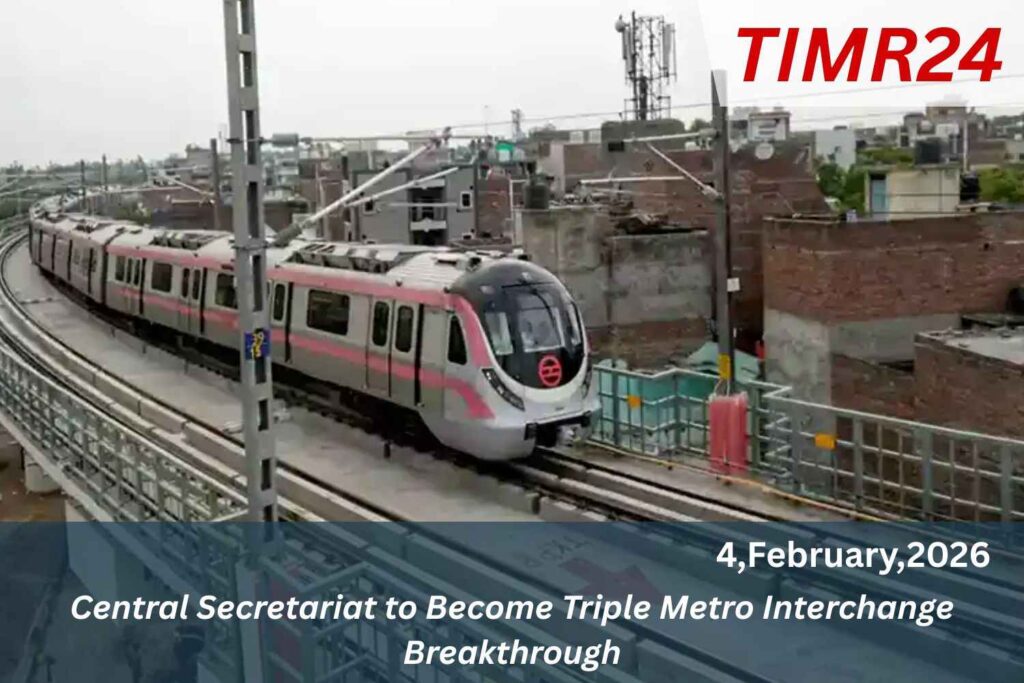
The Central Secretariat Metro Station is set to be upgraded into a triple-interchange hub as part of Delhi Metro’s Phase V(A), connecting the Yellow, Violet, and Magenta lines. The new Magenta Line will enhance connectivity to central Delhi and key government areas, including Central Vista. The expansion will provide direct access to all Kartavya Bhawans, with DMRC estimating daily usage by around 60,000 officegoers and nearly 200,000 visitors, which aims to reduce reliance on private vehicles and lower fossil fuel consumption Delhi’s public transport network is on the brink of a major transformation as Central Secretariat Metro Station is set to emerge.
Central Secretariat Currently Connects
As a triple metro interchange. Already known as one of the busiest and most strategic stations in the Delhi Metro network, Central Secretariat currently connects the Yellow Line and Violet Line. With the planned integration of an additional metro corridor, the station will soon enable seamless interchange between three major lines, reinforcing its role as a critical mobility hub in the national capital. This development is expected to significantly enhance passenger convenience, reduce travel time, and strengthen last-mile connectivity for thousands of daily commuters The Central Secretariat station occupies a unique geographical and administrative position in New.
Delhi, located close to Rashtrapati Bhavan, Parliament House, and major government offices. Due to its proximity to administrative zones and employment centers, the station already witnesses heavy footfall during peak hours. The conversion into a triple interchange is being designed to handle future demand while maintaining operational efficiency and commuter safety. According to the Delhi Metro Rail Corporation (DMRC), this expansion aligns with the broader goal of making Delhi’s metro system more interconnected and commuter-friendly From an infrastructure perspective, the upcoming interchange will involve complex underground engineering and careful.
Techniques And Modern Station
Integration with existing station layouts. Since Central Secretariat is already a deep underground station, construction activities will focus on minimizing disruption to current metro operations. Advanced tunneling techniques and modern station design principles are expected to be deployed to ensure smooth passenger movement across all three lines. This expansion also reflects DMRC’s experience in executing technically challenging projects across Delhi, including major interchange stations like Rajiv Chowk and Kashmere Gate The addition of a third metro line at Central Secretariat is expected to bring substantial benefits for daily commuters.
Passengers traveling between North, South, and Central Delhi will experience improved route flexibility without the need for multiple station changes. Office-goers, tourists, and government employees will especially benefit from reduced congestion at other major interchange (India) points. This move will also support transit-oriented development by encouraging the use of public transport over private vehicles, contributing to reduced traffic congestion and lower carbon emissions in central Delhi In terms of urban mobility planning, the triple interchange is a strategic step toward strengthening Delhi’s multimodal transport network. With better integration between different metro.
Transport Systems Operating
Corridors, passengers will have faster access to key locations such as Connaught Place, Lajpat Nagar, Hauz Khas, and the Airport Express corridor. This enhanced connectivity will also complement bus services and other public transport systems operating in the area The economic impact of this metro upgrade is expected to be equally significant. Improved accessibility around Central Secretariat is likely to boost commercial activity, increase real estate attractiveness, and support government operations by enabling smoother daily commutes. Experience from other major interchange stations in Delhi suggests that areas with high metro connectivity tend to witness long-term economic upliftment.
This project thus reinforces Delhi Metro’s role not just as a transport provider, but as a catalyst for urban growth From a passenger experience standpoint, the new interchange will prioritize ease of navigation, clear signage, and efficient crowd management. DMRC has consistently focused on passenger-centric design, and similar principles will be applied here. Wider corridors, multiple entry and exit points, and improved accessibility features for senior citizens and differently-abled passengers are expected to be part of the upgraded station layout. These improvements will help Central Secretariat handle increasing ridership while maintaining comfort and safety standards.
Central Secretariat Helps Distribute
The triple interchange plan also reflects Delhi Metro’s long-term vision of future-ready infrastructure. As Delhi continues to expand, the demand for reliable and fast public transport will grow. Integrating multiple metro lines at key nodes like Central Secretariat helps distribute passenger load more evenly across the network. This reduces pressure on traditional interchange stations and enhances overall system resilience Environmentally, the project aligns with sustainability goals by promoting mass transit usage and lowering dependence on fossil-fuel-based transport. Metro systems are already among the most energy-efficient modes of urban transport, and improved.
Connectivity further amplifies their environmental benefits. By making metro travel more convenient and time-efficient, the Central Secretariat interchange encourages commuters to shift away from private vehicles, contributing to cleaner air and reduced noise (India) pollution in central Delhi The transformation of Central Secretariat into a triple metro interchange marks a significant milestone in Delhi’s urban transport journey. It strengthens connectivity, supports sustainable mobility, and enhances commuter convenience at one of the city’s most important transit hubs. As the project progresses, it is set to redefine how passengers navigate.
Q1. What does a triple metro interchange mean?
It means a single station allows passengers to switch between three different metro lines without exiting the station.
Q2. Which lines will connect at Central Secretariat?
The Yellow Line, Violet Line, and an upcoming third metro corridor.
Q3. Why is Central Secretariat important for Delhi Metro?
Its central location and proximity to major government offices make it a high-traffic strategic hub.
Q4. Will current metro services be affected during construction?
DMRC plans construction in phases to minimize disruption to existing services.
Q5. How will commuters benefit from this interchange?
Faster travel, fewer station changes, reduced congestion, and better city-wide connectivity.