




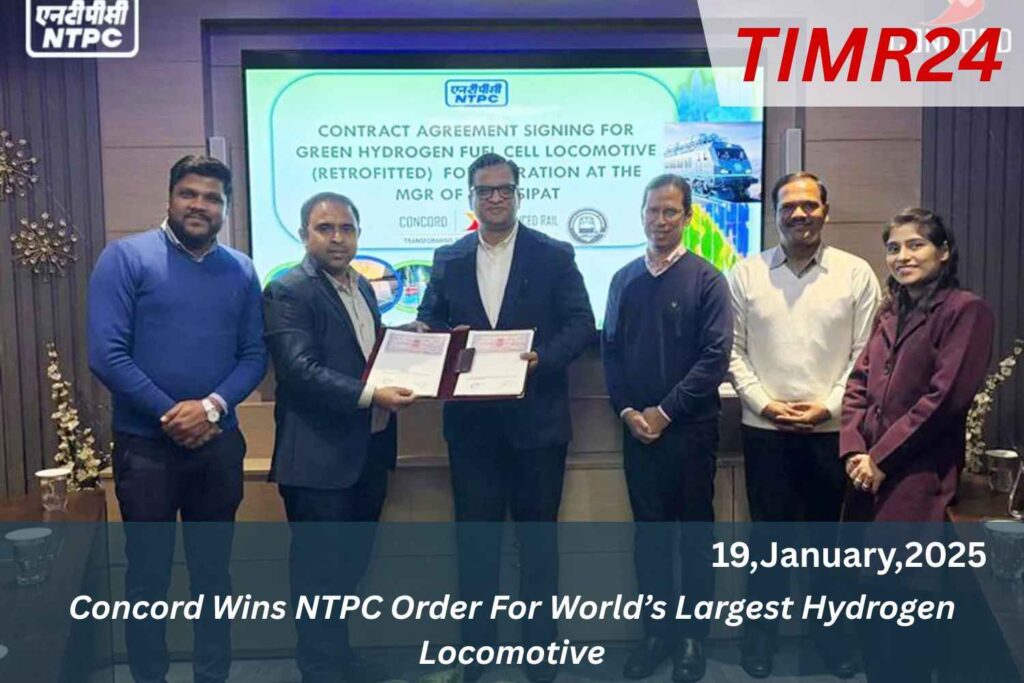
Concord Control Systems has received a Rs 470 million order from NTPC Limited to develop the world’s first 3,100 HP hydrogen-fuelled locomotive propulsion system, which marks a significant advancement in high-horsepower hydrogen rail technology. This project aims to convert a diesel locomotive into this higher horsepower engine, surpassing the existing international limit of 1,600 HP for hydrogen rail systems. The initiative aligns with Indian Railways’ goal of achieving net-zero carbon emissions by 2030, serving as a commercially deployable solution for freight operations. Key executives from Concord and NTPC expressed pride in this pioneering project.
India’s Clean Transportation
Emphasizing its role in promoting sustainable rail transport and India’s position as a global leader in zero-emission heavy rail technolog Concord’s latest achievement in securing a prestigious order from NTPC marks a defining moment for India’s clean transportation and hydrogen energy ambitions. The contract, which focuses on the development of the world’s largest hydrogen-powered locomotive, places Concord at the forefront of sustainable railway innovation while reinforcing NTPC’s role as a key driver of India’s green energy transition. This project reflects the growing convergence of energy, infrastructure, and climate-focused engineering in the country’s long.
Term development roadmap and aligns closely with national decarbonisation targets discussed across platforms such as renewable energy news and green hydrogen projects The hydrogen locomotive initiative represents a technological leap beyond conventional diesel-based railway systems that have dominated freight and industrial transport for decades. Hydrogen-powered locomotives operate using fuel cells that convert hydrogen into electricity, producing only water vapour as a by-product. This eliminates direct carbon emissions and significantly reduces noise pollution, making the technology ideal for industrial corridors, mining zones, and power plant.
International Energy Agency NTPC’s
Logistics With NTPC leading the project and Concord executing critical engineering components, the collaboration signals India’s readiness to adopt next-generation mobility solutions at scale, similar to global clean rail efforts highlighted by organisations like the International Energy Agency NTPC’s decision to award this order to Concord is rooted in both technical capability and strategic alignment. As India’s largest power producer, NTPC has been actively diversifying into renewable energy, green hydrogen, and sustainable mobility solutions. The hydrogen locomotive project complements NTPC’s broader clean energy portfolio and demonstrates how public-sector.
Enterprises can integrate innovation into core operations. Concord, on the other hand, brings specialised expertise in heavy engineering, rail systems, and advanced energy integration, making it a suitable partner for such a complex and globally significant undertaking. This collaboration also strengthens India’s position within the sustainable transport solutions ecosystem From an infrastructure perspective, the development of the world’s largest hydrogen locomotive is expected to drive ancillary advancements in hydrogen production, storage, and refuelling infrastructure. Large-scale hydrogen mobility requires a robust supply chain that includes.
Holistic Approach Mirrors Best Practices
Electrolysers, compression systems, safety protocols, and operational standards. By anchoring this project within NTPC’s ecosystem, the initiative benefits from access to green hydrogen production facilities and grid integration capabilities. This holistic approach mirrors best practices seen in global hydrogen corridors and supports India’s ambition to become a major player in the hydrogen economy, as promoted under initiatives like Make in India The environmental implications of this project are particularly significant. Railways remain one of the most energy-efficient modes of transport, but diesel locomotives still contribute to air pollution and greenhouse gas emissions.
Transitioning to hydrogen-powered locomotives can dramatically reduce the carbon footprint of industrial freight movement, especially in captive rail networks serving power plants and industrial hubs. The Concord–NTPC hydrogen locomotive is expected to set new benchmarks (India) for emission-free rail transport in India, reinforcing commitments made under national climate strategies and global sustainability frameworks Economically, the project is poised to create long-term value across multiple sectors. The localisation of hydrogen locomotive technology can stimulate domestic manufacturing, generate skilled employment, and reduce dependence on.
Railway Infrastructure India Initiatives
Imported fossil fuels Concord’s involvement ensures that a significant portion of design, fabrication, and integration work remains within India, supporting the growth of indigenous engineering capabilities. This aligns with broader railway infrastructure India initiatives that aim to modernise transport systems while fostering economic resilience through innovation-led growth From a policy standpoint, the project aligns with government-led efforts to promote green hydrogen and clean mobility. India’s National Green Hydrogen Mission envisions hydrogen as a cornerstone of future energy systems, particularly for hard-to-abate sectors like heavy transport and industry.
Hydrogen locomotives represent a practical application of this vision, translating policy intent into operational reality. The success of the Concord–NTPC project could encourage wider adoption of hydrogen-based rail solutions across public and private sector networks, accelerating the shift toward net-zero transportation Technologically, the scale of the world’s largest hydrogen locomotive introduces unique engineering challenges, including power output optimisation, safety management, and operational efficiency under diverse conditions. Concord’s role involves addressing these challenges through advanced design methodologies, rigorous testing.
Broader Innovation Narrative Within
And compliance with international safety standards. The project is expected to incorporate cutting-edge fuel cell technology, energy management systems, and digital monitoring solutions to ensure reliability and performance. Such advancements contribute to the broader innovation narrative within the railway innovation sector and set a precedent for future clean rail projects The strategic significance of this order extends beyond domestic boundaries. As countries worldwide explore hydrogen-powered mobility to meet climate goals, successful implementation in India can position Concord and NTPC as global reference points for large-scale.
Hydrogen rail solutions This opens opportunities for technology export, international collaboration, and participation in global clean energy supply chains. By demonstrating viability at scale, the project strengthens India’s credibility in sustainable infrastructure (India) development and reinforces its leadership aspirations in emerging green technologies In the long term, the Concord–NTPC hydrogen locomotive project is expected to act as a catalyst for systemic change within the rail and energy sectors. It highlights how integrated planning between power generation and transport infrastructure can unlock new pathways for decarbonisation.
Future Where Clean Mobility
As hydrogen production becomes greener and more cost-effective, the operational economics of hydrogen locomotives are likely to improve further, making them competitive with conventional alternatives. This evolution supports a future where clean mobility is not only environmentally responsible but also economically viable Concord winning NTPC’s order for the world’s largest hydrogen locomotive is more than a single corporate milestone; it is a transformative development for India’s clean energy and transport landscape.
The project embodies innovation, sustainability, and strategic collaboration, offering a blueprint for how large-scale infrastructure can adapt to climate imperatives. As the initiative progresses, it will continue to draw attention from stakeholders across energy, railways, and sustainability domains, reinforcing the importance of hydrogen as a cornerstone of future mobility and positioning India at the forefront of green rail transformation.
Q1. What makes this hydrogen locomotive the world’s largest?
It refers to its high power capacity and scale, designed to meet heavy industrial and freight transport requirements using hydrogen fuel cells.
Q2. Why did NTPC choose hydrogen locomotives?
Hydrogen locomotives support NTPC’s clean energy goals by reducing emissions and promoting sustainable transport solutions.
Q3. What role does Concord play in this project?
Concord is responsible for engineering, development, and integration of key systems for the hydrogen-powered locomotive.
Q4. How does this project benefit India’s environment?
It reduces carbon emissions, lowers air pollution, and supports India’s transition to clean and sustainable mobility.
Q5. Can this technology be expanded across Indian Railways?
Yes, successful implementation can pave the way for wider adoption across industrial and railway networks.