

















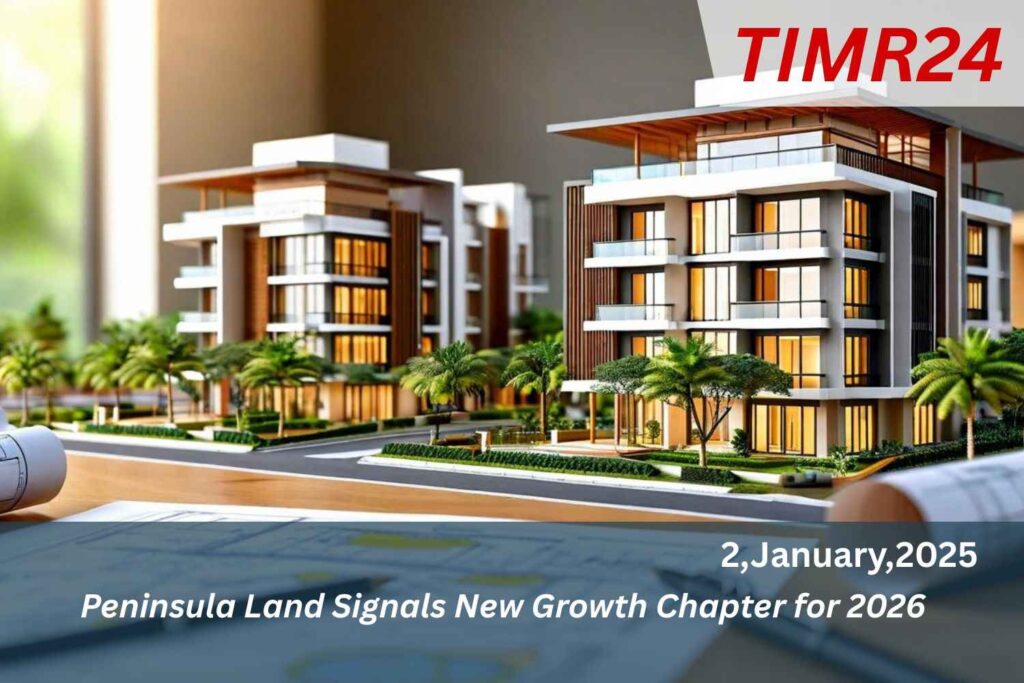
Peninsula Land, part of the Ashok Piramal Group, is set to launch a new residential initiative in 2026 that aims to redefine homebuying and respond to evolving lifestyle aspirations. This effort will strengthen its presence in the real estate market through the creation of curated living environments focused on vibrant communities, long-term value, and personalized experiences. The company emphasizes its commitment to design-led development and future-ready housing solutions Peninsula Land is entering 2026 with renewed strategic clarity, marking what industry observers describe as a decisive growth chapter for the Mumbai-based real estate developer.
Looking Approach Aligns With Broader
After navigating a period shaped by balance-sheet restructuring, selective project execution, and market recalibration, the company is now positioning itself to capitalise on India’s evolving urban housing demand. This forward-looking approach aligns with broader real estate momentum seen across metropolitan regions, where premium residential projects and integrated townships are gaining renewed traction A key driver behind Peninsula Land’s renewed confidence lies in its sharpened focus on core markets and asset-light strategies. Rather than aggressive land banking, the company has emphasised monetising existing land parcels, joint development.
Agreements, and phased project launches. This approach reduces financial risk while allowing flexibility in responding to market demand. Industry data from the Indian Brand Equity Foundation indicates that structured and transparent developers are increasingly favoured by both homebuyers and institutional partners The residential segment remains central to Peninsula Land’s 2026 vision, particularly in the premium and upper-mid housing categories. Demand in this segment has shown resilience, supported by rising disposable incomes, lifestyle upgrades, and a preference for branded developers. Cities like Mumbai, Pune, and Bengaluru continue to.
Features Another Notable Element
See end-user driven demand, especially for well-planned communities offering amenities, connectivity, and sustainability features Another notable element of Peninsula Land’s growth roadmap is its increasing emphasis on sustainability and compliance-led development. Environmental clearances, energy-efficient design, and responsible construction practices are no longer optional differentiators but essential components of long-term value creation. Regulatory frameworks overseen by bodies such as the Ministry of Corporate Affairs encourage governance transparency Macroeconomic stability also plays a significant role in shaping Peninsula Land’s.
For 2026. Interest rate movements, liquidity conditions, and credit availability directly influence housing affordability and developer financing costs. The Reserve Bank of India’s calibrated monetary policy stance has provided relative stability, supporting home loan (Solar) growth while containing This balanced environment offers developers like Peninsula Land an opportunity to plan multi-year execution strategies without excessive volatility From an execution standpoint, Peninsula Land is expected to prioritise timely project completion and cash-flow visibility. Delays have historically eroded buyer trust across the sector, but recent years have seen a structural.
Company’s Asset Monetisation Strategy
Shift towards delivery-focused operations. By maintaining disciplined timelines and transparent communication, the company can reinforce its brand credibility, which is increasingly critical in a market dominated by informed buyers The company’s asset monetisation strategy also deserves attention as a catalyst for growth. Strategic divestment of non-core assets and redevelopment of underutilised land parcels allow Peninsula Land to unlock capital while optimising its portfolio. Such measures not only strengthen the balance sheet but also enable reinvestment into high-return projects. In an environment where capital efficiency matters as much as scale.
This approach reflects prudent financial stewardship rather than aggressive expansion Peninsula Land’s 2026 trajectory will likely be influenced by evolving consumer preferences, particularly the growing demand for integrated living spaces. Homebuyers increasingly seek developments that combine residential, retail, and recreational elements within a single ecosystem. This shift supports higher project valuations and longer customer engagement cycles. By aligning design philosophy with these expectations, the company can enhance both sales velocity and brand loyalty Digital transformation is another area expected to support Peninsula Land’s growth.
Equipped To Respond To Changing Buyer
From online sales platforms to data-driven customer insights, technology adoption is reshaping how real estate is marketed and managed. Developers that integrate digital tools into project planning and customer engagement are better equipped to respond to changing buyer behaviour. This transformation is not merely operational but strategic, enabling scalability without proportionate cost increases Peninsula Land’s signal of a new growth chapter for 2026 reflects a convergence of strategic discipline, market readiness, and macroeconomic support. By focusing on premium residential demand, sustainable development, asset monetisation, and execution excellence.
The company is positioning itself for steady and resilient growth. While challenges such as regulatory approvals and market cycles remain inherent to real estate, (India) Peninsula Land’s calibrated approach suggests a measured optimism rooted in structural strengths rather than short-term speculation.
Q1. What is driving Peninsula Land’s growth outlook for 2026?
Its focus on premium housing, asset monetisation, and disciplined project execution.
Q2. Which segment is central to Peninsula Land’s strategy?
Premium and upper-mid residential housing in key urban markets.
Q3. How does sustainability factor into its growth plan?
Through compliant design, energy efficiency, and responsible construction practices.
Q4. What role does the macroeconomic environment play?
Stable interest rates and housing finance availability support demand and planning.
Q5. Is Peninsula Land expanding aggressively in new cities?
No, it is prioritising capital-efficient growth in core markets.