



















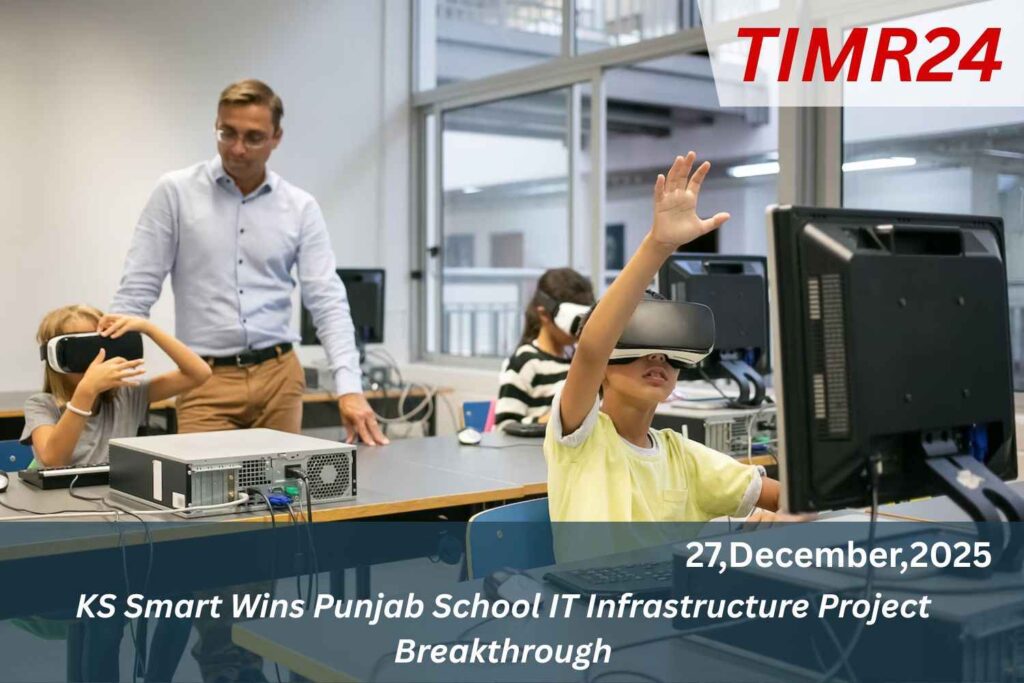
KS Smart Solutions Private Limited has secured a project valued at approximately Rs 1.73 billion from the Government of Punjab’s School Education Department for implementing IT infrastructure across government educational institutions in the region. The project involves supplying and installing 23,846 desktop computing systems and 23,207 uninterruptible power supply systems, along with ensuring system readiness at specified locations. KS Smart will manage the entire process, including supply, installation, configuration, commissioning, and warranty support, adhering to technical specifications and government procurement guidelines.
This initiative aims to enhance Punjab’s digital education by providing a reliable and scalable technology infrastructure for schools KS Smart’s recent success in securing the Punjab School IT Infrastructure Project marks a decisive step in the transformation of public education through technology-driven solutions. The project aligns with the Punjab government’s vision of modernizing school infrastructure and equipping students with digital tools that meet global learning standards. By entrusting KS Smart with this initiative, Punjab joins a growing list of Indian states investing in technology-led education reform to bridge learning gaps and enhance classroom experiences.
This development is significant not just for the company but also for the broader education ecosystem, as it reflects the increasing reliance on integrated IT infrastructure to support teaching, learning, and school administration. With digital classrooms becoming central to modern pedagogy, the project is expected to create long-term value for students, teachers, and policymakers alike. You can explore similar digital education initiatives in India through our internal coverage on Smart Education Projects.
Project Scope And Vision
The Punjab School IT Infrastructure Project focuses on creating a robust digital backbone for government schools across the state. The initiative is designed to enhance connectivity, deploy smart classroom technologies, and integrate learning management systems that support both students and educators. KS Smart will be responsible for deploying end-to-end solutions, including hardware, networking, software platforms, and ongoing technical support The project vision goes beyond installing devices. It aims to create an ecosystem where digital tools are seamlessly embedded into daily learning activities. This includes interactive panels, secure networks, digital content delivery.
Role of KS Smart In Educational Transformation
platforms, and centralized monitoring systems. Such initiatives directly support India’s broader Digital India mission, which emphasizes technology as a driver of inclusive growth. KS Smart has built a strong reputation for delivering large-scale IT and smart infrastructure projects across India. Its selection for the Punjab project highlights the company’s technical expertise and experience in managing complex government assignments. The company’s approach focuses on reliability, scalability, and future readiness, ensuring that the deployed infrastructure can adapt to evolving educational needs By leveraging cloud-based platforms and secure.
Networking solutions, KS Smart aims to minimize downtime and ensure uninterrupted access to digital resources. This approach is consistent with global best practices in educational fragmented solutions to integrated digital ecosystems. Readers interested in similar infrastructure models can refer to our internal article on IT Infrastructure in Public Sector Projects The introduction of advanced IT infrastructure in Punjab schools is expected to significantly improve teaching effectiveness and student engagement. Teachers will gain access to digital lesson plans, interactive teaching aids, and real-time assessment tools that make classrooms more dynamic and inclusive.
Students, on the other hand, will benefit from multimedia learning resources, virtual labs, and collaborative platforms that encourage critical thinking and creativity This transformation is particularly important in rural and semi-urban areas, where access to quality educational resources has traditionally been limited. By standardizing digital infrastructure across schools, the project ensures equitable access to modern learning tools. The initiative also supports blended learning models, which combine traditional classroom instruction with digital content, a trend increasingly adopted across India’s education system.
Alignment with Government Education Policies
The Punjab School IT Infrastructure Project is closely aligned with national education reforms such as the National Education Policy (NEP) 2020, which emphasizes technology integration, digital literacy, and teacher training. By upgrading school infrastructure, Punjab is creating the foundation required to implement NEP recommendations effectively Government-backed projects like this one demonstrate how public-private partnerships can accelerate educational development. KS Smart’s role as a technology partner ensures that policy objectives are translated into practical, on-ground solutions. For official policy references and education reforms, readers can visit the Ministry of Education, Government of India website .
Technology Components And Security Focus
A critical aspect of the project is the focus on cybersecurity and data protection. As schools increasingly rely on digital platforms, safeguarding student data and ensuring secure network access becomes essential. KS Smart’s solution architecture includes firewalls, access controls, and (Coal) centralized monitoring systems designed to prevent unauthorized access and cyber threats The infrastructure will also support scalable bandwidth to accommodate future digital tools such as AI-based learning platforms and virtual reality content. This future-ready design ensures that Punjab’s schools remain technologically relevant for years to come.
Economic And Social Benefits
Beyond education, the project is expected to generate broader economic and social benefits. Large-scale IT deployments create employment opportunities during installation, maintenance, and support phases. Local vendors, technicians, and service providers are likely to benefit from the project’s execution across multiple districts Socially, improved education infrastructure contributes to higher literacy levels, better skill development, and increased employability among students. Over time, this can support Punjab’s economic growth by creating a more skilled and digitally literate workforce. Such outcomes reinforce the importance of sustained investment in education technology as a catalyst for regional development.
Strengthening India’s Smart Infrastructure Ecosystem
The success of KS Smart in Punjab adds momentum to India’s expanding smart infrastructure ecosystem. Education is increasingly being viewed as a core component of smart city and smart state initiatives. By integrating IT infrastructure into schools, governments are laying the groundwork for digitally empowered communities This project complements other smart governance initiatives, including e-governance platforms and digital public services As the Punjab School IT Infrastructure Project progresses, its outcomes will likely serve as a benchmark for similar initiatives across India. The project demonstrates how strategic technology deployment can address systemic challenges in education.
While supporting national digital goals. KS Smart’s involvement underscores the growing role of specialized technology firms in public sector transformation With continuous monitoring, upgrades, and teacher training, the project has the potential to deliver sustainable improvements in (India) learning outcomes. As more states adopt comparable models, India’s education system moves closer to a digitally inclusive future built on resilient IT infrastructure.
Q1. What is the Punjab School IT Infrastructure Project?
It is a government initiative to modernize schools by deploying digital classrooms, networking systems, and learning platforms.
Q2. Who has been awarded the project?
KS Smart has been selected to implement the project across Punjab’s government schools.
Q3. How will students benefit from this project?
Students will gain access to interactive learning tools, digital content, and improved classroom experiences.
Q4. Does the project align with national education policies?
Yes, it supports the objectives of the National Education Policy 2020 and the Digital India mission.
Q5. Why is IT infrastructure important for schools today?
Modern IT infrastructure enables blended learning, improves teaching efficiency, and ensures equitable access to quality education.