

















Sujan Industries plays a key role in India’s industrial development, providing essential components and engineered systems across various sectors, including railways and energy. The company has introduced HUSE (Help Us Save Earth), which emphasizes sustainability and innovation to create cleaner and more connected industries. CEOs Brijesh Sujan and Co-Founder Narendra Sujan discuss the (Railways) advancement of intelligent engineering, particularly through technologies powering the Smart Wagon and Smart Coach platforms, which enhance predictive maintenance in the railway system Artificial intelligence is rapidly reshaping global transportation.
Growing Passenger Demand, Safety
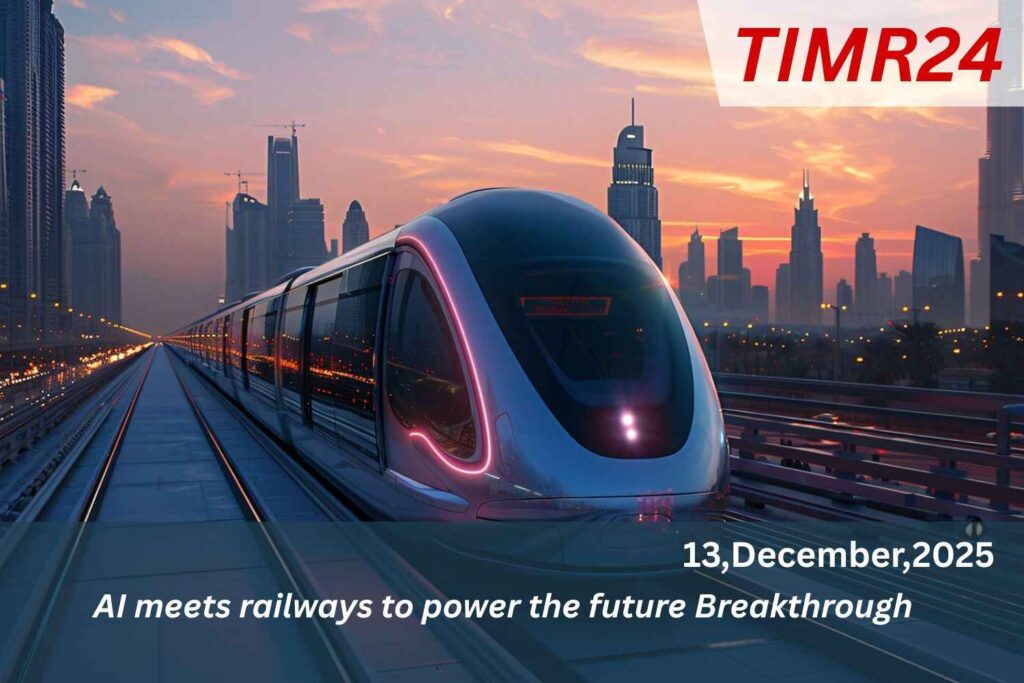
Systems, and the railway sector is emerging as one of the strongest beneficiaries of this digital transformation. As rail networks expand in scale and complexity, traditional operational models are struggling to keep pace with growing passenger demand, safety expectations, and sustainability goals. AI meets railways at this critical intersection, enabling data-driven decision-making, intelligent automation, and real-time responsiveness that collectively power the future of smart rail transport. In India and across the world, railway authorities are increasingly integrating AI into infrastructure planning, rolling stock management, and customer services to build resilient and future-ready rail systems.
One of the most impactful areas where AI is redefining railways is predictive maintenance. Conventional maintenance practices rely on fixed schedules or reactive repairs, often leading to unexpected failures and costly downtime. AI-driven systems analyze data from sensors installed on tracks, locomotives, and signaling equipment to detect early signs of wear and failure. By predicting issues before they escalate, railway operators can reduce service disruptions and extend asset life. Indian Railways has already begun deploying such intelligent systems as part of its broader modernization drive Safety enhancement remains another crucial domain where AI integration is proving transformative.
Obstructions, Or Trespassing In Real Time
Railways generate enormous volumes of visual and operational data, which AI can process far more efficiently than human operators. Computer vision algorithms monitor tracks, overhead equipment, and level crossings to identify hazards such as cracks, obstructions, or trespassing in real time. AI-based surveillance systems can instantly alert control rooms, significantly reducing accident response times. This proactive safety framework supports national goals of zero-accident rail networks and complements ongoing investments in smart railway projects AI is also revolutionizing railway traffic management and scheduling. Managing train movements across densely populated.
Corridors is a complex task requiring constant coordination. AI-powered traffic optimization tools analyze historical patterns, weather data, and real-time congestion to dynamically adjust schedules and routing. This leads to improved punctuality, higher track utilization, and reduced energy consumption. As high-speed and dedicated freight corridors expand, such intelligent traffic control systems will become essential for maximizing network efficiency while minimizing delays and emissions Passenger experience is another area undergoing significant enhancement through AI adoption. From AI-enabled chatbots for ticketing support to personalized travel and crowd management solutions.
Implemented Responsibly, Further Streamline
Railways are becoming more passenger-centric. AI systems can predict peak travel periods, optimize platform assignments, and manage station resources to reduce overcrowding. Facial recognition and biometric verification technologies, when implemented responsibly, (Railways) further streamline passenger movement and security. These advancements align closely with broader digital transformation initiatives highlighted in /transport-digital-transformation Energy efficiency and sustainability goals are also being strengthened through AI integration. Railways are among the most energy-efficient modes of transport, yet AI offers further optimization opportunities.
Machine learning models analyze driving patterns, braking systems, and power consumption to recommend energy-efficient operations. AI-controlled regenerative braking systems recover and reuse energy, while smart grid integration ensures optimal power distribution across electrified routes. Such innovations contribute directly to India’s climate commitments and sustainable infrastructure objectives supported by policy frameworks Freight rail operations are equally benefiting from artificial intelligence. AI enhances demand forecasting, wagon allocation, and route planning, enabling faster turnaround times and improved logistics reliability.
Predictive analytics help identify bottlenecks across freight corridors and suggest corrective actions before delays occur. As India positions rail freight as a backbone of its industrial growth, AI-driven logistics optimization will play a critical role in reducing transportation costs and improving supply chain resilience The convergence of AI with emerging technologies such as the Internet of Things, 5G, and digital twins is further accelerating railway innovation. IoT devices continuously feed real-time data into AI platforms, while digital twins simulate railway assets and networks under various scenarios. This allows planners to test infrastructure upgrades, emergency.
Responses, and capacity expansions virtually before real-world implementation. Such integrated systems reflect global best practices discussed Despite its vast potential, AI adoption in railways also presents challenges that require careful management. Data security, system interoperability, and workforce reskilling are critical considerations. Railway authorities must ensure that AI systems remain transparent, reliable, and ethically deployed. Human expertise will continue to play a vital role, with AI serving as a decision-support tool rather than a replacement. Training programs and digital skill development initiatives are essential to help the workforce adapt.
To this evolving technological landscape, particularly within large public systems like Indian Railways, as outlined on the future of railways powered by AI promises unprecedented levels of efficiency, safety, and passenger satisfaction. Autonomous train operations, fully intelligent stations, and self-healing infrastructure are gradually transitioning from concept to reality. As policy support, investment, and innovation converge, AI will become deeply embedded in railway DNA. The integration of artificial intelligence into railways is not merely a technological upgrade; it represents a fundamental shift toward smarter.
Q1. How is AI being used in the railway sector?
AI is used for predictive maintenance, traffic management, safety monitoring, energy optimization, and improving passenger experience.
Q2. Can AI improve railway safety?
Yes, AI-powered surveillance, fault detection, and real-time alerts significantly reduce accidents and operational risks.
Q3. Is Indian Railways adopting artificial intelligence?
Indian Railways is actively implementing AI across signaling, maintenance, ticketing, and infrastructure planning.
Q4. What role does AI play in train maintenance?
AI enables predictive maintenance by analyzing sensor data to prevent breakdowns and reduce downtime.
Q5. Will AI replace railway jobs?
AI will support workers by automating repetitive tasks while creating new roles in data analysis and system management.