










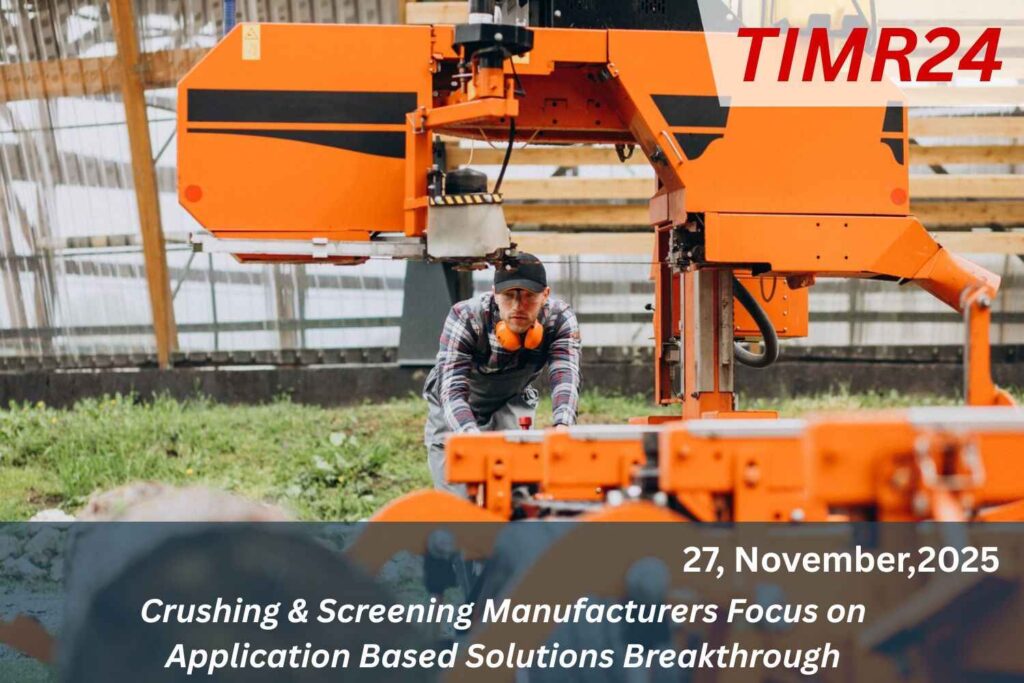
Crushing and screening manufacturers are expanding in the aggregates market by introducing advanced models of grizzly screens, cone and jaw crushers, and vertical shaft impactors. These new models feature enhanced crusher chamber designs, greater power, and reduced service needs, leading to higher productivity and lower operating costs in challenging environments. Mobile and skid-mounted plants are increasingly favored for their transport ease and quick setup, with improvements in tracks, diesel-electric drives, and hydraulics. The products address the specific operational needs of road contractors and quarry owners, who prefer application-based solutions over.
manufacturers increasingly
Standalone products. Insights from contractors and end-users highlight their challenges, product preferences, and expectations for improvements from OEMs. The global crushing and screening industry is undergoing a significant strategic transformation as manufacturers increasingly shift from a product-centric approach to application-based engineering solutions. This evolution is being driven by the growing complexity of mining operations, infrastructure development, recycling requirements, and environmental compliance norms across markets. Crushing and screening equipment is no longer designed as standard machinery; instead, it is now tailored based.
On-site conditions, raw material properties, usage patterns, and throughput targets. Market leaders such as Metso, Sandvik, Terex, and Kleemann are leading this change by offering customized equipment systems rather than generic machines. Traditionally, crushing and screening machinery was chosen primarily based on output capacity. However, the modern industry now recognizes that efficiency depends on material characteristics such as hardness, moisture level, abrasion index, and particle shape. Application-based solutions focus on delivering maximum productivity using minimum resources by engineering machines for rock type, mineral composition.
Technology influences the actual project
Processing volume and geographic conditions. For example, limestone requires very different crushing dynamics than iron ore or river gravel. Manufacturers are therefore redesigning crushers, screens, and feeders with specialized chamber profiles, liner configurations, and power settings to ensure optimal performance. To understand how this technology influences actual project delivery, readers can explore our internal guide on equipment selection for large projects at Infrastructure expansion has played a defining role in accelerating application-oriented design. Emerging economies across Asia, Africa, and the Middle East are investing heavily in highways, smart cities.
Rail corridors, ports, and energy projects. This growth has increased demand for reliable aggregate supply chains that operate in hostile environments with variable material quality. Crushing manufacturers are responding by offering region-specific configurations tailored for deserts, mountainous terrain, urban demolitions, and underwater mining locations. Whether it is tracked mobile crushers or hybrid crushing stations, the emphasis is now on versatility and uptime rather than only size and speed. Mobile plants fitted with automated feeders, hydraulic adjustment systems, and telemetry software are becoming common at infrastructure sites.
Waste recycling plants, for instance
You can also check our internal feature on Smart construction machinery. Another major factor shaping this shift is sustainability. Environmental regulations are no longer optional; they are determining how equipment is designed and deployed. Noise control, fuel efficiency, emission standards, and recycling efficiency all fall under the scope of application-based engineering. Waste recycling plants, for instance, require crushers capable of handling mixed materials such as concrete, steel, plastic, and timber simultaneously. This has led to the development of multi-stage crushing systems featuring advanced screening decks and magnetic separators. In mining areas, dust.
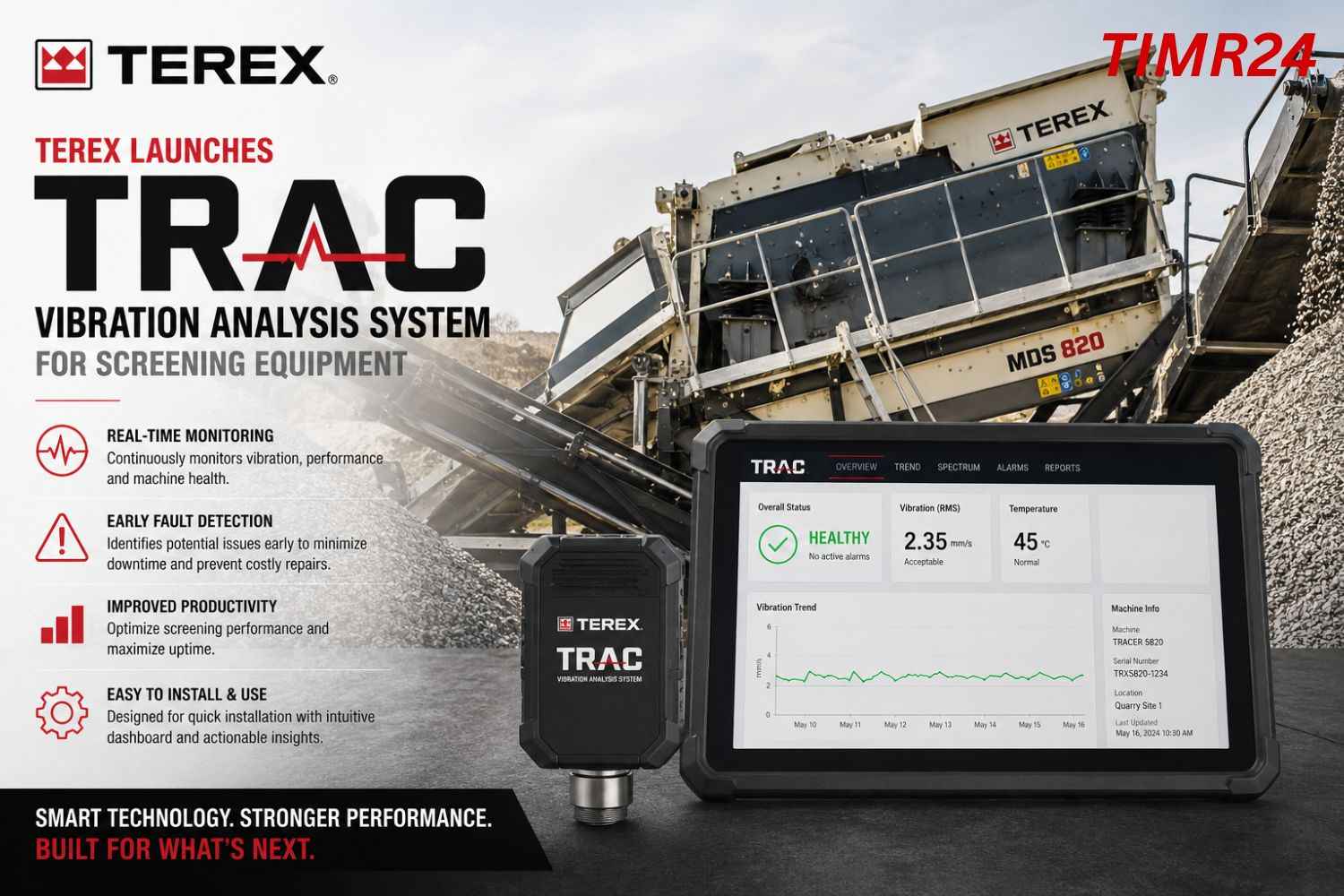
Suppression systems and water recycling features are now built into crushing units to reduce environmental impact. For deeper insights into eco-compliant industrial practices, Digital transformation has further reinforced application-based manufacturing. Crushing and (OIL) screening equipment is now embedded with smart control systems that allow operators to monitor performance in real time. Sensors monitor vibrations, power load, wear rates, and throughput levels, helping maintenance teams predict failures before breakdowns occur. These solutions also facilitate remote troubleshooting, making it possible to optimize machine settings across different.
converted crushing equipment
Sites from a central control room. Intelligent automation ensures that the crusher adjusts itself based on load fluctuations, thereby increasing output consistency and lowering fuel consumption. The integration of software and hardware has converted crushing equipment into data-driven production systems rather than manual mechanical tools. Manufacturers are now working closely with customers at early project stages, offering material testing services and simulation modeling before machine deployment. This ensures that each piece of equipment aligns with the project’s technical and environmental demands. Application-based crushers are therefore not.
Off-the-shelf” products; they are engineered systems. This approach also improves machine life cycles as components are designed to handle specific workloads rather than generalized stress ranges. As a result, operating costs are reduced, spare consumption is optimized, and machine downtime is minimized. Application-based solutions have also enabled customized aftermarket services. Instead of standard maintenance schedules, manufacturers now provide service plans based on how machines are used. For instance, a crusher processing high-silica materials will require a different maintenance cycle than one handling softer stones.
Governments worldwide are encouraging
This targeted service reduces operational inefficiency and improves asset value. Several manufacturers have also introduced remote service units and digital inspection platforms that diagnose machine health virtually, eliminating unnecessary manufacturing. Aligning closely with the broader goals of industrial modernization and resource efficiency. Governments worldwide are encouraging infrastructure development using energy-efficient and low-emission equipment. Organizations such as the International Labour Organization have highlighted the importance of using safer and cleaner machinery across construction sectors. Reference their global occupational.
Similarly, the World Economic Forum emphasizes industrial automation and smart manufacturing as core pillars of the Fourth Industrial Revolution. For environmental execution guidelines related to construction and mining, the United Nations Environment Programme offers industry sustainability frameworks. Additionally, the Ministry of Mines, Government of India, regularly publishes policy updates and circulars supporting equipment modernization in the mining sector. This global support for innovation and sustainability ensures that application-based crushing & screening will remain a central industry theme over the next decade.
Looking forward, the future of crushing and screening lies in predictive automation, modular plant design, and cleaner energy usage. Electric crushers, hydrogen-powered loaders, and autonomous feeder systems are emerging as real projects rather than experimental concepts. Manufacturers (MMRC) are also testing artificial intelligence-powered systems that instantly adjust crusher parameters based on material behavior patterns. This means productivity will no longer depend solely on operator skill but increasingly on machine intelligence. Application-based solutions represent a strategic transformation rather than a passing trend. By designing crushers and screens based.
on how, where, and what they process, manufacturers are delivering machinery that works smarter, cleaner, and longer. The shift improves profitability, enhances sustainability, and future-proofs operations against regulatory and market pressures. With digital intelligence and environmental responsibility shaping the sector, crushing and screening equipment has officially entered a new era of engineering excellence.
Q1. What are application-based crushing solutions?
They are crushing systems designed based on material type, site condition, and operating environment rather than generic output metrics.
Q2. Why are manufacturers shifting to application-based models?
To improve productivity, reduce downtime, meet environmental norms, and increase the lifespan of machines.
Q3. Which industries benefit the most from this approach?
Mining, infrastructure, construction, demolition, and recycling sectors benefit the most.
Q4. How does digital technology support application-based machines?
Through real-time monitoring, automated adjustments, and predictive maintenance.
Q5. Are application-based crushers more expensive?
Initial cost may be slightly higher, but operating and maintenance costs reduce significantly long term.