









IST - Wednesday, April 8, 2026 9:18 pm
Hot News

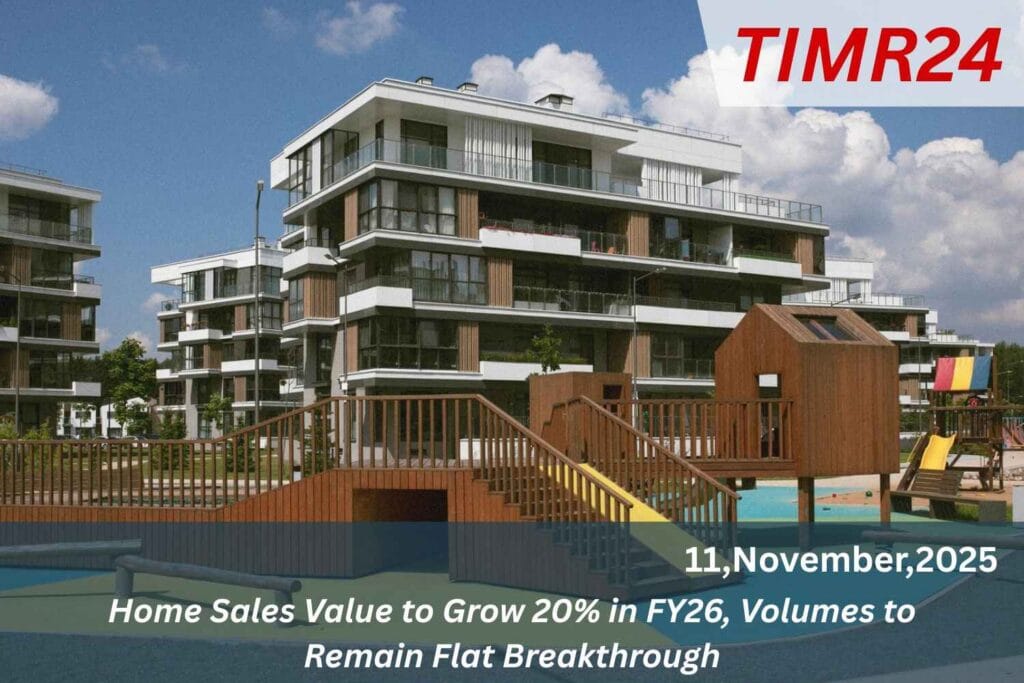
Home Sales Value to Grow 20% in FY26, Volumes to Remain Flat Breakthrough

Soniya Gupta

Sales

Mumbai’s Home residential property market is projected to see a 20% increase in home sales value for FY26, reaching Rs 6.65 trillion despite a 14% dip in sales volumes in FY25. Luxury and ultra-luxury segments are driving this growth, accounting for 42% of new launches in H1 FY26. Notably, NCR and Chennai achieved significant sales growth, reaching 74% and 71% of their FY25 sales values, respectively. While challenges like high input costs persist, ANAROCK expects the housing sector to maintain healthy value growth, prioritizing premium housing options among buyers The real estate sector in India is poised for a significant shift in FY26 as industry analysts.

Predict that home sales value is set to grow by 20%, even as overall sales volumes are expected to remain relatively flat. This indicates that while the number of transactions may not surge dramatically, the value per transaction is likely to rise, driven by a combination of factors including premium housing demand, inflationary pressures, and rising construction costs. For developers, investors, and homebuyers alike, this trend presents a nuanced picture of growth that goes beyond simple unit sales, highlighting a focus on value-driven market dynamics One of the primary drivers behind the expected increase in home sales value is the shift in buyer preferences toward larger.

Well-appointed homes, often located in high-demand urban centers. The post-pandemic lifestyle changes, combined with the growing emphasis on work-from-home setups, have led buyers to prioritize homes that offer better amenities, higher space standards, and enhanced lifestyle features. Cities like Mumbai, Bengaluru, and Pune are seeing this trend particularly strongly, where luxury apartments and premium townships are witnessing robust demand, even if smaller, budget-oriented housing projects are experiencing a plateau in sales volumes. This shift is critical for developers aiming to align their project portfolios with evolving consumer expectations.

Moreover, Regulatory Reforms

Additionally, rising construction costs are playing a pivotal role in influencing the overall sales value. The increase in the prices of raw materials such as steel, cement, and labor has resulted in developers passing on these costs to homebuyers. While this does not necessarily lead to a rise in the number of units sold, it does inflate the overall transaction value, contributing to the projected 20% growth in sales value. Moreover, regulatory reforms such as RERA compliance and enhanced building standards have added to construction expenses, yet they have also instilled greater confidence among buyers, ensuring that properties are perceived as higher quality investments.

This interplay of cost and quality creates a scenario where value growth outpaces volume growth, shaping the market outlook for FY26 Financing trends are also influencing this dynamic significantly. With interest rates on home loans stabilizing after periods of volatility, many potential buyers are finding it easier to invest in high-value properties. Financial institutions have been offering structured loans, flexible EMIs, and pre-approved home loans that cater to buyers targeting premium homes, further supporting the growth in transaction value. At the same time, the entry of organized players and institutional investors into the residential real estate market is boosting confidence in long-term returns.

Employment And Lifestyle Opportunities

Encouraging purchases that are often higher in value but fewer in number. This financial ecosystem reinforces the divergence between volume and value growth, demonstrating that the market is evolving in sophistication Urbanization trends are another key aspect affecting the real estate landscape. As more individuals migrate to cities for employment and lifestyle opportunities, demand for homes in urban and peri-urban areas continues to rise. However, the availability of land, coupled with zoning regulations and infrastructure limitations, has restricted the ability of developers to scale up housing units dramatically. Consequently, the focus has shifted toward premium and mid-segment projects.

Which occupy less land but deliver higher value. This phenomenon is particularly evident in metro cities, where vertical development and mixed-use projects are increasingly preferred over sprawling low-cost housing developments. The result is a market where transaction numbers remain relatively constant, but the monetary value of each transaction sees substantial growth Another significant factor contributing to the growth in home sales value is the rising demand for environmentally sustainable and technologically advanced homes. Modern buyers are increasingly conscious about energy efficiency, smart home features, and green certifications.

They are willing to pay a premium for properties that align with these expectations. Developers are responding by integrating solar power systems, rainwater harvesting, and energy-efficient construction materials into their projects, often increasing the overall cost and, consequently, (NABARD’s) the sales value. This focus on sustainability and tech-enabled living further differentiates high-value projects from regular housing offerings, underlining why volumes may remain flat even as values increase The role of government policies cannot be understated in shaping this trend. Initiatives like PM Awas Yojana, incentives for affordable housing, and tax benefits for homebuyers continue.

Solar Power Systems, Rainwater Harvesting

To stimulate demand, but primarily at the mid-to-high-value end of the market. While these measures encourage home purchases, the availability of affordable land and the rising cost of construction limit the number of units that can be built and sold within a financial year. Consequently, the overall sales volume remains stable, while the monetary value of transactions rises due to higher per-unit prices. This delicate balance between policy support and market constraints forms the foundation for the predicted 20% growth in home sales value Investors are also contributing to the changing market dynamics. Real estate is increasingly seen as a safe long-term investment amid volatile equity markets.

Leading to higher demand for premium residential properties. Many high-net-worth individuals and institutional investors prefer investing in ready-to-move-in apartments or under-construction projects with clear timelines and reputable developers. These high-value transactions, while fewer in number, contribute significantly to overall market growth, highlighting the contrast between rising values and stagnant volumes Despite the positive outlook for value growth, challenges remain for the sector. Developers face rising input costs, labor shortages, and logistical issues, all of which can constrain the pace at which new projects are launched.

Additionally, affordability remains a concern for a large segment of buyers, particularly in smaller towns and non-metro areas. These challenges contribute to the flattening of sales volumes even as transaction values rise. The market, therefore, requires a nuanced approach where developers focus on delivering quality, value, and lifestyle offerings rather than merely increasing the number of units sold From a market segmentation perspective, premium and luxury homes are expected to see the highest growth in transaction value. These segments cater to buyers who are less price-sensitive and more focused on lifestyle, location, and amenities. In contrast, budget and mid-segment housing will continue to account.

Emphasizing Lifestyle Technology

For the bulk of volume transactions but may see only modest increases in value. This segmentation highlights the evolving nature of demand, where monetary growth is concentrated in fewer, high-value properties, while overall transaction numbers remain stable Looking ahead, developers are expected to increasingly focus on value-driven projects that align with these trends. Mixed-use developments, integrated townships, and high-end residential complexes will dominate new launches, emphasizing lifestyle, technology, and sustainability. By doing so, they can capitalize on the growing willingness of buyers to invest in higher-value properties, ensuring profitability.

Even in a flat-volume market. Collaboration with financial institutions to offer innovative financing solutions, strategic land acquisition in high-demand locations, and leveraging technology for sales and marketing will be crucial strategies to sustain this value growth FY26 is (Industry) shaping up to be a year of nuanced growth for the Indian real estate sector. While the total number of homes sold may remain flat due to constraints in land availability, regulatory factors, and affordability challenges, the overall home sales value is projected to grow by 20%.

This growth is being driven by premium housing demand, rising construction costs, urbanization, sustainable and tech-enabled homes, and investor confidence. For stakeholders across the real estate ecosystem, understanding these market dynamics will be essential to making informed decisions, whether in project planning, investment strategy, or home purchase. As the market evolves, it is clear that value, rather than volume, will be the key metric defining success in FY26.

Q1. What is the projected growth in home sales value for FY26?
India’s residential property market is expected to see a 20% increase in sales value in FY26, reaching approximately ₹6.65 lakh crore.

Q2. Will the number of homes sold increase in FY26?
No, sales volumes are anticipated to remain flat or see minimal growth, with any increase unlikely to exceed 4%.

Q3. Which segments are driving this growth?
The surge is primarily driven by the luxury and ultra-luxury housing segments, reflecting a shift towards higher-priced properties.

Q4. How are developers responding to these trends?
Developers are focusing on premium offerings, with major players like Godrej Properties and DLF collectively selling homes worth ₹1.62 lakh crore in FY25.

Q5. Which cities are leading in this growth?
Delhi NCR and Chennai are at the forefront, achieving 74% and 71% of their previous fiscal’s sales value, respectively