



















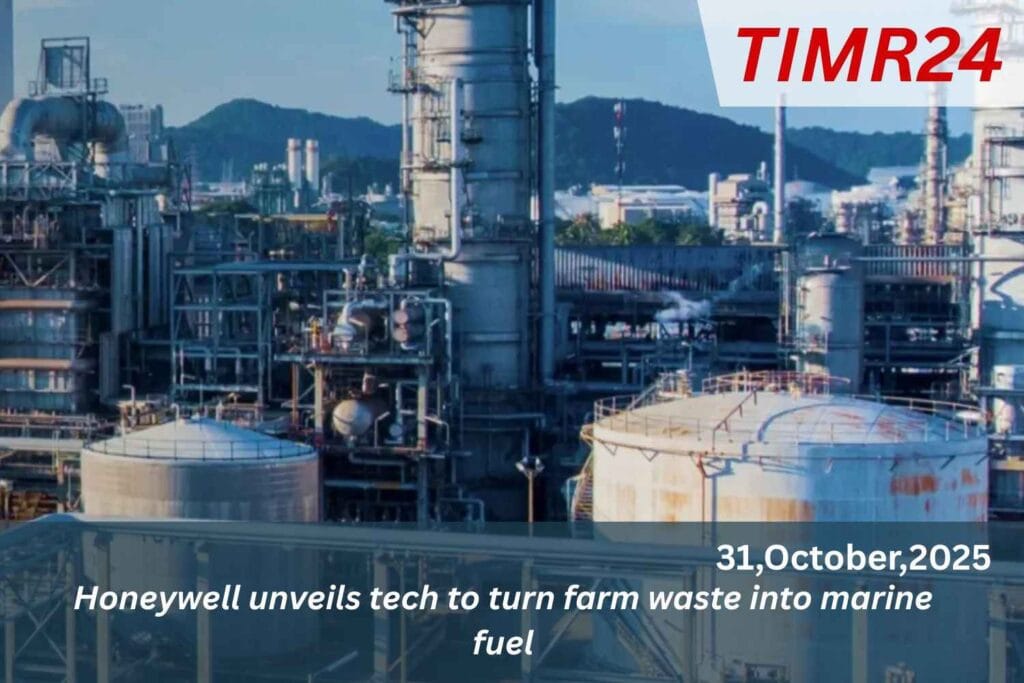
Honeywell has launched a groundbreaking technology that converts agricultural and forestry waste into renewable fuels, specifically targeting hard-to-abate sectors like maritime. This innovation allows for the production of low-carbon marine fuel, gasoline, and sustainable aviation fuel (SAF) from biomass sources such as wood chips and crop residues. The drop-in fuels provide ship operators with a cost-effective, lower-carbon alternative by utilizing locally available agricultural waste, thereby reducing production costs. This development is in line with Honeywell’s commitment to support India’s energy transition and meets growing demands to decrease carbon emissions in the shipping industry, which has historically relied.
On heavy fuel oil. Additionally, Honeywell’s Biocrude Upgrading process can be offered as a modular plant, simplifying deployment and reducing project risks In a landmark move towards decarbonizing global shipping and promoting circular economy principles, Honeywell has (Raises) announced the launch of a revolutionary technology that transforms agricultural residue and farm waste into renewable marine fuel. This innovation comes at a time when the maritime industry faces increasing pressure to reduce greenhouse gas emissions and transition towards cleaner energy sources. The technology, developed under Honeywell’s growing renewable energy portfolio.
Honeywell’s Sustainable Marine Fuel Initiative