






IST - Saturday, April 11, 2026 5:45 pm
Hot News

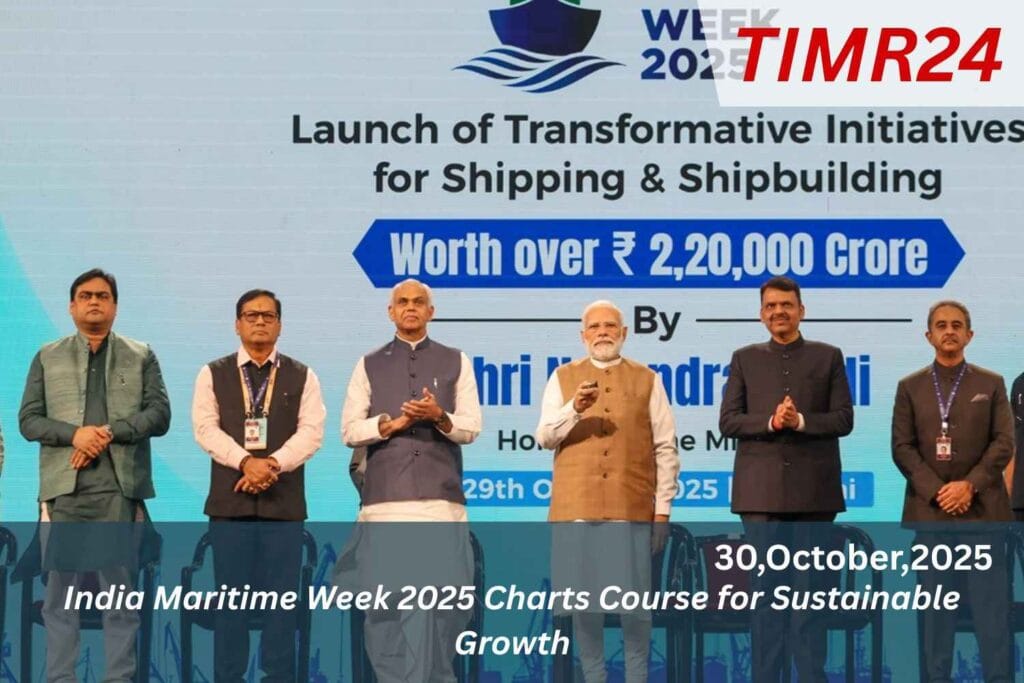
India Maritime Week 2025 Charts Course for Sustainable Growth

Soniya Gupta

Updated on:

India

India Maritime Week 2025 focused on maritime transformation through sustainability, innovation, and collaboration. Key discussions included port modernization, green energy, and maritime security under the theme “Sustainable Seas, Secure Future.” Union Minister Sarbananda Sonowal emphasized India’s aim for Net Zero by 2070 and initiatives like Sagarmala and Maritime India Vision 2030 that prioritize sustainability ports are being designated as green hydrogen hubs, with significant plans for e-fuel production and clean shore-power standards. Collaborations with countries like Sweden and Norway promote technological advancements and investments in green trade.

A public-private partnership for naval construction also reflected drive for domestic manufacturing. The event highlighted the importance of ports in industrial growth and introduced measures to enhance maritime safety and integrate logistics digitally India Maritime Week 2025 (Jammu & Kashmir) has emerged as one of the most impactful events shaping the country’s maritime future, setting the tone for sustainable port-led growth, digital transformation, and global collaboration. Organized in New Delhi, the event brought together policymakers, investors, shipowners, technology firms, and international agencies to discuss how India can become a leading maritime nation under.

Building a Green and Resilient Maritime Ecosystem

Its long-term roadmap Maritime India Vision 2030 and Amrit Kaal Vision 2047. With the theme “Charting a Sustainable Maritime Future,” the week-long program emphasized innovation, infrastructure modernization, and a deep commitment to the blue economy, blending economic growth with environmental stewardship The central focus of India Maritime Week 2025 was the pursuit of a greener maritime ecosystem. The Ministry of Ports, Shipping and Waterways (MoPSW) highlighted the country’s progress toward reducing carbon emissions across ports and shipping operations. India is adopting international standards set by the International Maritime.

Organization (IMO) to achieve net-zero emissions by 2050. Initiatives such as installing shore power systems, promoting renewable energy at ports, and exploring green hydrogen as a marine fuel represent a crucial step toward decarbonization. The government has also launched the Green Ports Policy 2025, encouraging public and private terminals to integrate solar and wind energy systems A major highlight of the event was India’s ongoing port modernization under the Sagarmala Programme, which aims to boost port efficiency, coastal connectivity, and maritime infrastructure. Ports like Jawaharlal Nehru Port, Chennai Port, and Visakhapatnam Port are undergoing massive upgrades to enhance.

Their handling capacities and reduce turnaround time. The integration of AI-driven analytics, blockchain-based logistics, and IoT-enabled monitoring systems is revolutionizing cargo movement. The adoption of Digital Twin Technology allows port authorities to simulate operations and plan expansions with precision, reducing inefficiencies and optimizing resource allocation India’s blue economy the sustainable use of ocean resources for economic growth is at the heart of Maritime India Vision 2030. India’s 7,500 km coastline and 12 major ports position it as a key player in global oceanic trade and marine innovation. During the event, discussions centered.

Smart Shipping and Digital Integration

On sustainable fisheries, marine biotechnology, offshore renewable energy, and eco-tourism. The Pradhan Mantri Mistaya Sampada Yojana (PMMSY) is creating new opportunities for fishermen while ensuring conservation of marine ecosystems. Similarly, the Deep Ocean Mission, led by the Ministry of Earth Sciences, promotes deep-sea exploration for minerals and biodiversity preservation. By focusing on the blue economy, India aims to balance development with ecological responsibility The digital transformation of shipping operations is redefining maritime logistics in Bharat. Under the Digital India framework, ports and shipping companies are adopting.

Advanced digital platforms for real-time cargo tracking and documentation. Blockchain systems are reducing delays and corruption, while IoT sensors monitor vessel performance and environmental impact. India is also investing in Maritime Single Window Systems (MSWIS), enabling seamless communication between customs, port authorities, and shipping lines. These technologies are making Bharat ports globally competitive while ensuring transparency and efficiency. Digital collaboration between government and private players such as Adani Ports and Special Economic Zone (APSEZ) and DP World India reflects the sector’s commitment to modernization.

Green Shipping and Decarbonization Efforts

Green shipping was one of the defining themes of Bharat Maritime Week 2025. As global trade expands, the carbon footprint of the maritime sector has come under scrutiny. Bharat, being one of the world’s top maritime nations, is taking a leadership role through programs like the Norway-India Green Shipping Initiative and the IMO Green Voyage 2050. The development of green corridors between Indian and international ports is also gaining momentum, aimed at establishing routes for vessels powered by alternative fuels such as LNG, methanol, and green hydrogen. The National Green Hydrogen Mission is expected to accelerate these transitions by supplying.

Cleaner energy for port operations and ship fuel. Bharat shipyards are now exploring sustainable ship recycling methods aligned with the Hong Kong Convention to ensure environmental safety and worker welfare Beyond ports, Bharat coastal regions are witnessing major transformation through the Sagarmala and Bharatmala initiatives, integrating maritime and road networks for improved logistics. States such as Gujarat, Maharashtra, and Tamil Nadu are emerging as coastal economic hubs due to their port-driven industrial clusters. The National Logistics Policy (NLP) complements these efforts by reducing logistics costs and boosting exports.

During the event, experts discussed how regional connectivity across South and Southeast Asia can enhance India’s maritime trade, with initiatives like Bharat-ASEAN shipping routes and Bay of Bengal partnerships gaining traction. These strategies not only increase trade efficiency but also contribute to balanced regional growth Collaboration between the government and private sector remains a cornerstone of maritime development. India Maritime Week 2025 saw major investment announcements by industry leaders, including Larsen & Toubro, JSW Infrastructure, and Adani Group, focusing on green energy integration, port modernization, and logistics.

Optimization. International collaboration was another key focus, with partnerships being formed with countries like Japan, Norway, and Singapore for knowledge exchange, port technology, and financing. The event also highlighted the role of World Bank and Asian Development Bank (ADB) in funding sustainable port projects and capacity-building programs India Maritime Week 2025 concluded with a strong message Bharat maritime growth story will be driven by innovation, inclusivity, and sustainability. The Maritime India Vision 2047 aims to make India a global hub for shipping, shipbuilding, and port logistics. The focus will be on developing deep-draft.

Ports, promoting inland waterways, and establishing multimodal logistics parks. The integration of green energy, artificial intelligence, and circular economy practices will define the next generation of maritime development. As Bharat advances toward a cleaner and more efficient maritime ecosystem, events like Bharat Maritime Week serve as vital platforms to align public policy with private innovation and global best practices In essence, India Maritime Week 2025 underscored the nation’s unwavering commitment to balancing industrial growth with environmental care. From port modernization and green shipping to digital integration and blue.

Economy empowerment, India’s maritime (Greenvoyage2050) transformation is not just about trade it’s about securing a sustainable future for generations to come.

Q1. What is the focus of India Maritime Week 2025?
It focuses on sustainability, digitalization, and green growth in India’s maritime sector under the Maritime India Vision 2030.

Q2. Where was Bharat Maritime Week 2025 held?
The event took place in New Delhi, bringing together global maritime stakeholders and policymakers.

Q3. How is Bharat promoting green shipping?
Through renewable energy adoption at ports, zero-emission vessels, and international collaborations like Green Voyage 2050.

Q4. What role does the Blue Economy play in this event?
It highlights sustainable use of ocean resources for economic growth, innovation, and livelihood development.

Q5. How does this event support India’s global maritime goals?
It aligns national strategies with global sustainability frameworks like IMO’s Net-Zero by 2050 initiative.