










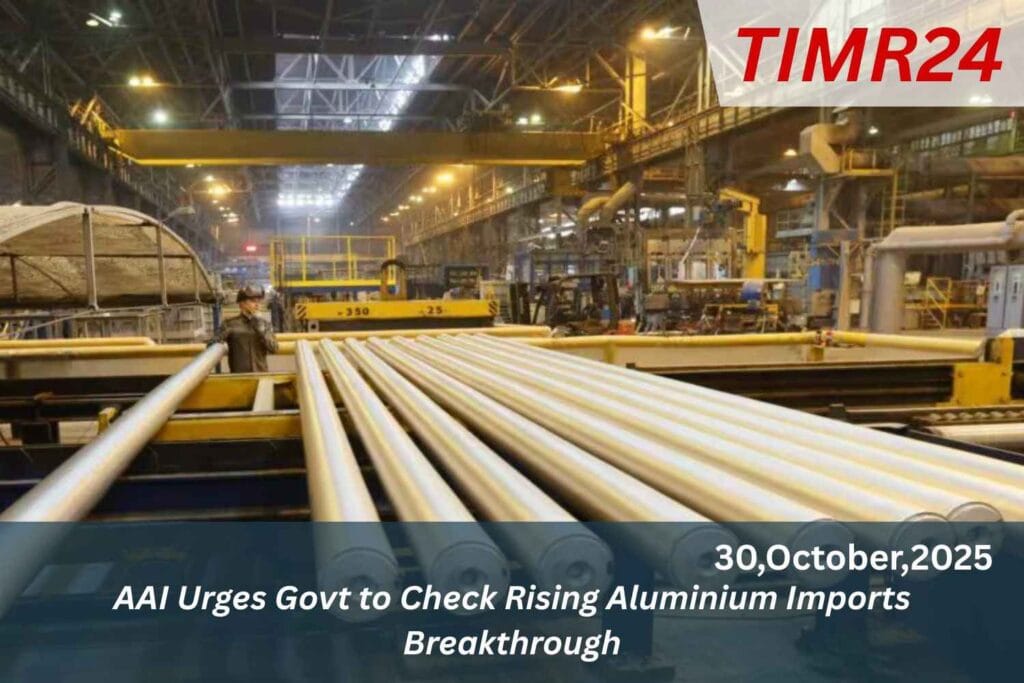
The Aluminium Association of India (AAI) has urged the Department for Promotion of Industry and Internal Trade (DPIIT) and the Ministry of Finance to implement urgent measures to protect the aluminium industry from rising import dependence and market distortions. They warned that unchecked imports may trigger an aluminium shortage, threatening over Rs 20 trillion of potential investments in India’s aluminium value chain. AAI is advocating for an increase in the basic customs duty to 15% on all aluminium products and the introduction of stringent quality standards to prevent substandard imports. This appeal follows a surge in low-quality imports.
From surplus-capacity countries, jeopardizing domestic producers. Aluminium is recognized as a strategic metal essential for national security and growth sectors. Globally, major economies have strengthened trade barriers, with the US increasing tariffs and the EU implementing non-tariff measures, enhancing import costs significantly India’s aluminium industry has been witnessing a critical juncture, (Nalco India) with increasing import dependence posing significant challenges to domestic manufacturers. The Aluminium Association of India (AAI) has recently urged the government to take immediate and decisive steps to curb the rising aluminium imports that threaten.
Rising Aluminium Imports A Growing Concern
The long-term sustainability of the sector. The AAI’s appeal underscores the urgent need for policy interventions that can safeguard local industries, promote “Make in India,” and strengthen India’s position as a global powerhouse Over the past few years, India has seen a surge in aluminium imports, particularly from countries such as China, the UAE, and Malaysia. These imports, often coming at heavily discounted prices, have created an uneven playing field for domestic producers. Despite India being the second-largest producer of aluminium in the world, accounting for over 4 million tonnes annually, the domestic industry continues to suffer due to cheaper imported products flooding the market.
The AAI highlighted that imported aluminium and aluminium products are entering the Indian market at prices much below the production cost of local players, resulting in severe margin pressures and reduced competitiveness. This trend not only hurts the profitability of Indian producers but also discourages new investments in the sector. If unchecked, this could lead to factory shutdowns, job losses, and a reduction in India’s industrial output Aluminium is a strategic metal used across multiple industries, including construction, transportation, power, packaging, and defence. Major Indian companies like Hindalco Industries, NALCO, and Vedanta have invested.
Billions in creating world-class smelting and refining infrastructure. However, these companies now face a dual challenge rising input costs and declining market share due to import competition The AAI’s statement emphasizes that despite having one of the lowest-cost (Local) production capacities globally, Indian producers are still struggling because of high energy costs and low import duties on products. Energy contributes to nearly 40% of aluminium production costs, and the lack of competitive electricity tariffs further weakens the domestic industry. With imported aluminium finding easy access to Indian markets, domestic players face reduced.
The Role of Government Policies
Utilization rates, affecting not just company profits but also the broader industrial supply chain The AAI has called upon the Indian government to implement stronger trade measures such as anti-dumping duties, safeguard tariffs, and import monitoring mechanisms. Such measures could protect domestic manufacturers from unfair trade practices while ensuring fair market competition India’s trade policy has been evolving toward promoting self-reliance and reducing import dependency under the Atmanirbhar Bharat initiative. Aluminium, being a critical raw material for multiple industries, deserves similar policy attention as steel and other strategic metals.
Strengthening the domestic ecosystem aligns perfectly with India’s broader industrial and environmental goals In addition to trade protection, the AAI suggests government intervention in reducing electricity tariffs for aluminium producers, incentivizing recycling, and supporting technology upgrades. The industry believes that with the right policy push, India could not only meet its domestic aluminium demand but also become a major exporter of value-added aluminium products Globally, the aluminium market has been witnessing volatile price movements driven by fluctuating energy prices, geopolitical tensions, and changing.
Demand patterns China continues to dominate global production, accounting for nearly 60% of global output. However, due to environmental concerns and carbon reduction targets, China has started limiting production in energy-intensive industries, creating opportunities for other producers like India AAI believes that India can emerge as a competitive and sustainable alternative to China in aluminium manufacturing. With abundant bauxite reserves the primary raw material for aluminium and a well-established industrial base, India holds the potential to become a global export hub. However, unchecked imports threaten to derail this vision by weakening domestic capacity.
The global aluminium supply chain is also shifting toward cleaner, low-carbon production. Indian companies such as Vedanta and Hindalco are investing heavily in green technologies, waste recycling, and renewable energy integration. Supporting these efforts through favourable policies could not only help India meet its climate commitments but also enhance its global competitiveness One of the major issues highlighted by the AAI is India’s limited focus on value-added products. Most domestic producers focus on primary aluminium, while imports often consist of downstream products such as extrusions, foils, and finished components.
By encouraging value addition within the country, India can enhance profitability, create skilled employment, and boost exports Investments in advanced manufacturing technologies, research and development, and product innovation are critical to this transition. Government initiatives like the Production-Linked Incentive (PLI) Scheme can play a pivotal role in driving technological modernization and value-added production. By leveraging such schemes, India’s aluminium industry can reduce its dependence on imported finished goods and strengthen its presence in international markets.
Sustainability and Environmental Goals
The industry also plays a crucial role in India’s sustainability and clean energy goals is a lightweight, recyclable material that contributes to reducing carbon emissions, especially in transportation and construction sectors. Promoting domestic production of low-carbon aligns with India’s Net Zero by 2070 target and supports the circular economy framework AAI’s call for restricting imports is not just about trade protectionism but also about promoting Sustainable Industrial Growth. Imported aluminium often has a higher carbon footprint due to production in countries relying heavily on coal-based energy.
Encouraging domestic, cleaner production would therefore contribute to India’s environmental objectives and global climate commitments The path forward for India’s industry lies in balancing trade liberalization with strategic protection. By reducing import dependency, boosting domestic production, and investing in innovation, India can secure its position as a global leader in manufacturing. The government’s proactive role in ensuring fair competition, affordable energy, and support for local industries will be crucial in achieving this vision The AAI’s plea to the government represents a larger sentiment within India’s industrial.
Ecosystem a call for strategic intervention to strengthen domestic industries and ensure their long-term survival. Aluminium, being a backbone for sectors like infrastructure, power, and defence, deserves special attention under India’s industrial policy roadmap The Association of India’s appeal to curb rising imports is a timely reminder of the importance of nurturing domestic industries in an era of global economic uncertainty. As India aims to become a $5 trillion economy, strengthening its core manufacturing sectors including aluminium is vital for economic stability, employment generation, and Technological Advancement.
By addressing the concerns raised by AAI and formulating a balanced trade policy, the government can ensure that India not only protects its domestic industry but also becomes a global hub for high-quality, sustainable aluminium production. The move to check rising imports is not merely an industrial necessity it’s a step toward economic sovereignty and sustainable growth.
Q1. What is the size of India’s green building market by FY32?
A1. The market is projected to reach $85 billion by FY32.
Q2. Which cities lead India’s green construction growth?
A2. Delhi NCR, Mumbai, Bengaluru, and Pune are leading the green building revolution.
Q3. What are the main certifications for green buildings in India?
A3. IGBC, LEED, and GRIHA are the top certifications for sustainable buildings.
Q4. How do green buildings contribute to sustainability?
A4. They reduce energy consumption, promote resource efficiency, and lower carbon emissions.
Q5. Who are the major players in India’s green real estate sector?
A5. Godrej Properties, Tata Housing, Mahindra Lifespaces, and DLF are key leaders.