









IST - Saturday, February 21, 2026 12:24 am
Hot News

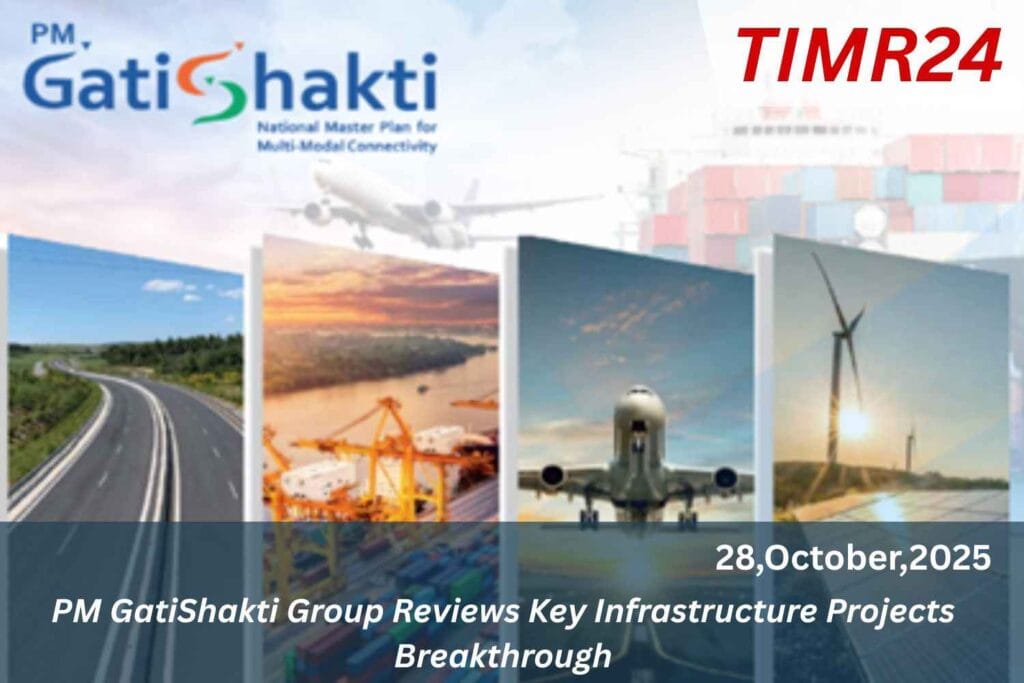
PM GatiShakti Group Reviews Key Infrastructure Projects Breakthrough

Soniya Gupta

Updated on:

GatiShakti

The Network Planning Group (NPG) under the PM GatiShakti initiative has reviewed and assessed 10 infrastructure projects aimed at improving multimodal connectivity across India. The review includes major connectivity corridors linking industrial hubs with economic zones, ports, and freight terminals. Officials from various ministries participated in the review, focusing on enhancing synergy between ministries for last-mile connectivity, efficient logistics movement, and reduced project costs India’s journey toward becoming a global economic powerhouse has entered a new phase with the PM GatiShakti National Master Plan, a transformative initiative aimed at.

Integrating and accelerating the nation’s infrastructure development. The recent PM GatiShakti Group review meeting marked a significant milestone in evaluating the progress of key infrastructure projects that are shaping India’s logistics and connectivity landscape. Led by senior officials from multiple ministries, the review emphasized the importance of inter-ministerial coordination, data-based planning, and timely project completion to achieve the long-term goals of Viksit Bharat 2047. The session focused on eliminating bottlenecks, optimizing transport networks, and creating synergy across roadways, railways, ports, and airports to boost India’s logistics competitiveness.

Background The Vision Behind PM GatiShakti

Launched by Prime Minister Narendra Modi in 2021, the PM GatiShakti National Master Plan is a digital platform designed to unify the planning and implementation of infrastructure projects across central and state governments. The aim is to bridge departmental silos and enhance coordination between ministries such as Railways, Road Transport, Civil Aviation, Shipping, Power, and Telecommunications. By integrating over 1,400 layers of geospatial data, the platform provides real-time insights that aid in decision-making and ensure that every project aligns with national priorities. This systematic approach not only reduces delays but also improves.

The cost-effectiveness and sustainability of infrastructure investments background, refer to the GatiShakti initiative by promoting efficiency in supply chains and reducing logistics costs across industries The GatiShakti Group’s review meeting focused on several high-impact projects that are vital to strengthening India’s logistics ecosystem. Among them were the Dedicated Freight Corridor (DFC), Bharatmala Pariyojana, Sagarmala Programme, and National Infrastructure Pipeline (NIP) projects. These initiatives are interconnected and collectively designed to provide seamless multi-modal connectivity.

Between economic hubs, ports, industrial clusters, and consumption centers enhancing freight transport capacity and reducing transit times between major industrial cities. Similarly, the Bharatmala Pariyojana, under regions to major trade centers. The review highlighted progress in both initiatives, noting that integrated planning has helped avoid overlapping investments and land-use conflicts.

Technology-Driven Planning and Monitoring

Meanwhile, the Sagarmala Project is revolutionizing maritime connectivity by modernizing ports and developing coastal infrastructure. According to integration of port connectivity with inland waterways and road-rail linkages has significantly boosted port efficiency and cargo handling capacity. Together, these programs form the backbone of India’s GatiShakti vision One of the most impressive breakthroughs discussed during the review was the role of technology in planning and monitoring. The GatiShakti digital platform uses Geographic Information Systems (GIS) to map terrain, utilities, and environmental.

Constraints This enables ministries to plan routes for highways, railways, and pipelines while minimizing ecological disruption By sharing geospatial data across departments, the platform eliminates redundant approvals and accelerates project timelines. The use of data analytics and AI-based decision tools has further improved the accuracy of cost estimations and resource allocation. The government has also made the platform accessible to state authorities, enabling them to align their infrastructure plans with national strategies. This collaborative model ensures that investments at every level central, state, and private are coordinated and impactful.

Boost to Logistics and Multi-Modal Connectivity

The review meeting underscored that multi-modal connectivity remains at the heart of the PM GatiShakti vision. By linking various modes of transport road, rail, air, and sea the government aims to reduce logistics costs to single-digit levels of GDP. The National Logistics Policy complements this effort by promoting the use of integrated logistics parks, warehousing zones, and digital freight systems One of the key highlights of the review was the progress made in building Multi-Modal Logistics Parks (MMLPs), which are being established under the Bharatmala and Sagarmala frameworks. These parks serve as central hubs for cargo consolidation, warehousing.

And distribution, reducing turnaround times for industries. Enhanced connectivity to industrial corridors like the Delhi-Mumbai Industrial Corridor (DMIC) and Chennai-Bengaluru Industrial Corridor (CBIC) will further promote exports and strengthen India’s manufacturing (Vesting) ecosystem The infrastructure push under PM GatiShakti is expected to generate substantial employment across sectors such as construction, logistics, steel, and cement. Improved connectivity lowers transportation costs, boosts trade competitiveness, and stimulates industrial growth in tier-2 and tier-3 cities. The Make in India and Atmanirbhar Bharat campaigns are directly benefiting from.

Inter-Ministerial Coordination and Governance Reforms

This transformation, as efficient logistics networks make India more attractive to global investors According to officials, the reviewed projects collectively have the potential to add millions of jobs in the coming years, particularly in construction and logistics. Moreover, digital integration and simplified approvals have encouraged private sector participation through Public-Private Partnership (PPP) models Another important takeaway from the review was the emphasis on governance reform. The GatiShakti framework has made it possible for different ministries to work on shared digital dashboards, monitor progress, and resolve disputes more efficiently.

By breaking silos, the platform ensures that decisions are made collectively, reducing the risk of duplication and project delays The Ministry of Commerce and Industry, which oversees GatiShakti implementation, has also introduced performance monitoring indicators to evaluate project impact and sustainability. Collaboration with the NITI Aayog and the Department for Promotion of Industry and Internal Trade (DPIIT) ensures that infrastructure development aligns with industrial policy and investment goals Looking ahead, the GatiShakti Group emphasized the need for further integration of digital tools, including artificial intelligence and machine learning.

To forecast project risks and manage timelines more effectively. The next phase of development will focus on green infrastructure, renewable energy corridors, and climate-resilient design Additionally, financing models such as infrastructure investment trusts (InvITs) and municipal bonds are being explored to mobilize funds for long-term projects. The Group also recommended expanding the GatiShakti framework to urban mobility, focusing on smart city planning, electric vehicle infrastructure, and metro rail expansion The PM GatiShakti initiative, therefore, is not just about building physical infrastructure it’s about transforming India’s approach to.

Development By ensuring that every project contributes to a unified national network, the initiative is laying the foundation for an economically resilient, digitally empowered, and globally competitive India The GatiShakti Group’s review signifies more than just administrative oversight it represents India’s resolve to build a seamless, sustainable, and synchronized infrastructure ecosystem As ministries and states collaborate through data-driven systems, India is set to witness a paradigm shift in how infrastructure projects are conceived and executed. The alignment of national priorities through the GatiShakti platform will not only improve logistics efficiency but also.

Create millions of new opportunities for industries and citizens alike. With every breakthrough review, India moves one step closer to its vision of “Viksit Bharat 2047”, where every road, (MMRC) rail, and port is a symbol of progress, connectivity, and prosperity.

Q1. What is the PM GatiShakti National Master Plan?
It’s a digital platform integrating data from multiple ministries to enhance coordination in infrastructure planning and project execution.

Q2. Which sectors are covered under GatiShakti?
It covers roads, railways, ports, airports, power, telecommunications, and urban infrastructure.

Q3. How does GatiShakti improve logistics efficiency?
By integrating data and reducing overlaps, it lowers logistics costs and improves connectivity between production and consumption centers.

Q4. What is the significance of the latest GatiShakti review meeting?
It assessed progress on critical projects and aligned inter-ministerial strategies for faster implementation.

Q5. How can states benefit from using the GatiShakti platform?
States can plan regional infrastructure more effectively, attract investments, and connect better with national projects.