



















IST - Saturday, February 21, 2026 9:48 pm
Hot News

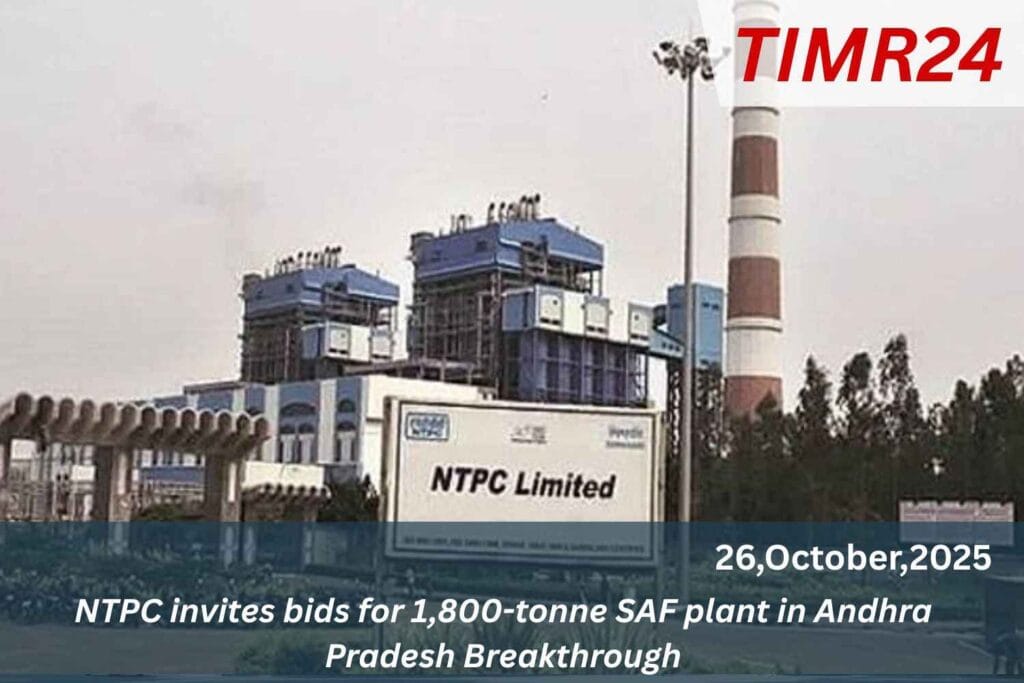
NTPC invites bids for 1,800-tonne SAF plant in Andhra Pradesh Breakthrough

Soniya Gupta

Updated on:

NTPC

NTPC is tendering for a 1,800-tonne sustainable aviation fuel production unit in Andhra Pradesh, covering design, engineering, fabrication, supply, and construction. Bids must be submitted by 6 November 2025. India’s SAF production potential is 8-10 million tonnes annually India’s largest power generation company, NTPC Limited, has taken another ambitious step in its clean energy transformation journey by inviting bids for establishing a 1,800-tonne Sustainable Aviation Fuel (SAF) plant in Andhra Pradesh. This initiative symbolizes NTPC’s growing commitment to green technology and marks a significant step toward decarbonizing India’s aviation sector.

The SAF project aligns with the company’s long-term goal of achieving net-zero carbon emissions and supports India’s broader commitment to carbon neutrality by 2070 The development of the SAF plant underscores the government’s strong focus on renewable and alternative fuels. As part of the National Bioenergy Programme, this project represents a strategic milestone in integrating renewable energy solutions with industrial and aviation growth. The proposed plant will utilize biogenic feedstock and waste-based materials to produce eco-friendly jet fuel that emits up to 80% less carbon compared to traditional aviation fuel. By blending innovation with.


Technological Focus and Feedstock Utilization

At the heart of this SAF project lies advanced technology designed to convert organic materials into high-quality aviation fuel. The plant is expected to use Hydro processed Esters and Fatty Acids (HEFA) technology, one of the most efficient and globally accepted methods for SAF production. This technology enables the transformation of waste oils, non-edible vegetable oils, and other sustainable biomass into clean aviation fuel that can seamlessly replace conventional jet fuel without requiring modifications to aircraft engines or airport refuelling systems The decision to set up the SAF plant in Andhra Pradesh is strategically driven by the region’s industrial.

Infrastructure, port connectivity, and renewable energy potential. The proximity to major air transport hubs such as Vijayawada and Visakhapatnam further enhances the logistical viability of SAF distribution. Additionally, the project will create an opportunity for local farmers and waste collection units to participate in feedstock supply, boosting rural employment and circular economy (Mahindra Logistics) models in southern India For an in-depth look at India’s renewable technology advancements, you can explore The aviation industry has been under immense pressure to reduce its carbon footprint, and SAF is widely seen as the most.

Practical solution in the short to medium term. NTPC’s initiative comes at a time when both public and private sectors are aligning their sustainability goals with International Civil Aviation Organization (ICAO) standards under the CORSIA framework. The introduction of a dedicated SAF production facility will help Indian airlines meet emission reduction obligations while maintaining operational efficiency and competitiveness According to projections, India’s domestic aviation fuel demand is set to increase by nearly 5% annually over the next decade. This growing demand presents a unique opportunity for NTPC to scale its SAF operations and establish long-term.

Supply partnerships with leading carriers such as Air India, IndiGo, and Vistara. The SAF plant will not only reduce the aviation industry’s carbon intensity but will also contribute to energy independence by curbing crude oil imports Beyond environmental sustainability, the SAF plant promises substantial economic benefits for the state of Andhra Pradesh and the national economy. The project is expected to generate direct and indirect employment opportunities across multiple sectors, including biomass collection, transportation, refining, and logistics. It will also spur innovation in renewable fuel research, attract foreign investment, and enhance India’s position as a regional hub for green fuel production.

Environmentally, SAF production will help mitigate greenhouse gas emissions, reduce air pollutants such as sulfur oxides, and improve overall air quality. The plant’s operational efficiency will be powered by NTPC’s renewable sources, including solar and wind energy installations in nearby regions. This integrated model ensures that both fuel production and energy consumption remain sustainable throughout the value chain You can explore NTPC’s broader renewable portfolio, including hydrogen and solar initiatives.

NTPC’s Expanding Green Energy Vision

The SAF project is part of NTPC’s overarching energy transition strategy, which involves diversifying its operations beyond thermal power into renewables, hydrogen, and sustainable fuels. NTPC has already launched pilot projects in green hydrogen blending, bio-CNG, and carbon capture, reinforcing its leadership in the renewable domain. The establishment of the SAF plant demonstrates the company’s readiness to explore new frontiers in clean energy while contributing to India’s international climate commitments In recent years, NTPC has announced multiple green energy ventures, including floating solar parks and hydrogen mobility projects.

Showcasing its evolution from a conventional power utility to a sustainability-driven corporation. The company’s initiatives are aligned with India’s Energy Transition Roadmap 2030, which aims to achieve 50% of electricity generation from renewable sources To successfully execute the SAF project, NTPC is seeking partnerships with global technology providers, engineering companies, and biofuel producers. The bid invitation encourages collaboration with organizations specializing in biorefinery technology, process design, and supply chain logistics to ensure world-class project execution. International participation is expected, considering the global shift toward renewable aviation.

Sustainable Development and India’s Global Commitments

NTPC’s move toward SAF is a vital component of India’s broader strategy to combat climate change and fulfil international pledges made under the Paris Agreement. With increasing global emphasis on sustainable aviation, India’s proactive stance could position it among the top nations leading the clean fuel transition. The establishment of this plant in Andhra Pradesh not only signifies progress in renewable energy but also reinforces India’s leadership in innovation-driven, climate-conscious infrastructure.

The United Nations Environment Programme (UNEP) has identified sustainable aviation fuel as a critical enabler for climate mitigation in transport. By investing in SAF, India sets a precedent for other developing economies to integrate bio-based solutions into national energy strategies (NTPC )1,800-tonne SAF plant project in Andhra Pradesh marks a historic turning point in India’s clean energy landscape. It merges innovation, environmental responsibility, and industrial growth under one vision the creation of a sustainable, self-reliant energy ecosystem. With the aviation sector poised for massive expansion, the demand for low-emission fuels will continue to rise, and NTPC’s timely investment ensures.

That India remains ahead in the global race toward decarbonized air travel As the tendering process advances, this initiative will likely inspire further collaborations, technology transfers, and large-scale investments across the renewable energy sector. Ultimately, NTPC’s SAF project stands as a symbol of India’s green future, where economic progress and environmental preservation move hand in hand.

Q1. What is the purpose of NTPC’s 1,800-tonne SAF plant in Andhra Pradesh?
The Sustainable Aviation Fuel (SAF) plant aims to promote cleaner aviation fuel production and reduce carbon emissions, aligning with India’s net-zero goals.

Q2. Where will the new NTPC SAF plant be located?
The proposed 1,800-tonne SAF facility will be established in Andhra Pradesh, though the specific site location will be finalized after the bidding process.

Q3. What is the capacity of the NTPC SAF plant?
The plant will have a production capacity of 1,800 tonnes per year of Sustainable Aviation Fuel, contributing to India’s green energy transition.

Q4. Who can participate in NTPC’s bidding process?
Domestic and international companies with expertise in biofuel and aviation fuel technology are eligible to submit bids for the project.

Q5. How does the SAF project support India’s clean energy goals?
By producing renewable aviation fuel, the project helps reduce dependence on fossil fuels and supports India’s vision of sustainable transportation and energy diversification.