


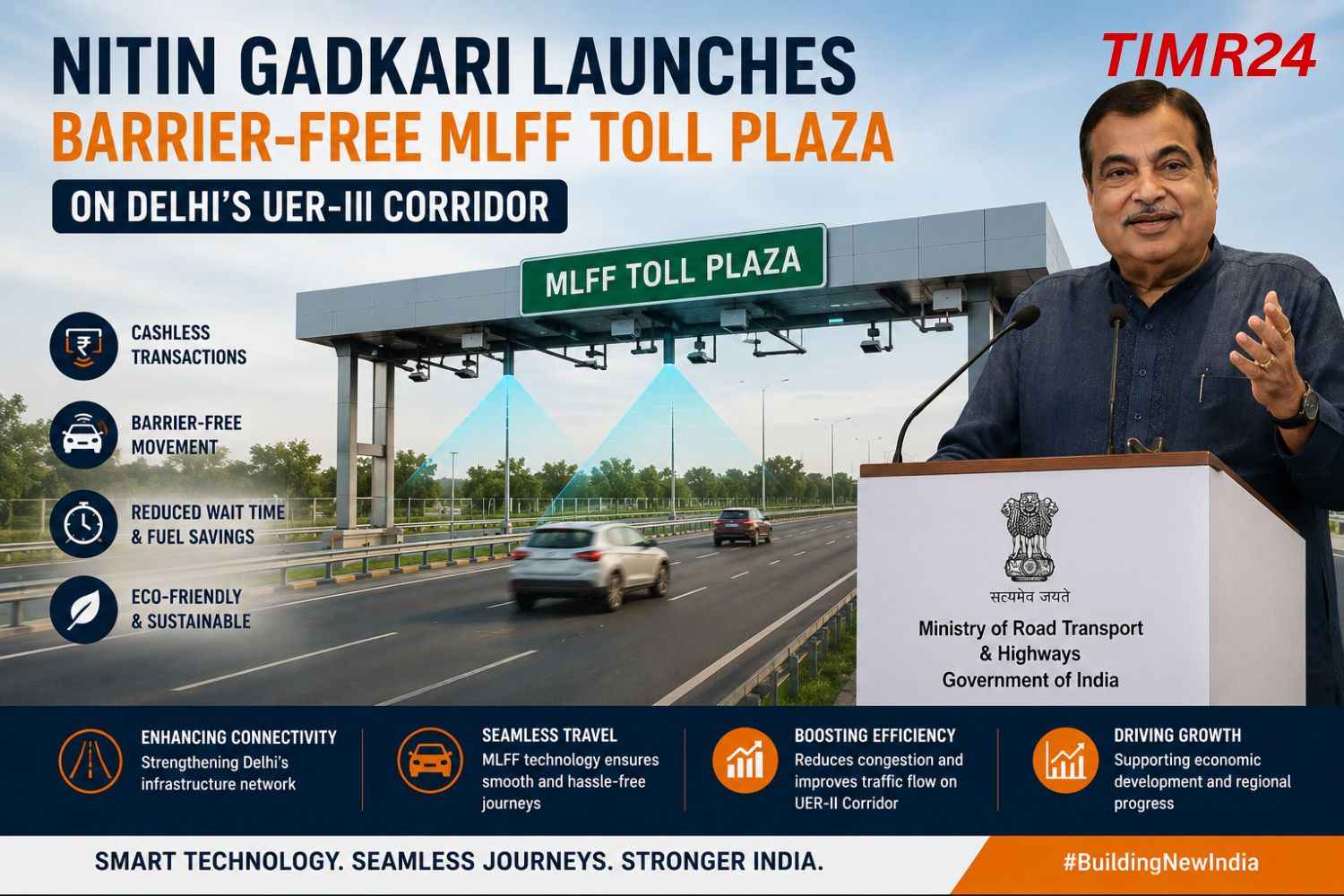




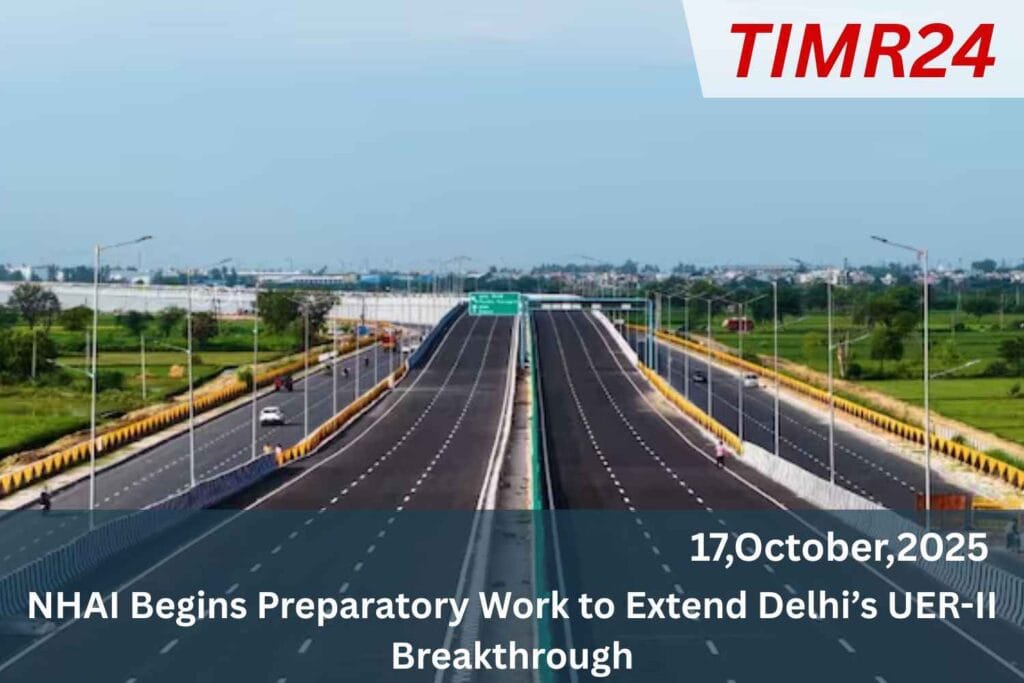
The National Highways Authority of India (NHAI) is preparing for the first extension of the Urban Extension Road-II (UER-II), linking it to the Delhi-Saharanpur Expressway. The project aims to decongest Delhi’s inner and outer ring roads, NH-44, and central routes by diverting long traffic. The proposed 17 km extension will cost over Rs 33.50 billion and will reduce congestion on NH-48, NH-44, and the city’s Ring Roads. The feasibility study will cover traffic analysis, alignment options, topography, lane configurations, utilities, forest clearance requirements, and socioeconomic impact assessment. The National Highways Authority of India (NHAI) has officially commenced.
Preparatory work for the extension of Delhi’s Urban Extension Road-II (UER-II), a major infrastructure initiative aimed at transforming the city’s urban mobility landscape. UER-II, which serves as one of the vital arterial road networks in Delhi, is expected to significantly reduce traffic congestion in critical urban corridors while enhancing connectivity between the city’s residential and commercial zones. The initiative aligns with the government’s broader urban development objectives and complements ongoing projects aimed at modernizing transportation infrastructure across Delhi and the National Capital Region (NCR). For a comprehensive look at Delhi’s ongoing road development.
Projects, readers can visit the (Delhi Projects) The preparatory phase of UER-II involves detailed alignment studies, topographical surveys, and the identification of areas for initial land acquisition. NHAI’s early intervention in these stages is crucial to ensure that the construction phase proceeds without major delays, which have historically been a challenge in large-scale urban infrastructure projects. The alignment for the UER-II extension has been designed to strategically connect areas like Dwarka, Rohini, Wazirabad, and parts of north and west Delhi with NH-44, providing seamless movement for both private and commercial vehicles. By offering an alternative corridor to existing.
Congested routes, this extension is expected to enhance overall traffic efficiency and reduce travel time across the capital. Readers interested in learning more about ongoing NHAI projects can explore the (NHAI) One of the key objectives of the UER-II extension is to strengthen connectivity between Delhi and its neighboring NCR regions, including Gurugram, Sonipat, Noida, and Faridabad. By providing faster access to these areas, the road extension will support economic activity and regional integration. Improved transportation corridors are particularly important for the movement of goods and services, as smoother freight transit helps reduce operational costs and delivery times.
This aspect is particularly significant in the context of Delhi’s growing role as a logistics hub in northern India. The (Road Highways) has consistently highlighted the importance of such urban corridors in promoting economic growth and reducing urban congestion In addition to traffic and economic benefits, the UER-II extension project also incorporates modern urban planning and environmental sustainability measures. NHAI has planned the inclusion of green belts along the route, noise mitigation barriers near residential areas, and effective stormwater drainage systems to manage urban runoff. Environmental experts emphasize the importance of integrating sustainable.
Solutions in road projects to minimize ecological impact while enhancing urban livability. This approach is increasingly being adopted in major Indian cities to ensure that infrastructure expansion does not come at the cost of environmental degradation. Detailed project reports and environmental assessments are often shared on platforms such as for transparency and stakeholder engagement The safety and convenience of commuters are also central to the UER-II extension plan. Modern road design standards will be employed, including well-marked service lanes, pedestrian pathways, and intelligent traffic management systems. These features will not only make travel more.
Efficient but also improve overall road safety for motorists and pedestrians. By integrating these elements, the project sets a benchmark for urban highway development in India, demonstrating how large-scale infrastructure projects can meet both efficiency and safety requirements simultaneously. For more on traffic management innovations, readers can refer to From a socio-economic perspective, the extension of UER-II is poised to stimulate growth in surrounding areas. Improved accessibility often leads to the expansion of residential and commercial real estate projects along the corridor. Local businesses are likely to benefit from increased connectivity, while the development of ancillary.
Facilities such as service stations, logistics hubs, and commercial centers will contribute to employment generation and regional economic activity. This ripple effect underscores how infrastructure projects like UER-II extend their benefits beyond mere transportation improvements to influence urban development patterns and community prosperity. Case studies of similar projects can be explored on Stakeholder engagement is a critical component of the preparatory phase, involving consultations with local residents, government authorities, and private sector partners. These interactions help address potential land acquisition issues, resolve public concerns, and ensure.
Compliance with regulatory requirements. Transparent communication from NHAI ensures that citizens are kept informed about traffic diversions, construction timelines, and anticipated completion dates. Such engagement fosters public trust and reduces the likelihood of disputes that could delay project progress. For updates on public consultations and project announcements The UER-II extension is expected to enhance Delhi’s position as a well-connected urban hub within the NCR. With growing urban populations and increasing demand for efficient mobility, investments in road infrastructure are crucial. The extension not only supports commuter convenience but also.
Facilitates smoother intercity and regional travel, reinforcing the strategic importance of Delhi’s transportation networks. This aligns with broader government initiatives aimed at creating smart, sustainable, and economically integrated urban centers. Analysts suggest that enhanced infrastructure, such as UER-II, can significantly influence urban expansion patterns, making connectivity a key driver of metropolitan development. Additional insights on smart city initiatives can be accessed at the preparatory work for the extension of Delhi’s UER-II represents a transformative phase in the capital’s transportation planning. By combining modern engineering practices.
Sustainable design considerations, and strategic regional integration, the project is set to deliver substantial benefits for commuters, businesses, and the broader economy. Beyond easing congestion and reducing travel times, UER-II will foster economic opportunities, support regional connectivity, and provide a template for future urban road projects across India. As the project progresses, continuous monitoring, stakeholder collaboration, and adherence to best practices will ensure that the extension meets its objectives efficiently and sustainably, marking a significant milestone in Delhi’s urban development journey. For further reference, NHAI updates and related road projects can be explored.
q1. What is the UER-II project in Delhi?
UER-II (Urban Extension Road-II) is a key infrastructure project aimed at improving connectivity across Delhi and its neighboring regions.
q2. Which areas will be affected by the UER-II extension?
The extension will cover major corridors linking Dwarka, Rohini, Wazirabad, and NH-44, reducing traffic congestion in these zones.
q3. Who is responsible for the UER-II extension?
The National Highways Authority of India (NHAI) is overseeing the preparatory work and execution of the UER-II extension.
q4. When is the UER-II extension expected to be completed?
While preparatory work has started, the project timeline may vary depending on land acquisition, approvals, and construction pace.
q5. What benefits will the UER-II extension bring?
The extension will reduce travel time, improve connectivity with NCR regions, enhance freight movement, and support Delhi’s urban development plans.