













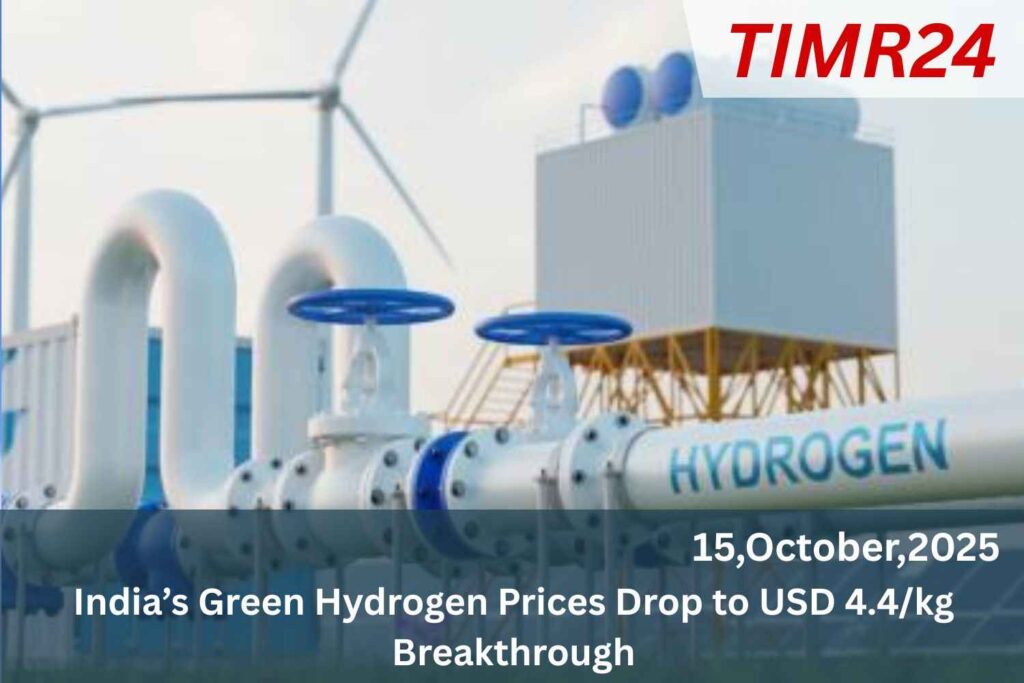
India’s green hydrogen cost has dropped by over USD 1 per kg in recent tenders by state-owned oil companies, according to Oil Minister Hardeep Singh Puri. The price has dropped from USD 5.5 per kg to USD 4.4-4.5 per kg, indicating rapid progress in cost reduction for the zero-emission fuel. Green is a clean fuel alternative for industries like steel, cement, chemicals, transport, and power generation. India has set a target of producing 5 million tonnes annually by 2030 under the National Green Mission, which aims to capture 10% of the global market.
India’s green hydrogen sector has achieved a significant milestone with the recent reduction in production costs, now ranging between USD 4.4 and USD 4.5 per kilogram. This development marks a notable decline from the previous cost of USD 5.5 per kilogram, reflecting the nation’s commitment to advancing its clean energy agenda. The price drop was highlighted by Oil Minister Hardeep Singh Puri during the World India conference, emphasizing the competitive pricing achieved through recent tenders by state-owned oil companies like Indian Oil Corporation (IOC), Bharat Petroleum Corporation Ltd (BPCL), and Hindustan Petroleum Corporation Ltd (HPCL) (ARMI)
The reduction in green costs is attributed to several key factors. Firstly, the declining prices of renewable energy, particularly solar power, have significantly lowered the cost of electricity used in water electrolysis, the primary method for producing green hydrogen. Additionally, advancements in electrolyser technology have enhanced efficiency, leading to reduced capital and operational expenditures. Economies of scale, driven by increased production volumes and competition among suppliers, have further contributed to cost reductions. For instance, in a recent IOC tender for a 10,000-tonne per annum green production facility at its Panipat refinery.
Larsen & Toubro offered a tax-inclusive price of USD 4.5 per kilogram for a 25-year contract The strategic initiatives undertaken by the Indian government have also played a pivotal role in fostering the growth of the green sector. The National Green Mission, launched with an investment of INR 19,744 crore (approximately USD 2.4 billion), aims to establish a robust infrastructure for green production, storage, and distribution. This initiative is expected to generate substantial employment opportunities and reduce the nation’s dependence on fossil fuel imports. By 2030, India targets the production of 5 million metric tonnes of green annually, positioning itself as a global leader in the green hydrogen economy (Corporation).
The implications of reduced green costs extend beyond environmental benefits. Industries such as steel, cement, and chemicals, which traditionally rely on coal or natural gas, can now explore cleaner alternatives, aligning with global decarbonization goals. Furthermore, the adoption of green in refineries and ammonia production can facilitate the transition from grey hydrogen, thereby mitigating greenhouse gas emissions. The transportation sector, particularly heavy-duty vehicles, is also poised to benefit from the integration of green hydrogen fuel cells, offering a sustainable solution to reduce vehicular emissions.
Looking ahead, the trajectory of green hydrogen costs in India appears promising. Projections indicate that with continued advancements in technology and increased production capacities, the cost of green could further decrease to approximately USD 2.4 per kilogram by 2030 This anticipated reduction underscores the potential for green hydrogen to become a cost-competitive and scalable energy solution, contributing significantly to India’s energy transition and sustainability objectives India’s progress in reducing green hydrogen production costs signifies a transformative shift towards a sustainable energy future The confluence of government initiatives.
Technological advancements, and market dynamics has created a conducive environment for the growth of the green hydrogen sector. As the nation continues to innovate and invest in clean energy technologies, it is well-positioned to achieve its ambitious goals and play a pivotal role in the global green hydrogen economy.
Q1. What is the current price of green hydrogen in India?
India’s green hydrogen price has dropped to USD 4.4/kg in 2025.
Q2. Why is green hydrogen important?
Prices have fallen due to cheaper renewable energy, government incentives, and technological advancements in electrolysis.
Q3. Which sectors benefit from green hydrogen?
Industries like steel, fertilizer, transportation, and power generation are major beneficiaries.
Q4. How does India produce green hydrogen?
Using electrolysis powered by renewable energy sources like solar and wind.
Q5. What is the future of green hydrogen in India?
India aims to expand production and infrastructure, targeting widespread adoption by 2030.